
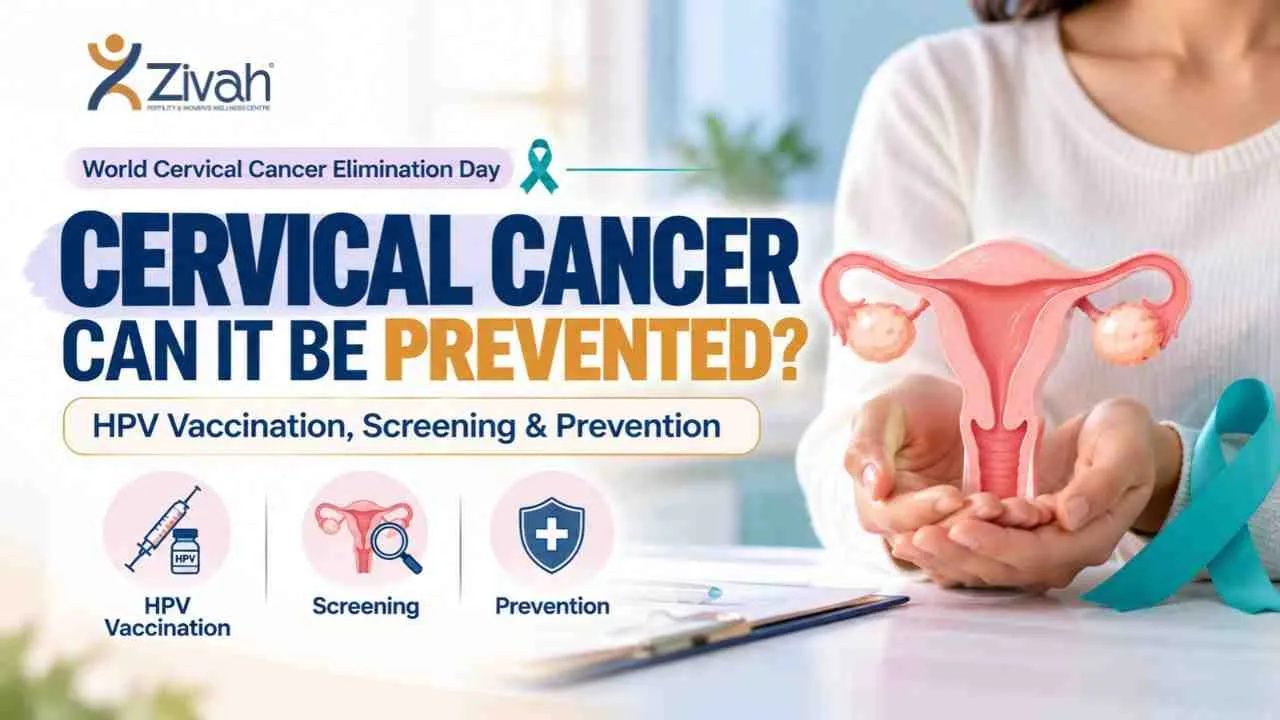
World Cervical Cancer Elimination Day is on November 17. It’s a reminder that cervical cancer is often preventable with the HPV vaccine and regular screening, and this year was a big step forward for girls in India.
Or maybe you’ve been meaning to book a Pap smear but keep putting it off. Or you are a parent wondering if the HPV vaccine is the right one for your daughter. In any case, knowing your options is the first step to cervical cancer prevention.
The guide explains the causes, the symptoms to look for, who should be vaccinated and when, how screening works and what else reduces your risk. We have the tools to catch it early. The question is, do you use them?
What Is World Cervical Cancer Elimination Day? Why 17 November Matters
World Cervical Cancer Elimination Day is a relatively new event with a strong purpose. WHO calls it a historic milestone in the fight to end a preventable cancer, and World Cervical Cancer Elimination Day is only the second time it is officially celebrated.
How the Day Began and What the 90-70-90 Targets Mean
The date was not chosen at random. The anniversary of WHO’s 2020 global strategy to eliminate cervical cancer is 17 November. The World Health Assembly later declared it an official day in 2025, and it was first observed that November. The approach is founded on three straightforward 2030 objectives, and each of them delivers a clear message to families:
WHO’s 90-70-90 Targets: What They Mean for You
| Target | Goal by 2030 | What it means for you |
|---|---|---|
| Vaccination | 90% of girls vaccinated by age 15 | Vaccinate your daughter early |
| Screening | 70% of women screened by ages 35 and 45 | Get tested, even if you feel fine |
| Treatment | 90% of women with precancer or cancer treated | Follow up on any abnormal result |
India stands to lose more than most countries in terms of cervical cancer awareness. It has the greatest number of deaths from cervical cancer in the world. That’s why this year has been so important.
India’s nationwide cervical cancer vaccination program was inaugurated in February, providing a free single dose of the HPV vaccine to 14-year-old girls, with approval from parents or guardians.
Check with your nearby government health centres, as availability may have changed since the launch drive. To understand why vaccination matters, it helps to know how cervical cancer begins.
What Is Cervical Cancer and What Causes It?
Cervical cancer begins in the cervix, the bottom section of the womb that opens into the vagina. Unlike many cancers, its main cause is well documented. Knowing the causes of cervical cancer is what makes prevention possible.
How HPV Causes Cervical Cancer
If you’ve ever wondered what causes cervical cancer, it’s a virus called HPV, or human papillomavirus. In most cases, it is connected with high-risk types, primarily HPV 16 and 18. HPV is extremely common.
Most sexually active people will have some std at some point, often without knowing it, and in most cases the body clears it itself within a year or two. It doesn’t say anything about anyone’s decisions. The risk is an infection that doesn’t go away.
Over many years, it can slowly convert the cells of the cervix into precancer and finally into cancer if nothing is done. For women with a healthy immune system, this normally takes 15 to 20 years. It’s our biggest benefit that we start so early; we have lots of time to discover changes and treat them early.
Cervical Cancer Risk Factors Beyond HPV
HPV is the primary cause, although other risk factors for cervical cancer might increase the likelihood that an infection will linger or progress to cancer:
- A compromised immune system. Women with HIV are nearly six times more likely to get cervical cancer, which can develop in about 5 to 10 years
- Smoking
- Never screened
- Having had multiple pregnancies, or taking birth control pills for a long time (the causes are not fully known)
Having several sex partners or beginning sex at a young age might further increase your chances of exposure to HPV. It’s about exposure, not fault. Cervical cancer can be slow-growing, but why do so many women find out too late? The answer resides in its symptoms, or absence of them.
What Are the Symptoms of Cervical Cancer? Early Signs Not to Ignore
Most people expect cancer to express itself with pain or apparent changes. Cervical cancer normally doesn't, at least not in the early stages, and that's what makes it risky.
Precancer and early cervical cancer often have no symptoms. You can feel healthy, have normal periods, and still show no signs of anything wrong, even as changes are already happening in your cells.
That’s why waiting for cervical cancer symptoms isn’t a safe solution. The disease can take years to develop, as we saw earlier, but that extended window only helps if someone is watching. Cervical cancer early detection depends on screening, not on symptoms.
Warning Signs of Cervical Cancer to Tell Your Doctor About
Signs may appear as the condition advances. If you’re wondering what the symptoms of cervical cancer are, look out for these:
- Bleeding after sex, in between cycles or after menopause
- Unusual, watery or stinky vaginal discharge
- Pain in the pelvis or during sex
Later, some women also notice back or leg pain, or swelling in the legs. Other less significant explanations for these indications include infection or a benign polyp.
Nonetheless, they are always worth a checkup, so don’t wait for them to go away on their own. You don't have to wait till you're symptomatic. There are two basic instruments that can protect you far earlier, and the first is a vaccine.
HPV Vaccine for Cervical Cancer: Age, Doses, Safety and Cost
The HPV vaccine protects against the forms of HPV that most commonly cause cervical cancer. It is the first line of prevention and one of the easiest things many families can do.
When Should the Cervical Cancer Vaccine Be Taken? Parents commonly ask at what age the cervical cancer vaccine works best. The answer is early, ideally between 9 and 14, far before any risk of exposure to HPV.
The body also responds well with fewer doses at this age. It is still recommended for young women up to age 26 who haven't received it before. Women ages 27 through 45 can talk to their doctor, who will consider their unique risk.
The number of HPV vaccine shots you need depends on your age when you start. See the table below. Remember, the vaccination prevents new infections, but it cannot treat an existing HPV infection or cell alterations that have already occurred.
The vaccination is not recommended during pregnancy. Tell your doctor if you are pregnant, plan to become pregnant, or have had a serious allergic response in the past.
HPV Vaccine Schedule by Age
| Age group | Usual schedule | Good to know |
|---|---|---|
| Girls aged 14 (national programme) | Single dose, free | Check current availability at a government health centre |
| 9–14 years (private) | Usually 2 doses, 6 months apart | Best protection, given before any exposure |
| 15–26 years | Usually 3 doses | Still strongly recommended |
| 27–45 years | Decided case by case | Discuss your risk with your doctor |
Is the HPV Vaccine Safe? Side Effects, Vaccine Names and Cost in India
That is why so many parents are uneasy about what they have read online. Is the HPV vaccine safe? Health organisations like the WHO consider it safe, and it has been administered to girls and women worldwide for years.
In India, the available vaccines are Gardasil 4, Gardasil 9, and locally made Cervavac. Your doctor will tell you which one is right for your age and needs. Side effects are usually mild and temporary, such as pain, redness, or oedema at injection sites. Some young people feel faint after an injection, and this is why the national program urges girls to wait for 30 minutes afterwards.
Let's bust some myths. The vaccine does not alter fertility or cause earlier sexual activity, and it does not give you an HPV infection. The immunisation is free for eligible girls under the national program.
Private clinics charge different amounts for different vaccines and numbers of shots. Make sure to inquire about the full price before you start. But none of the vaccines protects against all of the types of HPV that might cause cancer. That’s why screening is still important, even if you’re vaccinated.
Cervical Cancer Screening: Pap Smear vs HPV Test Explained
You know that lengthy, slow window we were talking about? Used by clinicians for cervical cancer screening. Simple tests can detect abnormalities in cells years before they become cancer, when they are easier to treat.
Pap Smear vs HPV Test: What Does Cervical Cancer Screening Detect?
There are two main screening tests, and they test for different things. A Pap smear tests a sample of cells from your cervix for abnormal changes. The HPV test searches for the high-risk virus itself, which shows who is more likely to develop such changes in the future. Co-testing is when doctors do both tests on the same sample.
Many government health centres in India also give VIA, a brief visual inspection of the cervix after a moderate solution of vinegar is administered, to women.
So who wins in the Pap smear vs HPV test battle? Neither one totally replaces the other. How often you are tested depends on your age, the test you had and your historical findings. Women with HIV may need to start earlier and be screened more often.
Pap Smear vs HPV Test at a Glance
| Feature | Pap smear | HPV test |
|---|---|---|
| What it looks for | Abnormal cervical cells | High-risk HPV types |
| How it’s done | Small sample brushed from the cervix | Same way, often the same sample |
| Commonly started | Ages 21–25 | Around age 30 |
| Usual gap if normal | About every 3 years | About every 5 years |
| What a positive result means | Cells need a closer look | Follow-up testing is needed |
Pap Smear Procedure: Does It Hurt, and When Should Screening Start?
A Pap smear is a normal test that removes a few cells from your cervix to screen for early alterations. The doctor carefully inserts a speculum to view the cervix, and a gentle brush collects cells. It’s only a few minutes.
So is a Pap smear painful? Most women, no. You might feel some pressure, but it’s brief. Book your test outside your period and avoid sex and vaginal creams for 48 hours before. Your gynaecologist will tell you when to start, and the test can typically be done safely throughout pregnancy as well.
It is based upon the type of test and if it is paired with an HPV test. Ask for the entire cost beforehand. Even if you've taken the HPV vaccine, regular screening is still important.
There are two pillar. (Vaccination and screening) A few daily decisions give you an extra layer of safety. Knowing what to do with your results is just as important.
How to Prevent Cervical Cancer: What Else Lowers Your Risk
Most of the work is done by the vaccine and routine screening. But if you’re asking how to prevent cervical cancer in your regular life, there are a few basic actions that give extra protection.
Everyday Ways to Lower Your Risk of HPV and Cervical Cancer
Good cervical cancer prevention also means reducing your odds of a long-lasting HPV infection. Condoms can help when it comes to how to prevent HPV transmission, but they don’t protect you completely because HPV can reside on parts of the skin not covered by a condom.
Fewer sexual partners also means less exposure. Women with HIV can reduce their risk by continuing to take their regular treatment. Stopping smoking helps your body remove HPV more easily.
Tested HPV-Positive? Here’s What It Really Means
A positive HPV result can be scary, but it’s not a cancer diagnosis. It only means you have the infection on your cervix. There’s no treatment to get rid of HPV, but most women’s bodies will fight the virus out naturally over time.
Vaccines that could someday treat an existing HPV infection are being explored, but they are not yet accessible. More important is follow-up. About a year later, your doctor may repeat the test or may offer a colposcopy, a closer look at the cervix. If precancer is detected, it can be removed before it develops cancer with a simple surgery like LEEP.
That’s the years-long window working for you. Beware of supplements that promise to “clear” HPV; there’s no evidence they do. All of these measures function best when they are started early, and today can be the start.
This World Cervical Cancer Elimination Day, Take Your First Step With Zivah
World Cervical Cancer Elimination Day is a good time to take one tiny, practical step for your cervical health or your daughter’s. At Zivah, our Gynecologists offer HPV vaccination for eligible girls and the HPV vaccine to women who have missed it earlier.
If a screening result is abnormal, we can also perform a colposcopy, so there is no delay in follow-up. Our doctors walk you through each stage, so you know what’s going on and why.
With approval, parents can book the vaccine for their daughters, and women can book a consultation for themselves. If you're unsure where to start, one visit can give you an idea of what you need based on your age and health history. Book your HPV vaccination or consultation with Zivah on this World Cervical Cancer Elimination Day. If you have an abnormal result, ask about colposcopy.
Final Thoughts: A Largely Preventable Cancer
Cervical cancer is caused by an ongoing HPV infection and grows slowly over several years. It is usually quiet in its early stages, but vaccination and screening can prevent it or detect it when it is still easily treatable. The steps are easy.
Vaccinate your daughter early, be tested on schedule even when you feel fine, and follow up on any abnormal result without delay.” Elimination is a global aim, and the world is working toward this goal. It starts with one vaccine, one test for you.