
At Zivah, your well-woman check-up brings preventive screening and a clear read on your fertility into one yearly visit. It checks your reproductive and overall health, including periods and hormones, as well as cervical, breast, and pelvic exams. We built it for women at every stage, whether you want to stay ahead of problems or you are starting to think about pregnancy.
Because we are a fertility-focused team, this complete well-woman check-up in India reads your results with your future in mind, giving you a head start on your routine women's health check-ups. So before you book, it helps to know exactly what this check-up covers.
What Is a Well-Woman Check-up?
At Zivah, a well-woman checkup is a single visit that reviews your reproductive and overall health. A well-woman test is a planned health checkup that you schedule when you are feeling good so that problems are found early on instead of as they get worse. It gathers the checks that need to be done at different times and runs them all at once, giving you a clear picture.
What makes ours different is that every finding is based on the view of fertility. We read more than just your body to see if it's telling us anything about your chances of getting pregnant. That's a simple way to explain a well-woman health screening: it checks for both fertility and the risk of pregnancy.
What does a well-woman check-up include?
| Area of Health |
What We Check |
Why It Matters |
|---|---|---|
| Reproductive health |
Periods, ovulation signs, pelvic organs (uterus and ovaries) |
Spots issues that affect both comfort and fertility |
| Hormones |
Thyroid, prolactin, key reproductive hormones |
Explains tiredness, weight changes, and irregular cycles |
| Cancer screening |
Cervix (Pap smear), breasts (clinical breast exam) |
Catches early changes before they grow |
| General health |
Blood count, sugar, vitamin D, blood pressure |
Keeps your whole body in view, not just one part |
| Fertility readiness |
Egg reserve (AMH), cycle health |
Shows where you stand if pregnancy is a near or future plan |
What this means for you: One visit covers both prevention and fertility, so nothing gets missed. What is included in a well-woman check-up at Zivah is shaped around you, not a fixed list, which is why so many women make it their yearly anchor. And once you see what it covers, the bigger question is why this yearly visit matters so much.
Why a Well-Woman Check-up Matters for Your Health
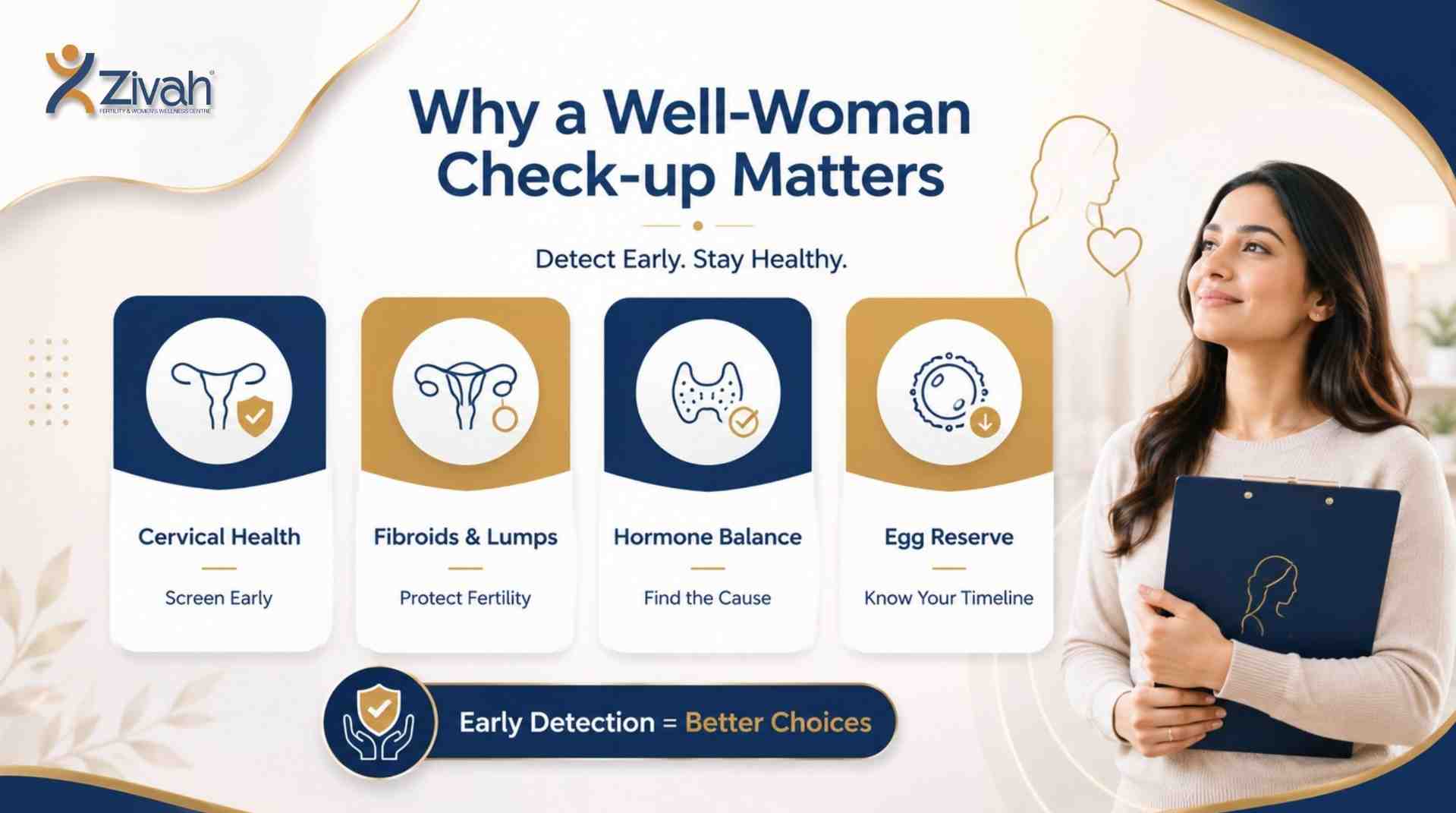
A well-woman check-up is important because most major health problems appear out of the blue. Some common conditions can get worse over time, even if you don't notice:
- Cervical cell changes that lead to cancer if missed.
- Fibroids or lumps that make your periods and ability to have children difficult.
- Tiredness and weight changes can be caused by thyroid or hormone issues.
- A falling egg reserve makes it harder to get pregnant.
When these signs show up, it's harder to get better, and you have fewer options. That changes when women get a preventive health check. These changes are identified early, when they are still easy to address.
How early detection protects your future
For women thinking about pregnancy, early detection carries even more weight. If you find a hormone imbalance or low egg reserve (AMH) at age 30, you have time to make plans. But if you find the same thing at age 38, you might not have time. At Zivah, we look at every finding through the lens of fertility. That's why getting a women's health check-up once a year protects both your health now and your future choices.
The real benefit of getting a regular gynaecological check-up is that it gives you more power and fewer surprises. That safety net is important at any age, but some women need this check more quickly than others.
Who Should Book a Well-Woman Check-up at Zivah?
Every adult woman benefits from a well-woman exam, but what you need shifts with your age. A woman in her twenties and a woman approaching menopause have different needs, so a single-plan approach doesn't work. Most women should start getting health checks in their early 20s and have their screenings updated every 10 years. At Zivah, we don't give everyone the same check. Instead, we customised the check to your life stage.
What does a well-woman check-up include at each age?
Each age brings its own needs. Here's what matters most at every stage.
| Your Stage of Life |
What Deserves Attention |
How Zivah Helps |
|---|---|---|
| In your 20s |
Cycle patterns, contraception, early fertility picture |
Track your baseline and answer early questions |
| In your 30s |
Egg reserve, thyroid, planning pregnancy |
Plan timing and check fertility before it dips |
| In your 40s |
Perimenopause signs, breast health, bone strength |
Guide you through changing hormones with care |
| After 50 |
Menopause support, heart and bone health |
Protect long-term health beyond the fertile years |
A well-woman check-up for women in their 30s leans hard on fertility, while later years turn toward menopause and bone health. But you don't always have to wait for your yearly visit. Sometimes your body shows signs that you should come in sooner.
Signs Your Body May Need a Check-up Sooner
Most of the time, going once a year is enough. But some symptoms mean you shouldn't wait. This isn't because they always mean something bad, but because finding the cause early gives you more control to decrease the problem.
Symptoms you should never wait on
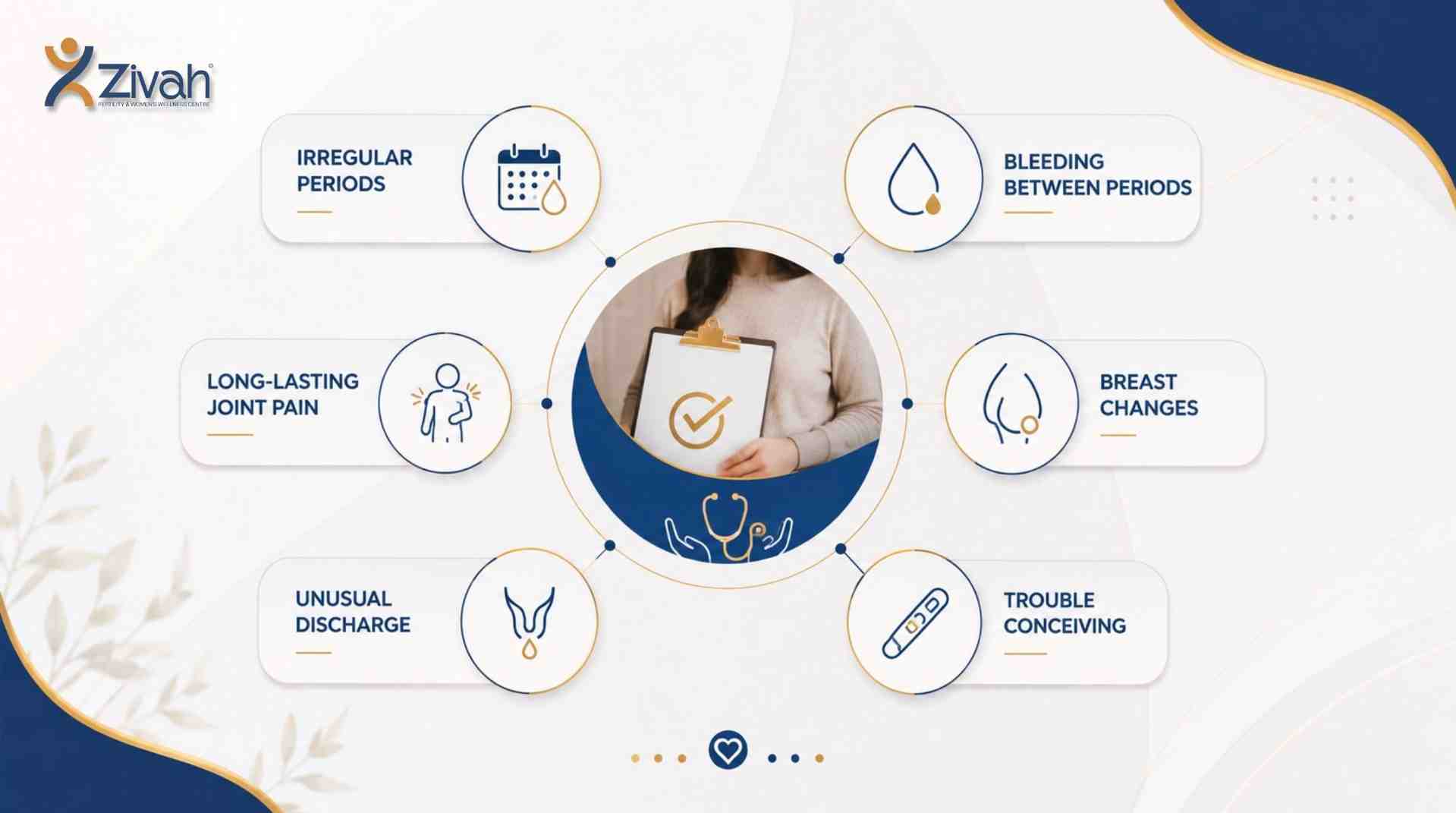
If any of these things happen, you should book your slot as soon as possible:
- Periods that turn heavy, painful, or hard to predict (irregular periods).
- When you bleed between periods or after being intimate.
- Shoulder or hip pain that won't go away.
- One of your breasts has a new lump or change.
- A strong smell, an unusual discharge, or itching.
- Not being able to get pregnant after trying for months.
These are the signs that a woman needs to see a gynaecologist, and they're also the main reasons why most women do see one between visits. Most of them are caused by easy-to-treat problems, and it's much easier to deal with them if you catch them early. This is what your visit will be like, whether you're coming for a regular checkup or because something seems off.
What Happens During a Well-Woman Check-up
Many women feel nervous before a well-woman check-up, but the visit is very smooth, calmer than you might expect. We start by talking with you; you tell us about your periods, your health history, and anything worrying you. Only then do we begin the examination.
After that, you tell us how fast to do the checks. You are told about each step before it happens, so you always know what to expect and why. Nothing is rushed, and you can ask us to pause at any time. This is the whole well-woman check-up procedure in practice: clear, unhurried, and on your terms.
At the end, we sit down and talk through what we found in plain words, not medical jargon. You leave knowing your results and your next step.
What tests are done in a well-woman check-up?
Here's exactly what we run and what each test tells us.
| Test or Screening |
What It Looks At |
How Zivah Helps |
|---|---|---|
| Pelvic examination |
Uterus, ovaries, vaginal health |
Check gently and explain what we find |
| Pap smear (cervical screening) |
Early cell changes in the cervix |
Take the sample and track your results |
| Clinical breast exam |
Lumps or changes in breast tissue |
Examine carefully and refer for a scan if needed |
| Pelvic ultrasound (scan) |
Fibroids, cysts, womb lining |
Scan and show you the picture in plain words |
| Blood and hormone tests |
Anaemia, sugar, thyroid, AMH (egg reserve) |
Run the panel and explain every number |
These are the main tests done in a women's health check-up, though we only run what your age and history call for. And those same tests do more than check for illness. For many women, the body shows how ready it is for pregnancy.
How Zivah Supports Your Fertility and Future Pregnancy
As you know, Zivah is a fertility team first, so your well-woman check-up does something a standard one cannot. It looks at your data as a starting point for getting pregnant, not just a quick look at your health. The same tests that screen for diseases also assess your readiness to have children. We connect the dots for you instead of leaving you to guess.
How do you get your body ready before pregnancy?
If a baby is part of your plans, near or far, this is where a preconception check-up begins. Before you start trying, we look at the things that matter most for a healthy pregnancy:
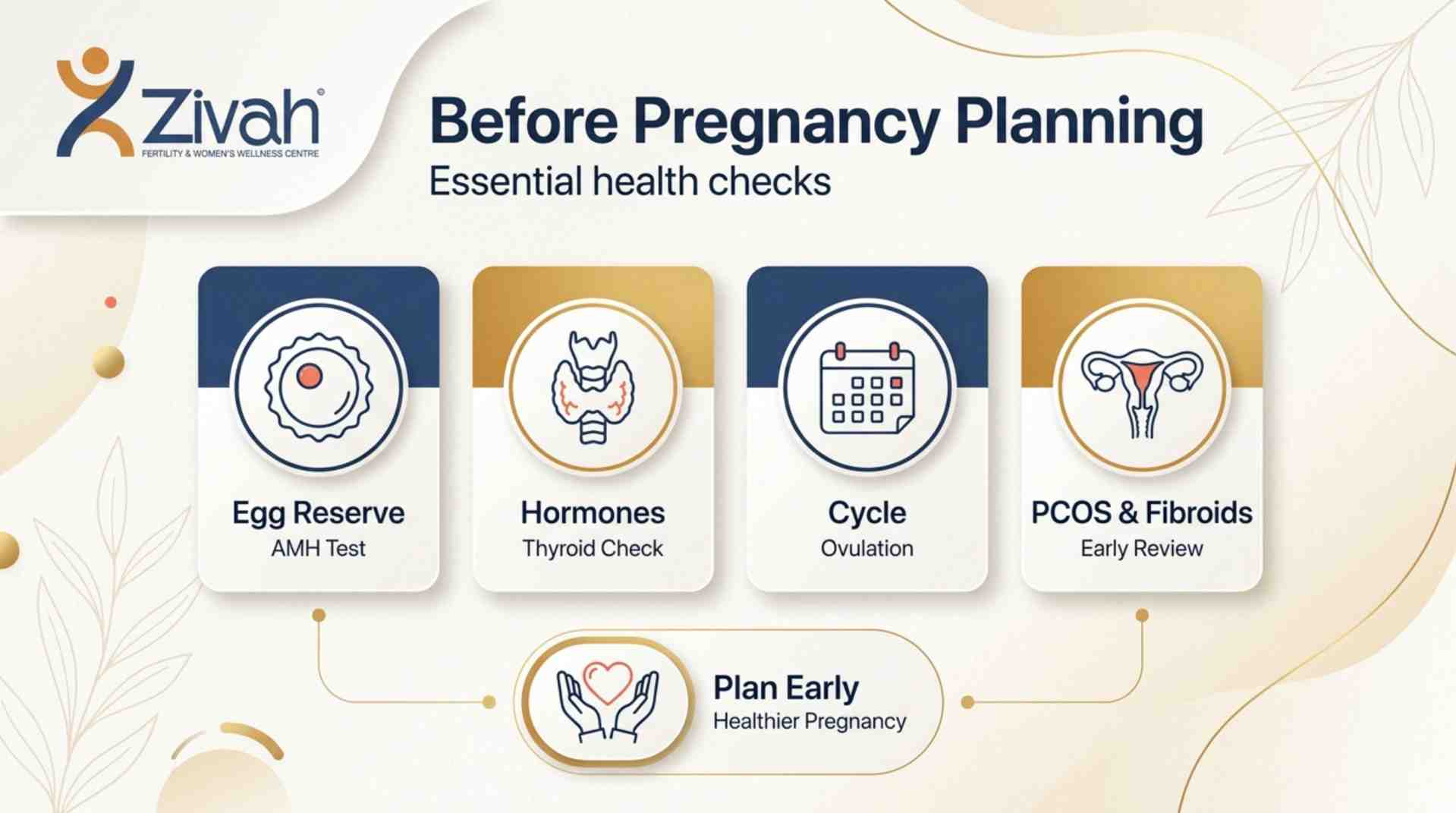
- Egg reserve (AMH) to see how much time you have.
- Thyroid and hormones that shape conception.
- Signs of pregnancy and a healthy cycle.
- Having conditions such as PCOS or fibroids can make conceiving more difficult.
From there, we map out simple steps to take before you try. A pre-pregnancy health check-up like this can smooth the road ahead and reduce surprises later. Even if pregnancy is years away, a well-woman check-up before planning a baby gives you a clear starting point for whenever you feel ready. One visit only helps if you keep it up, though, so how often should you actually come back?
How Often Should You Get a Well-Woman Check-up?
For most women, once a year is enough for a full well-woman check-up. One visit a year keeps your health on track and makes sure nothing is missed in between. But you don't need every test every year. Some checks are needed less often, and your age decides which ones you need.
How often do you need each screening?
A full check is once a year for most women. But each test has its own timing. A Pap smear is often needed only every three years once your results are normal. Other checks follow their own pattern. The table below shows a simple guide for when you should come in sooner.
| Screening |
How Often (General Guide) |
When to Come Sooner |
|---|---|---|
| Full well-woman check-up |
Once a year |
New symptoms or planning pregnancy |
| Pap smear (cervical screening) |
Every 3 years (from age 21) |
Abnormal bleeding or a past abnormal result |
| Clinical breast exam |
Every 1 to 3 years |
A new lump or breast change |
| Pelvic ultrasound (scan) |
As your doctor advises |
Pelvic pain or heavy periods |
| Hormone and fertility tests |
When planning pregnancy or facing cycle issues |
Trouble conceiving or irregular cycles |
This is a guide, not a strict rule. If you notice a new symptom, come in right away, no matter the date. Planning a baby can also bring some tests forward. At Zivah, we keep track of what you need and when you need it, so you don't have to. Knowing how often to come is one thing. Knowing where to go for it matters just as much.
Why Choose Zivah for Your Well-Woman Check-up
Many clinics offer women's health check-ups, but what makes Zivah the right choice is how care is built around you. At every step, you get a team that works on women's health, all of your tests in one place, and written results that you can understand. The best thing about check-ups is that fertility experts read them, which turns a normal visit into a real omen.
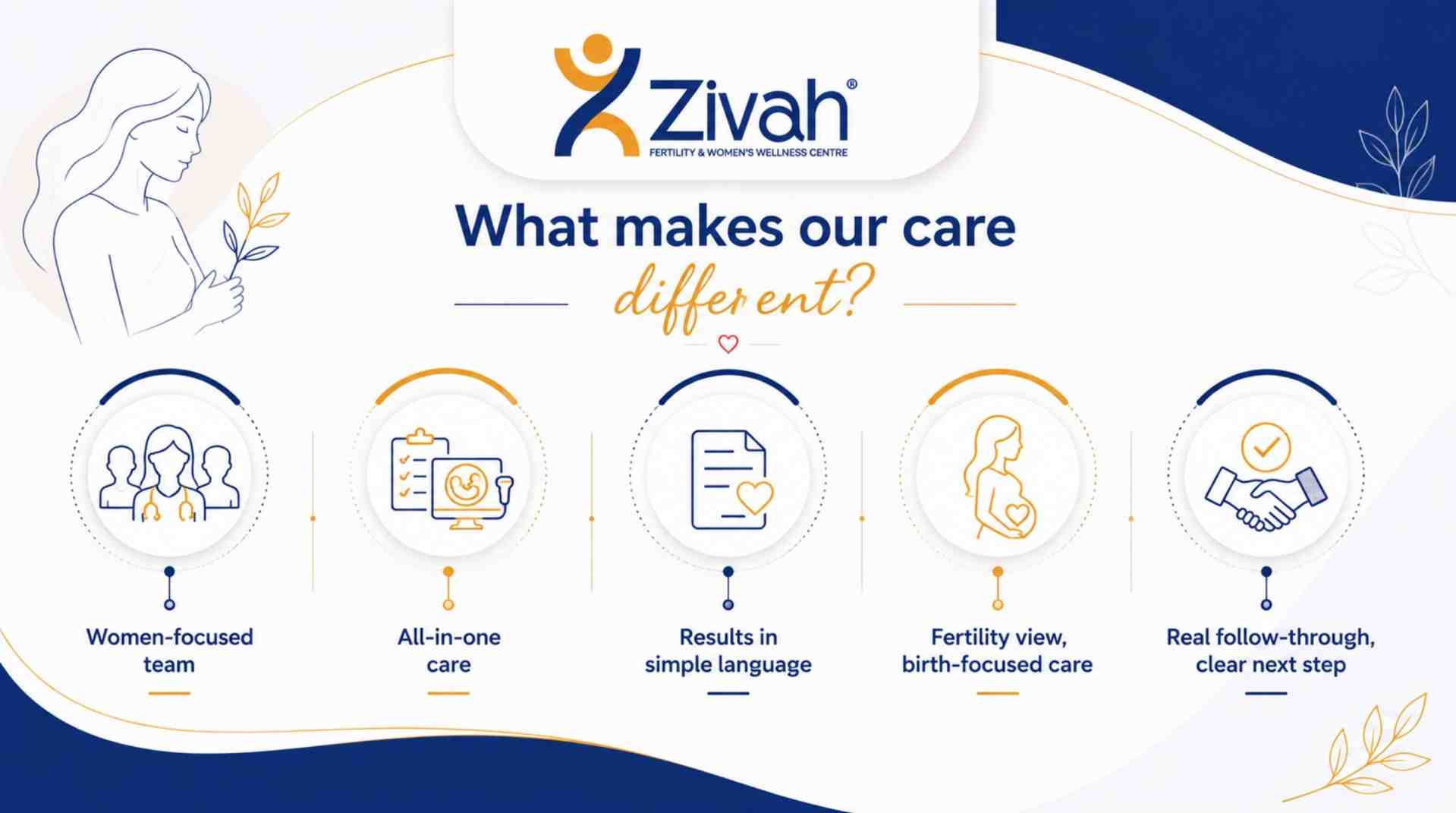
What makes our care different?
Here's what care at Zivah feels like in practice:
- A team that focuses on women and knows the female body at every stage.
- Screenings, scans, and pregnancy checks can all be done in one place.
- Results are written in simple language, so you know what the numbers mean when you leave.
- A fertility view, with care shaped by doctors who plan births every day.
- REAL follow-through, where what was found leads to a clear next step and never a dead end.
If you are wondering where to get a well-woman check-up in India, Zivah brings prevention and fertility care together in one trusted place. From your first visit to your follow-up, you are looked after by people who do this every day. If a few practical questions are still on your mind, here are the ones women ask us most.
Take Charge of Your Health with Zivah
Your health rarely warns you before something goes wrong, which is exactly why a yearly well-woman check-up is worth the small space in your calendar. In one visit, you cover prevention, screening, and a clear read on your fertility, all under one roof and explained in plain words. Whether you are simply staying ahead or starting to plan for a baby, this women's preventive health screening keeps your choices open.
At Zivah, we turn that single appointment into lasting peace of mind. When you are ready to book a well-woman check-up in India, you will be in the hands of those who read today's results with your tomorrow in mind.
Book your well-woman check-up at Zivah today, and give your health the head start it deserves.