
At Zivah Fertility, we care for you through every season of life, from your very first period to the years well beyond menopause. Your body changes at each stage, and the care it needs changes too. That is why complete women's health care should never feel one-size-fits-all.
Whether you are a teenager puzzled by an irregular cycle, a young woman planning a family, or someone navigating mid-life change, you deserve a place that already understands where you are. As a women's health clinic serving all ages, Zivah brings your check-ups, scans, screenings, and treatment under one warm roof, so you never have to explain your story twice.
Because your needs look different at twenty than at fifty, it helps to understand how women's health shifts with age.
Why Women's Health Needs Change at Every Stage of Life
A woman's health changes all the time. Hormones change it over time as they rise, fall, and rise again.
How does a woman's health change with age? Our bodies change all the time. When we are teens, we need one type of care, but by middle age, we need something else. This is why stage-based care for women's health is important; it meets you where you are.
How does a woman's health change from her teens to menopause?
There are four general stages of your health, each with its own needs. First periods occur in the teen years, and cycles slowly find their rhythm. The reproductive years are about fertility and cycle health.
Nearing the forties, hormones shift, and perimenopause brings new changes. After menopause, the quiet concerns move toward bone and heart health. Understanding these women's health needs by age is how Zivah supports each one, gently and at the right time.
| Life Stage |
What Your Body Is Going Through |
How Zivah Cares for You |
|---|---|---|
| Teens & First Periods (10–18) |
Irregular cycles, cramps, and early hormonal changes |
We explain cycle health, check concerns, and guide families |
| Reproductive Years (18–35) |
Fertility, contraception, and cycle health |
We support fertility, pregnancy planning, and menstrual concerns |
| Preconception & Pregnancy (25–40) |
Trying to conceive and pregnancy care |
We provide testing, scans, and guidance before and during pregnancy |
| Perimenopause (40–50) |
Cycle changes, mood shifts, and hot flushes |
We manage symptoms and protect long-term health |
| Menopause & Beyond (50+) |
Bone loss, heart risks, and vaginal dryness |
We support bone, heart, and overall health for healthy ageing |
As your body moves through these stages, some concerns surface more than others, and these are the ones we help you manage most.
Conditions We Treat Across Every Age Group
Some worries stay with a woman quietly over the years, while others suddenly appear and need help right away. No matter where you are on that path, you should never feel like you're by yourself.
Which women's health problems can Zivah treat at any age?
Zivah helps women with all of their health problems, from their first painful period as teenagers to menopause and beyond. We can help you with all stages of your care, whether you need help with fertility, treatment for a menstrual problem, or treatment for PMS or PMOS.
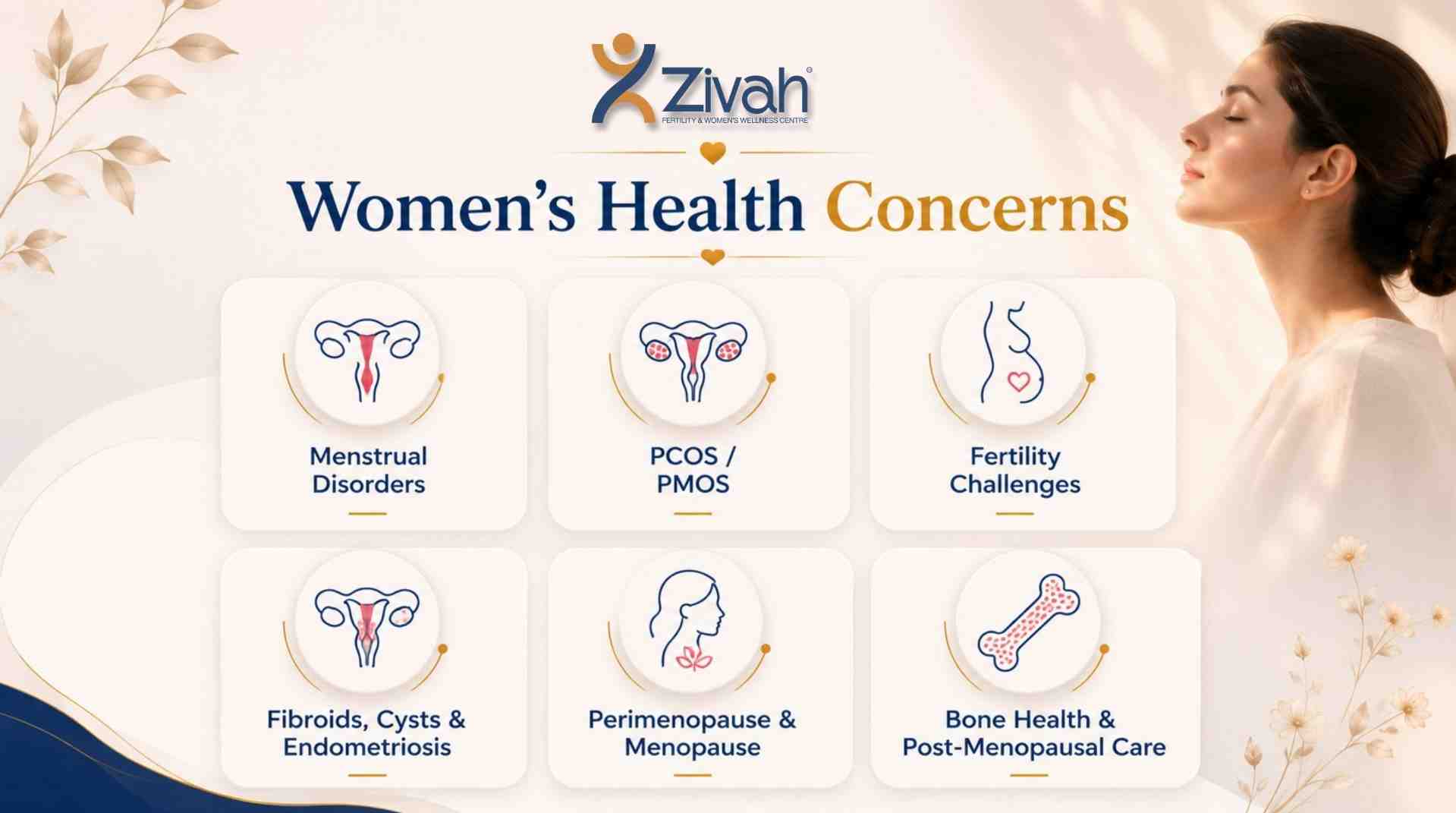
Do you have to be trying to get pregnant to visit Zivah? Not at all. Women come to us at every age and for every reason: a painful cycle, a recent diagnosis, or simply a check-up that brings peace of mind. Here are the concerns we help women with most often:
- Menstrual disorders (irregular, heavy, or painful cycles).
- PMOS (Polyendocrine Metabolic Ovarian Syndrome), also known as PCOS.
- Fertility difficulties and trouble conceiving.
- Fibroids, ovarian cysts, and endometriosis.
- Perimenopause and menopause concerns.
- Bone thinning (osteoporosis) and post-menopausal care.
You may recognise your own story in one of these, or sense that something feels off. Either way, knowing when to seek care is where real peace of mind begins.
Signs You Should See a Gynaecologist
Often, your body tells you what's wrong before you can say it. If your period changes, you feel a new pain, or something doesn't feel like you, you should pay attention and not ignore it.
What symptoms mean you should not wait to see a doctor?
Some symptoms are your body's way of telling you it needs help right away. Knowing when to see a gynaecologist can save you weeks of stress. There are a few health warning signs that women should check right away:
- Pelvic pain that doesn't go away or keeps coming back.
- Spots or bleeding that don't make sense between periods.
- Heavy cramps that get in the way of your day.
- Cycles that all of a sudden become heavier, longer, or less regular.
- Strange discharge, smell, or itching that won't go away.
A lot of the time, women worry before they book that they are overdoing it. Are these symptoms something you should not ignore, or are they nothing? None of these really means that something is wrong; most of the time, the problem is simple and easy to fix. But they should be checked out calmly because things are always better caught early than left to wait. Just a careful talk with someone you know will help you figure out what's going on.
How Zivah Diagnoses Women's Health Concerns
To give good care, you must first understand. We at Zivah look at the whole picture before making any suggestions. This is because the right diagnosis turns worry into a clear, achievable plan.
What tests does Zivah use to find the cause of your symptoms?
We start by listening to your history, then use gentle, well-chosen tests to understand what your body is telling us. Depending on your age and concern, gynaecological diagnosis might mean a simple blood test, a scan, or a screening, never more than you need. Each well-woman screening test we recommend has a clear purpose, and we always explain why before we begin.
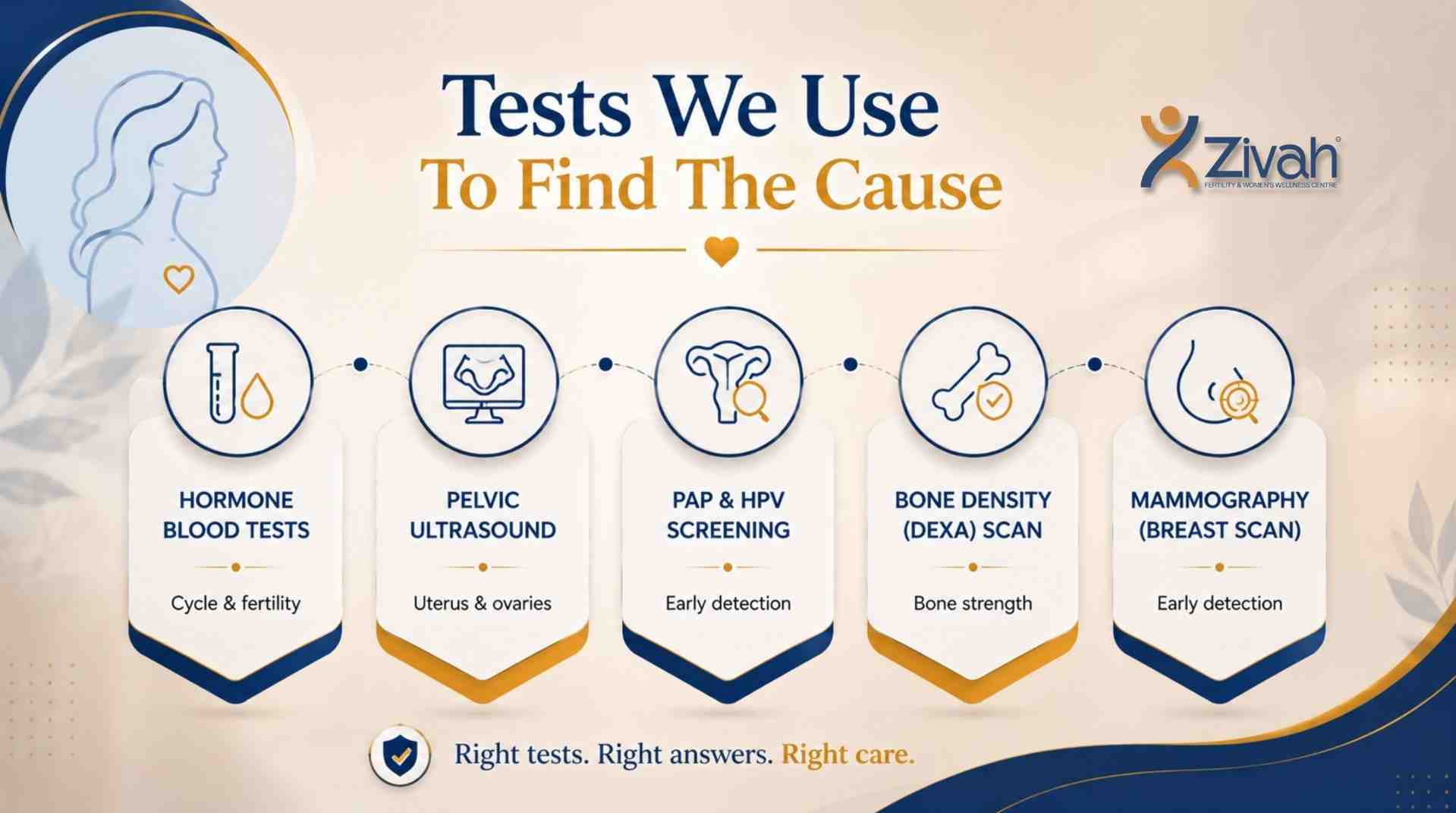
| What We Check |
Why It Matters |
How Zivah Helps You |
|---|---|---|
| Hormone Blood Tests |
Reveal cycle and fertility concerns |
We test hormone levels and explain your results clearly |
| Pelvic Ultrasound (Scan) |
Checks the uterus and ovaries |
We identify possible causes of your symptoms |
| Pap & HPV Screening |
Detects cervical changes early |
We screen and guide you on the next steps |
| Bone Density (DEXA) Scan |
Measures bone strength |
We assess bone health and plan preventive care |
| Mammography (Breast Scan) |
Detects breast changes early |
We provide age- and risk-appropriate breast screening |
Is it worth coming in even if nothing feels seriously wrong? Really, most of the time, yes. Many worries are easier to solve early on. After we figure out what's going on, we'll provide care tailored to your needs.
How Zivah Treats and Supports You Through Every Stage
No two women are quite the same, and neither is their care. Once we understand what your body needs, we shape a plan around you - never a one-size-fits-all fix.
How does Zivah plan treatment for each woman's needs?
We tailor your care to your needs, your stage of life, and what matters most to you. Whether that's help with hormones and fertility, a steady cycle, or the menopause, we start with what you're going through and lead you to the gentlest way that works for you. This is how we show care for the things that women worry about the most:
| Your Concern |
What You May Notice |
How Zivah Helps You |
|---|---|---|
| Irregular or Painful Periods |
Missed cycles, heavy bleeding, or cramps |
We assess your cycle and provide suitable treatment |
| PCOS |
Weight changes, acne, and irregular cycles |
We create personalised lifestyle, hormone, and fertility plans |
| Trouble Conceiving |
Trying for pregnancy without success |
We assess the cause and guide your fertility journey |
| Menopause Symptoms |
Hot flushes, dryness, and mood changes |
We manage symptoms and support bone and heart health |
| Preventive Well-Woman Care |
No symptoms, but you want to stay proactive |
We provide appropriate screenings to detect health risks early |
Whatever stage you are in, staying one step ahead is always the kindest care of all, which is why prevention matters just as much as treatment.
Preventive Care Every Woman Should Not Skip
The best care is often the kind that keeps trouble away before it ever begins. A little attention now, at the right age, can save you far greater worry later.
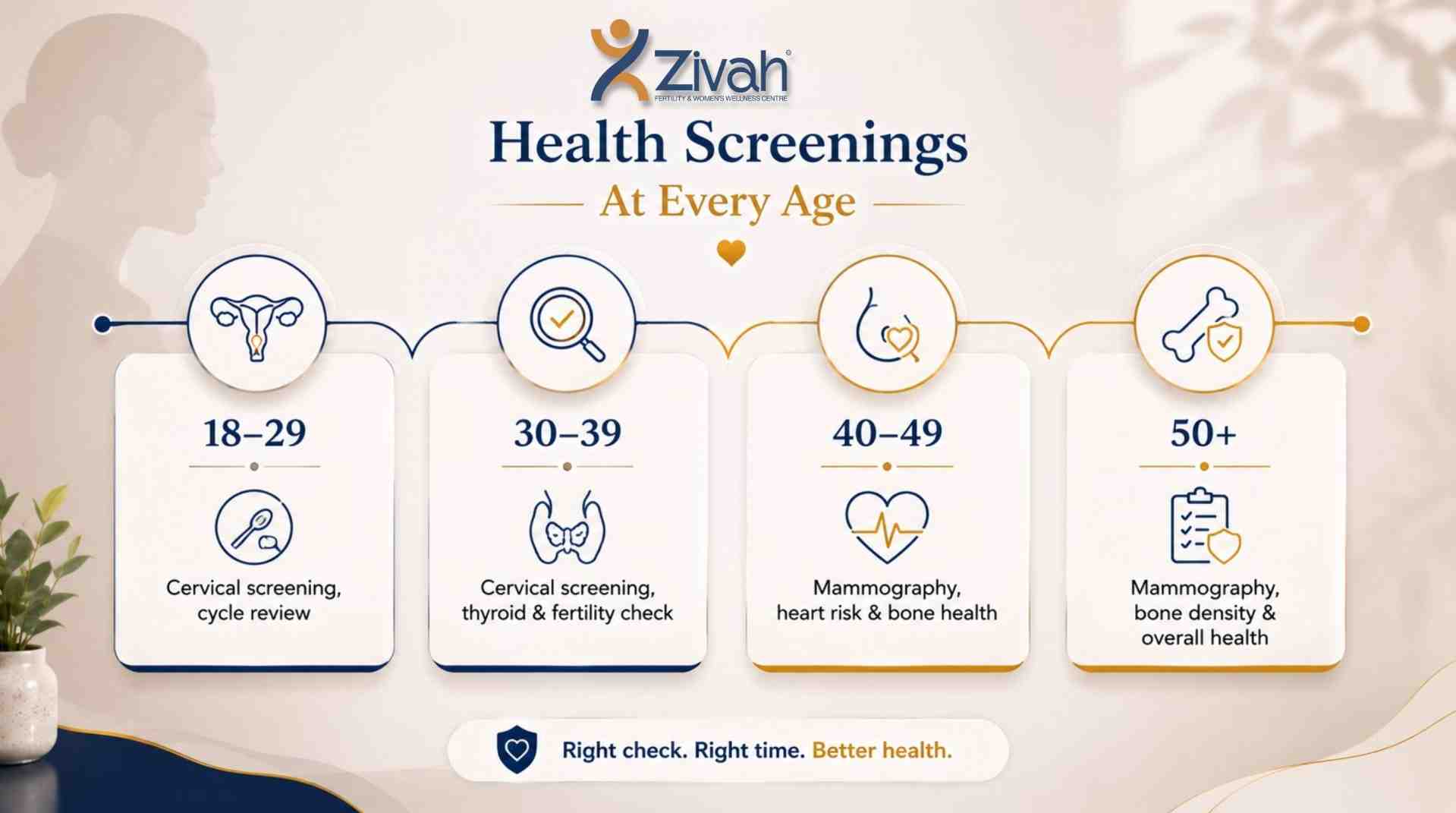
Which health screenings should you have at each age?
The right check at the right time changes as you move through life. While health bodies generally recommend routine cervical screening from your late twenties, specialists often suggest adding a bone-density check as hormone levels shift near menopause, and mammography from around the forties. Following a simple well-woman check-up schedule means you are never left guessing about women's health screenings by age; you know what is worth doing and when.
| Age Band |
Screening to Consider |
Why Now |
|---|---|---|
| 18–29 |
Cervical screening (as recommended), cycle review |
Address menstrual concerns and support reproductive health |
| 30–39 |
Cervical screening, thyroid and fertility assessment when indicated |
Support pregnancy planning and identify health concerns |
| 40–49 |
Mammography, cardiovascular risk assessment, bone health review when indicated |
Detect midlife health changes and risks early |
| 50+ |
Mammography, bone density (DEXA), heart and overall health review |
Reduce risks linked to ageing and menopause |
Do you really need screenings if you feel perfectly well? More than ever, in fact, the quietest years are often the best time to stay ahead. And when you are ready to begin, we make that first step simple.
Who Should Book Women's Health Care at Zivah?
Some visits are caused by worry, but many of the most important ones are the start of a new year or stage of life that needs some extra care.
Who should see a women's health doctor? Any woman standing at a turning point in her life, long before anything feels wrong. You may find it is the right time to book if you are:
- A teenager reaching her first cycle and learning what is normal for her body.
- A newly married woman or couple planning a pre-conception checklist before starting a family.
- Someone stepping into mid-life and noticing that things are beginning to change.
- A woman following up after a recent diagnosis, wanting steady guidance in the future.
- Simply due for a check-up, and ready to feel confident about your health again.
One thing women often ask is whether it is too early to come in. Is there a right age to start women's health care? The truth is, there is no wrong time; the earlier you begin, the better your body will be understood over the years. Wherever you are on that path, Zivah is here to walk it with you, and booking your first consultation is a quiet act of self-care.
Why Choose Zivah Fertility for Women's Care
Picking a place to trust with your health is a big decision, and you should go with one that sees the whole person. Zivah is a trusted gynaecology centre because of several things that work together in the background:

- Care under one roof: your consultations, scans, screenings, and treatment come together in one place, so your story stays in one caring set of hands.
- Every age, every stage: from a girl's first period to the years well beyond menopause, our care grows with you.
- Diagnosis and treatment at the same time: you get answers and the care that follows without having to go anywhere else.
- A friendly, experienced staff: you are greeted with the same level of warmth, whether you are just starting out or returning after years away.
This is what complete women's care under one roof truly means, not just skilled hands, but a place that makes you feel looked after. Whenever you feel ready, a single conversation is all it takes to begin, and the answers to a few common questions are just below.
Your Health, Cared For at Every Age
As a woman, you go through many seasons, and each one needs care that feels warm, slow, and truly yours. Zivah is here to walk with you at every age and stage, whether this is your first time in women's health or you've been away for years.
You never have to wait for something to feel wrong before you seek care. Sometimes the kindest thing you can do for yourself is to be seen, understood, and reassured.
Women's care for all ages: it is always better to be early than late. Your health is worth caring for at every stage. Whenever you feel ready, book your Women's Care for All Ages consultation; that gentle first conversation is always here waiting for you.