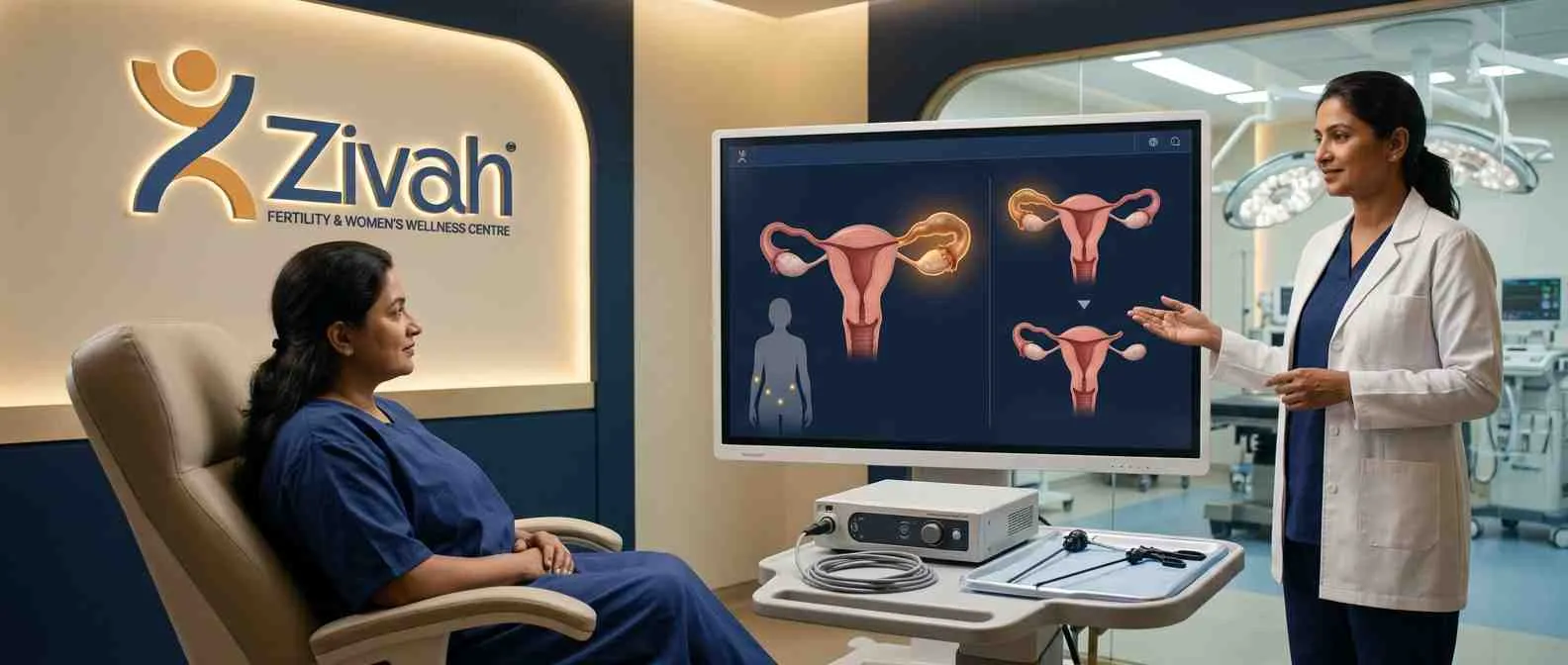
A laparoscopic salpingectomy is keyhole surgery to remove one or both fallopian tubes. Sometimes called fallopian tube removal. Instead of one big cut, it is done through a few little cuts. That makes it a minimally invasive salpingectomy procedure. It has less discomfort, small scars, and quicker recovery than open surgery.
This page explains everything you’ll want to know before you make your decision, including why the surgery is done, the many types of surgery, how the process works, what recovering looks like, what influences the cost, and the question most women ask first: what it means for your fertility.
That's the bit that surprises everybody. Removal of the tubes doesn’t necessarily close the door on pregnancy. Depending on the type of salpingectomy surgery and your goals, there is typically still a clear path forward.
At Zivah, tube removal is done with your future in mind, by our reproductive and maternal-fetal specialists, from emergency care to a whole IVF pathway, all under one roof.
What Is a Laparoscopic Salpingectomy?
The name looks intimidating, but it's simpler than it sounds. Break it in two: "salping" means fallopian tube, and "-ectomy" means removal. Thus, the salpingectomy definition is simple: surgery to remove a fallopian tube.
If you want to find the tube removal procedure name, here is the name of the tube removal surgery. The "laparoscopic" part describes how it is performed. The surgeon makes a few tiny keyhole cuts instead of one huge one, using a camera and slim equipment, much softer than open surgery.
It is done under general anaesthesia, so you are unconscious throughout, and many women go home the same day. That's the short definition of salpingectomy most patients are looking for.
Salpingectomy vs Salpingo-Oophorectomy vs Tubal Ligation
These three are often mistaken; therefore, the difference is:
- Salpingectomy: removes only the tube, leaving the ovary.
- Salpingo-oophorectomy: The ovary and the tube are removed together.
- Tubal ligation ("tubes tied"): Nothing is removed; the tube is simply blocked or sealed.
So a salpingectomy vs tubal ligation comes down to one thing: removal versus interruption.
Types of Salpingectomy Explained
| Type |
What's Removed |
Common Reason |
|---|---|---|
| Unilateral salpingectomy |
One tube (left or right) |
Ectopic pregnancy or one-sided tube damage |
| Bilateral salpingectomy (bisalp) |
Both tubes |
Permanent contraception or cancer risk-reduction |
| Partial salpingectomy |
Part of one tube |
Localised damage or during tubal ligation |
| Total salpingectomy |
An entire tube |
Severe disease, infection, or blockage |
| Salpingo-oophorectomy |
Tube(s) + ovary |
Ovarian disease or higher cancer risk |
Why Is Laparoscopic Salpingectomy Done?
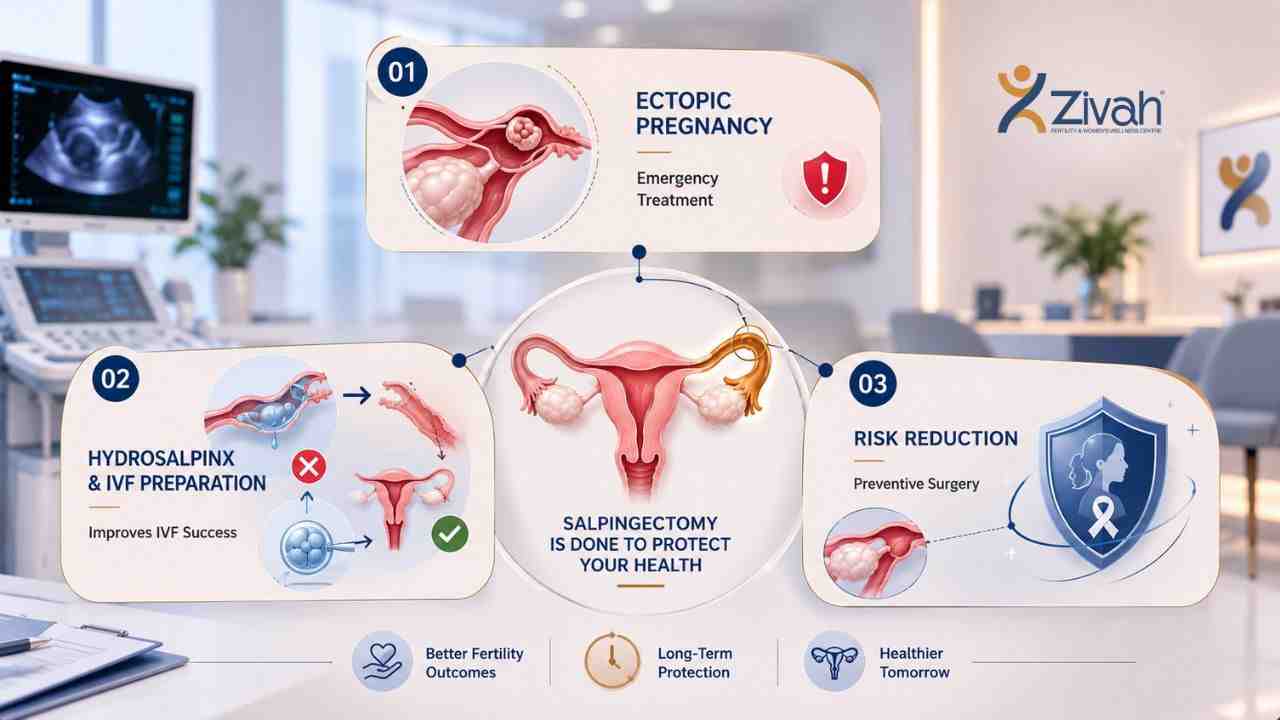
There is not one reason to remove a fallopian tube; there are four, and they are very diverse. Some are unexpected cases. Others worry about the preservation or restoration of fertility. Some are selected to reduce the cancer risk, and some women select it as a permanent method of birth control.
To understand why salpingectomy is done, you need to know which of the above applies to you. These four signs account for practically every reason why the surgery is recommended.
1. Salpingectomy for Ectopic Pregnancy
The most common reason for surgery is ectopic pregnancy, in which a fertilised egg implants in the tube rather than the uterus. If the tube ruptures, it can cause major internal bleeding and may require emergency salpingectomy to stop the ectopic pregnancy.
One essential note: If you are Rh-negative, you will need an Anti-D shot within 72 hours of surgery to protect any future pregnancies.
2. Tubal Disease, Hydrosalpinx & IVF Preparation
A tube can get plugged and fill with fluid, a condition known as hydrosalpinx. This can work quietly against fertility. Here’s why it matters: the fluid that gets stuck is harmful to the embryos and can flow back into the uterus, damaging a new one that’s been transferred in via IVF.
Removing the diseased tube eliminates this reflux. Studies show that a salpingectomy before IVF can increase your odds of successful implantation by 2x. You may read more about this in our Fertility and IVF services.
3. Risk-Reducing & Opportunistic Salpingectomy
Since many ovarian cancers really start in the fallopian tubes, eliminating them can dramatically reduce that risk, studies show by about 80% for high-risk women.
This is why a prophylactic salpingectomy is sometimes recommended and why tubes are being increasingly removed during other pelvic surgery such as a hysterectomy, as a preventive measure.
Who Is a Candidate for Laparoscopic Salpingectomy?
The good news is that the keyhole method suits most women. If you’re wondering “am I a candidate for salpingectomy?” the answer generally relies on your overall health and the purpose of the surgery.
Another typical reason to choose it is permanent birth control. A bilateral salpingectomy (bisalp) is an increasingly common choice for women seeking contraception, and it is a good choice because it also reduces the risk of ovarian cancer.
That being said, part of appropriate treatment is identifying who should not have laparoscopic salpingectomy by the keyhole technique. Other potential safer options include severe pelvic infection or scarring, a ruptured ectopic pregnancy with significant bleeding, severe obesity, bleeding problems, or active infection.
When Open Surgery Is Recommended Instead
Sometimes, open surgery, called a laparotomy, is simply the superior decision, and that’s not a failure.Open salpingectomy, in an emergency such as a ruptured ectopic or where extensive scar tissue obscures the vision through the keyhole, offers fuller and faster access to the surgeon. It can be the safer, sometimes life-saving choice. Here is a comparison of the most asked things by patients between the two approaches.
Laparoscopic vs Open Salpingectomy: A Side-by-Side Comparison
| Feature |
Laparoscopic |
Open (Laparotomy) |
|---|---|---|
| Incision size |
A few micro-incisions (5–10 mm) |
One larger cut (10–15 cm) |
| Hospital stay |
Same day or one night |
One to two days |
| Recovery time |
One to two weeks |
Four to six weeks |
| Scarring |
Minimal, fades over months |
More noticeable |
| Pain level |
Generally mild |
More significant |
| Typical suitability |
Most planned tube removals |
Complex or high-bleeding cases |
| Emergency use |
Suitable for many ectopics |
Preferred for ruptured, unstable cases |
Tests and Imaging Before Salpingectomy In Zivah
The first thing is to know exactly what is going on before any tube is taken out. Salpingectomy diagnosis is definite, which determines the entire plan; hence, a few key tests always occur first. The key ones being:
- Pelvic ultrasound – the ultrasound performed before removal of the fallopian tube will show either an ectopic pregnancy or a tube filled with fluid (hydrosalpinx).
- Hysterosalpingogram (HSG) – an X-ray dye test to check for a blocked tube.
- Beta-hCG blood test – this checks the levels of the pregnancy hormone to confirm an ectopic pregnancy.
- Routine bloods – a blood count, a clotting check, and a blood-type screen (essential, since Rh-negative people need particular care).
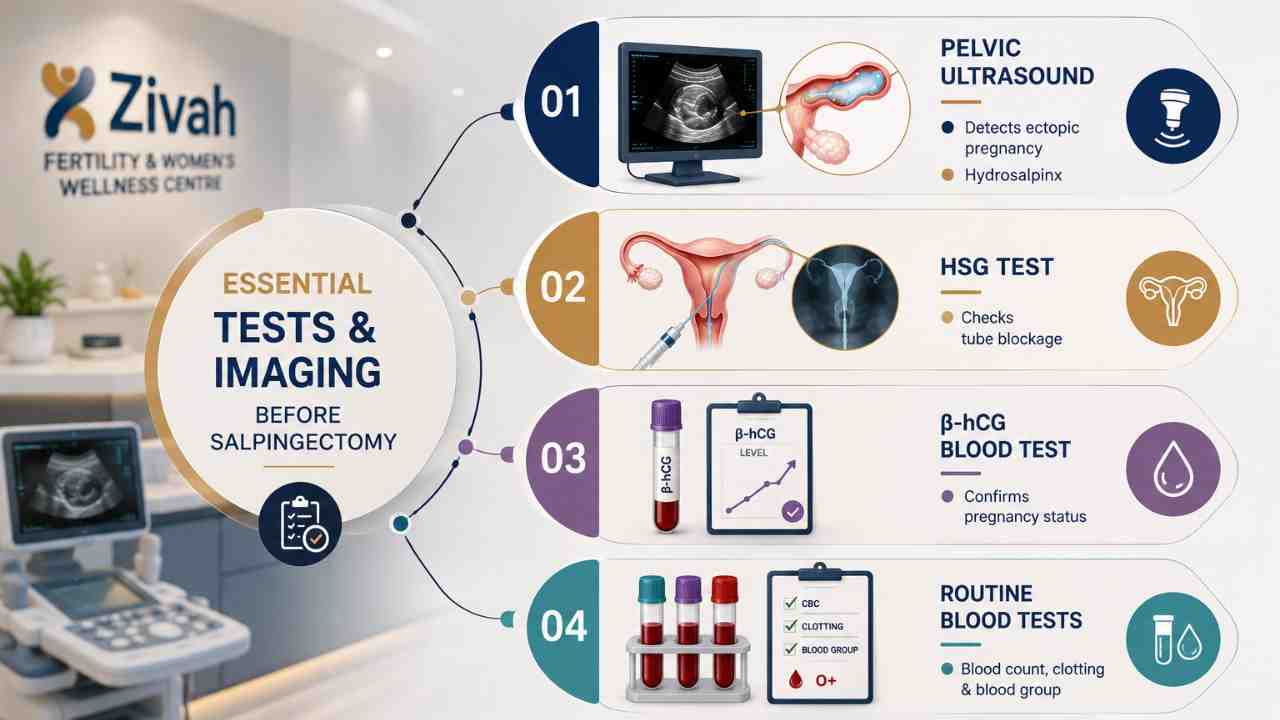
At Zivah, these tests before a salpingectomy are part of our broader pelvic ultrasound imaging and Doppler studies, giving your surgeon the whole picture beforehand.
Confirming an Ectopic Pregnancy Before Surgery
If ectopic is suspected, an ultrasound for ectopic pregnancy and repeat beta-hCG levels confirm it, so surgery is planned with assurance, not speculation. All diagnostic imaging of the Pelvis at Zivah is done in perfect adherence to the PC&PNDT Act.
How to Prepare for Laparoscopic Salpingectomy In Zivah
A smooth surgery starts far before the day. Knowing how to prepare for salpingectomy takes away most of the nerves, and the steps are easy to follow.It starts with a consultation, during which you will discuss the treatment, ask your questions, and sign the consent form.
After that, your team evaluates your test findings and any regular medicines you're on; some, like blood thinners, may need to be stopped in advance.
Fasting and Bowel Preparation
As the day approaches, you will be given instructions on fasting and, in some instances, a bowel prep the night before. The last one is practical. You won't be able to drive after the anaesthetic, so arrange for a lift home. People underestimate the power of fasting.
Correct fasting before tube removal is important for anaesthesia safety. You will normally be told to cease eating and drinking for about 8 hours before operation.
Some women will be requested to undergo a bowel prep the night before their laparoscopy. This fills the intestine, allowing the surgeon to see better. And don't forget to book that lift home.
Pre-Operative Preparation Checklist
| Step |
What to Do |
Why It Matters |
|---|---|---|
| Consultation & consent |
Discuss the procedure and sign consent |
Ensures you understand the surgery and agree to it |
| Blood tests |
Complete blood count and clotting profile |
Confirms your body can handle surgery and clot normally |
| Imaging review |
Surgeon reviews your ultrasound and scans |
Plans the operation around your specific cyst |
| Medication review |
Flag all medicines; pause blood thinners if advised |
Reduces bleeding risk during surgery |
| Fasting |
No food or drink for 6–8 hours before |
Keeps anaesthesia safe and lowers complication risk |
| Transport arrangement |
Arrange a lift home |
You can't drive after anaesthesia |
How Is Laparoscopic Salpingectomy Done?
Want to know what really goes on in the usual procedure? Knowing the stages ahead of time helps the whole endeavour seem much less difficult.
The laparoscopic salpingectomy goes in a clear, meticulous order: no rushing; every step is there for a reason. This is what a laparoscopic salpingectomy looks like, from the moment you’re asleep until the final stitch is in place:
- Anaesthesia - An IV line is placed, and general anaesthesia is provided so you are sleepy and pain-free the entire time.
- Catheterisation - A tiny urine catheter is inserted to keep the bladder empty during the surgery.
- Tiny openings - The surgeon makes a few small cuts, just 5–10 mm each, near your belly button and lower tummy.
- Making room - A little carbon-dioxide gas gently lifts the tummy wall, creating space and a clear view inside.
- The camera goes in - A slim camera (the laparoscope) shows your tubes on a screen in close, magnified detail.
- Removing the tube - The tube is sealed at the uterine end, carefully detached, and lifted out through a specimen bag.
- Conclusion - The bleeding was stopped, the gas released, and the little cuts closed.
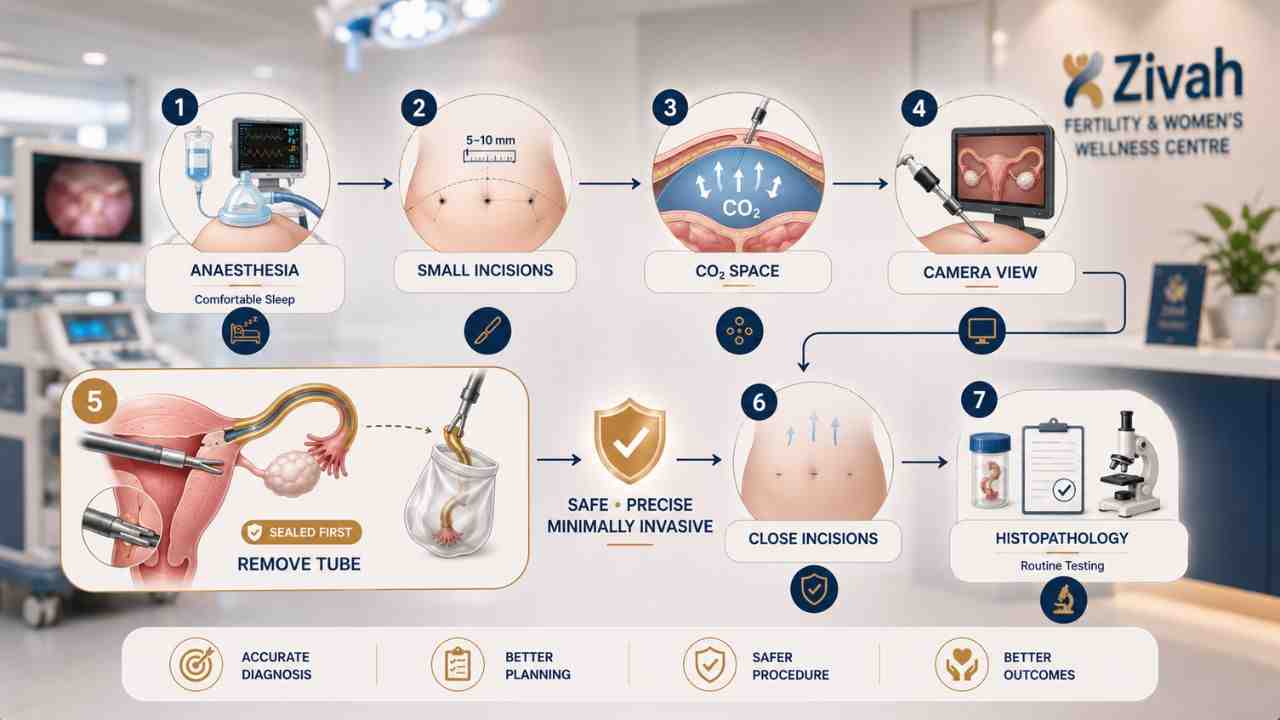
All excised tubes are regularly sent for histopathology testing to exclude any occult abnormalities. Removing a single tube is faster than removing both tubes.
Anaesthesia and Incisions
The cuts or salpingectomy incision sites are really tiny, only about 5-10 mm each. You are unconscious under anaesthetic. You just need a few minor keyhole cuts and a bit of gas for laparoscopic tube removal. That's the whole reason recovery feels so much easier than open surgery.
Removing the Fallopian Tube
This is the major section. Then the surgeon goes through the standard processes of a laparoscopic salpingectomy, sealing the tube close to the womb, carefully separating it and sliding it out in a little pouch. And the way you gently get the tube out keeps all the stuff around it safe.
What Happens If Surgery Can't Be Done Laparoscopically
Once the action starts, the keyhole pathway isn't always the best option, often because of scar tissue or bleeding. If so, the surgeon may need to switch to open surgery. It's a planned conversion to open surgery, and it's about keeping you safe, not a sign of failure.
Recovery After Laparoscopic Salpingectomy
The good thing about keyhole surgery is how quickly you recover. Most women find their recovery from salpingectomy easier than they thought; small wounds heal faster than one major one.
Expect to be a bit sore for a day or two, and maybe an odd shoulder ache. That is merely remaining gas, and it will clear out on its own. The average recovery time for laparoscopic salpingectomy is one to two weeks for everyday living and three to four weeks for a more complete recovery.
Shower after the day. Do not take a bath till wounds are healed. The scars from the salpingectomy are small and diminish over the months. Call your clinic if you see any of the following:
- Feeling sick or fever
- Bloody bleeding
- Severe or worsening pain
- Draining of a wound Painful urination
First 48 Hours After Laparoscopic Salpingectomy: Rest, but don’t be in bed; mild exercise will help you heal and reduce the chance of clotting. Take pain relief as indicated and sip fluids.
Periods, Hormones & Ovulation After Tube Removal
Here is the comforting truth that many women want to hear. Your ovaries are untouched, thus hormones remain precisely the same. Salpingectomy does not cause menopause, and your menstruation after fallopian tube removal is normal. And you do still ovulate, the egg just gets reabsorbed. For a couple of weeks, avoid hard lifting and intercourse as you heal.
Recovery Timeline After Fallopian Tube Removal
| Time After Surgery |
What to Expect |
Activity Guidance |
|---|---|---|
| First 24 hours |
Soreness, drowsiness, possible shoulder ache |
Rest, sip fluids, gentle movement |
| Days 2–3 |
Discomfort easing, more energy |
Short walks; avoid strain |
| Days 4–7 |
Feeling noticeably better |
Light work and daily activities |
| Weeks 2–4 |
Near-full recovery |
Gradually resume exercise and normal routine |
Risks and Side Effects of Laparoscopic Salpingectomy
There are obvious benefits and a few concerns to know about with any operation. When you weigh both, you feel good about your decision.
Benefits of Minimally Invasive Tube Removal
Because of the benefits, salpingectomy is the recommended choice. This is a minimally invasive salpingectomy, which means less discomfort, fewer scars, a short hospital stay, quicker return to normal life and fewer overall complications than open surgery.
Possible Risks and Complications of Laparoscopic Salpingectomy
Salpingectomy risks are rare; however, it is important to be honest. The most common are mild bleeding or infections. Rare risks include harm to neighbouring organs, such as the colon or bladder, blood clots, the need to convert to open surgery, or a hernia at the site of incision.
Bilateral salpingectomy side effects: no change in hormones, no menopause, because the ovaries are unaffected. The only real effect is the loss of natural fertility, which we treat next.
Salpingectomy and Fertility: Can You Get Pregnant After Tube Removal?
This question is the one most women want answered first, and the good news is reassuring. Can you get pregnant after salpingectomy? Yes, most of the time.
Depends on how many tubes they took out. Even if one tube is removed, a natural pregnancy is still highly possible; the remaining tube can still transfer an egg to the uterus as normal. If both tubes are taken out, there’s no natural conception feasible, but that doesn’t close the door. IVF bypasses the tubes altogether.
The eggs are harvested, fertilised in a lab, and the embryo is implanted straight into your uterus. So pregnancy without fallopian tubes is extremely achievable. In fact, if a sick tube is removed, IVF success can improve, since that dangerous fluid is no longer there to interfere.
 Pregnancy After Unilateral vs Bilateral Salpingectomy
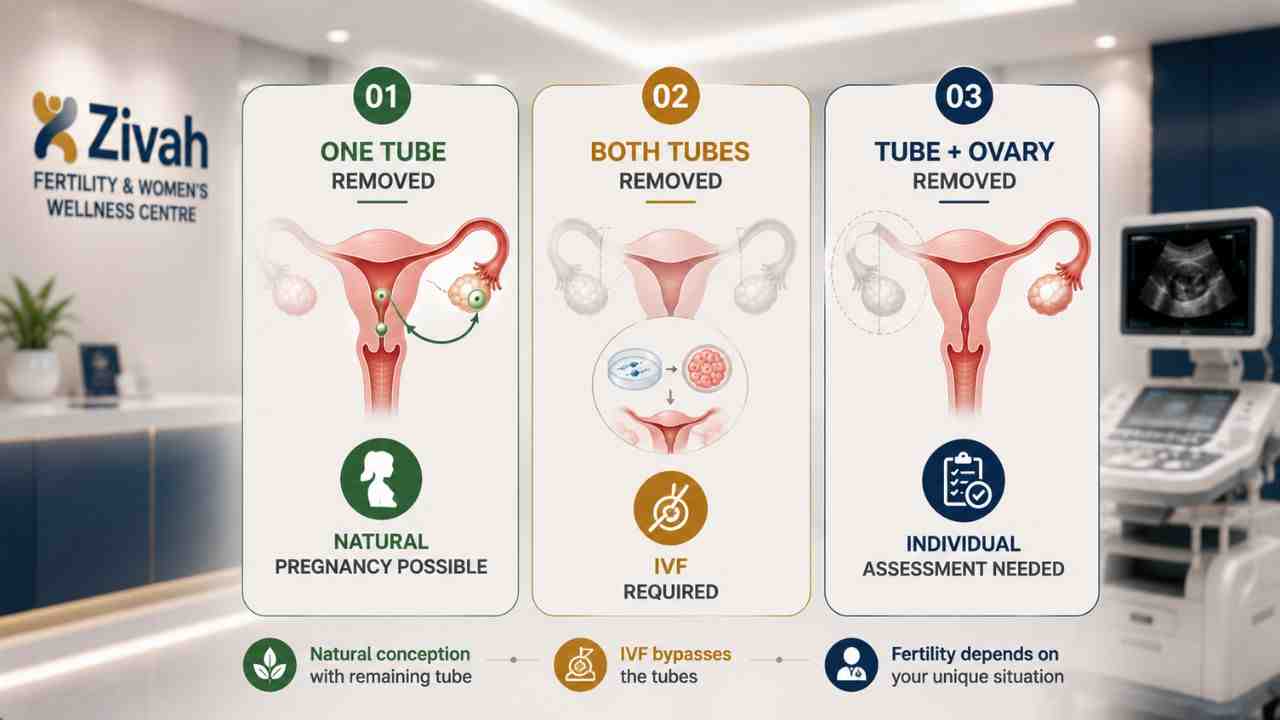 Pregnancy After Unilateral vs Bilateral Salpingectomy
So, if your tubes are cut, can you get pregnant? You can still get pregnant naturally with a unilateral salpingectomy (one tube). Both tubes gone = no natural conception, but IVF to the rescue to make pregnancy viable in another way.
IVF After Fallopian Tube Removal
If both tubes are removed, the simplest way to get pregnant after salpingectomy is IVF. All done outside the tubes; thus, the tubes are not needed. Zivah’s Fertility Services and IVF in-house guides you through each phase.
Pregnancy Options After Salpingectomy
| Type of Surgery |
Natural Conception |
Assisted Options |
|---|---|---|
| Unilateral (one tube) |
Still possible with the remaining tube |
IVF if needed |
| Bilateral (both tubes) |
Not possible |
IVF bypasses the tubes |
| Salpingo-oophorectomy (tube + ovary) |
Depends on remaining ovary/tube |
IVF, sometimes with donor eggs |
Why Choose Zivah for Laparoscopic Salpingectomy
The place where you undergo your surgery is as important as the surgery itself. Zivah's difference is total care in one place, from the operation to whatever follows.
As a salpingectomy specialist centre, Zivah brings combined minimum access expertise with emergency ectopic care, cancer risk advice and an in-house integrated IVF approach. Considering a bisalp for permanent contraception? That's also supported here. We will look at your fertility future from the first visit.
Expert Fallopian Tube Surgeons at Zivah
Our fallopian tube surgeons have the experience and precision needed for keyhole surgery. Looking for the best specialist for fallopian tube removal? An experienced gynaecologist for laparoscopic salpingectomy at Zivah will take you from the first scan to full recovery. Ready to take it further? Book a consultation to discuss your options.