IUI treatment is frequently one of the first fertility choices doctors provide to couples wanting to establish a family. This easy treatment, also called intrauterine insemination, inserts the sperm straight into the uterus near the time of ovulation to enable healthy sperm to reach the egg. For many couples, artificial insemination with IUI is the first step on their fertility treatment journey. Gentle, affordable, and successful for a wide range of fertility problems.
At Zivah, every IUI cycle comes backed by experienced professionals and personalised planning to give you the best chance at success. This guide will walk you through how IUI works, who it’s for, how successful it is and more.
What Is IUI Treatment?
IUI treatment is a simple fertility procedure for helping couples conceive when natural conception is not happening. The IUI meaning is simple; it stands for intrauterine insemination, or putting healthy, washed sperm directly inside the uterus during the woman’s ovulation window. This way, the sperm has a much shorter and easier way to the egg, increasing the chances of fertilisation.
IUI Full Form and Medical Abbreviation
IUI full form is Intrauterine Insemination, the traditional medical abbreviation used by fertility clinics throughout the world. You might also see spellings like IUF, IVI or iuv, but all three refer to the same procedure that makes it easier for the sperm to reach the egg and conceive successfully.
Who Should Consider IUI Treatment?
IUI is not for every couple, but it is best suited to the less severe type of fertility issues. Most doctors would recommend that you start with IUI before moving on to more advanced alternatives like IVF. Here are the most typical instances in which IUI is recommended.
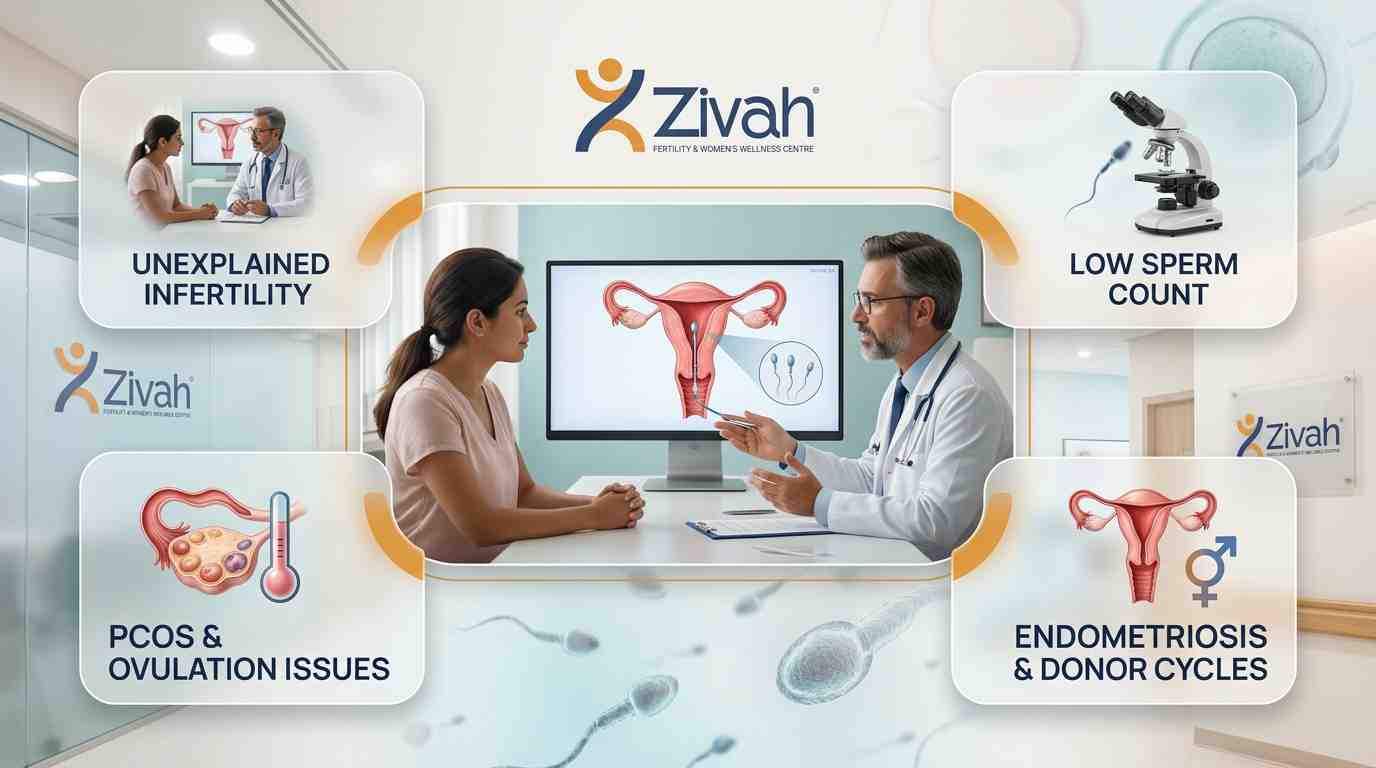
1. IUI for Unexplained Infertility
If all test results are normal and there is no pregnancy, the first treatment option commonly tried by doctors is IUI for unexplained infertility. This usually involves moderate fertility medication and offers the sperm an easier passage to the egg.
2. IUI for Low Sperm Count and Male Infertility
When men have low sperm count or if their motility is not good, IUI for male infertility can be a good help for them. The sperm is then cleansed in the lab, and the best sperm is selected before insemination. ICSI is a better option for serious sperm problems.
3. IUI for PCOS and Ovulation Problems
PCOS and irregular periods can make a natural pregnancy difficult for many women. IUI for PCOS, paired with simple medicines like Clomid or Letrozole, helps the ovaries release a healthy egg at the right time.
4. IUI for Endometriosis, Cervical Issues & Donor Sperm Cycles
IUI also works properly with:
- Mild endometriosis without a significant effect on fertility
- Cervical factor infertility, where the mucus blocks the sperm
- Donor sperm IUI for single women, same-sex couples, or severe male infertility
Knowing who IUI works best for is only half the story. Up next, here's how IUI compares to IVF and ICSI.
Difference Between IUI, IVF and ICSI
Many couples become confused between IUI, IVF and ICSI when considering fertility options, but they're not three competing fertility treatments. Think of them as three steps on the same ladder. IUI is the easiest first choice, IVF is when IUI hasn't worked, and ICSI is a more advanced part of IVF that is used especially in cases of severe male infertility.
How IUI, IVF and ICSI Differ: A Quick Comparison
The main difference is in location and the technique used for fertilisation. In IUI, the sperm is placed in the uterus, and fertilisation takes place naturally in the body. In IVF, the eggs and sperm are put together in a laboratory dish, and fertilisation takes place naturally. ICSI takes one step further: a single healthy sperm is put directly into the egg, and this works best when sperm quality is very low. Here's a side-by-side comparison of how they compare:
| Parameter |
IUI |
IVF |
ICSI |
|---|---|---|---|
| Where Fertilization Happens |
Inside the uterus |
In a lab dish (natural) |
In a lab dish (manual injection) |
| Sperm Count Needed |
Moderate |
Moderate |
Works with very low count |
| Best Patient Type |
Mild infertility, PCOS |
Tubal or female-factor |
Severe male-factor, failed IVF |
| Invasiveness |
Minimally invasive |
Moderately invasive |
Moderately invasive (within IVF) |
| Lab Involvement |
Low |
Moderate |
High (sperm hand-picked) |
| Typical Success Rate per Cycle |
10–20% |
30–40% |
35–45% |
| Affordability |
Low |
Moderate |
High |
When IUI Isn't Enough: Moving to IVF
Sometimes IUI does not result in pregnancy, and that's okay. All that says is that it is time for something more powerful. When should doctors usually recommend IUI vs. IVF?
- 3-6 IUI cycles haven't worked
- There is serious male infertility
- Fallopian tubes are blocked or damaged
- The woman is over 38
This is not a setback, just the next natural step and often the proper road forward with IVF. Once you know where IUI fits in the big picture, the next thing to know is the steps of this process.
How the IUI Procedure Works at Zivah
IUI is a simple, well-paced procedure that usually takes a few weeks to complete. Everything is timed perfectly to offer the sperm and egg the best possible chance of meeting at the correct time. Here is the IUI process, step by step, in the order it actually happens.
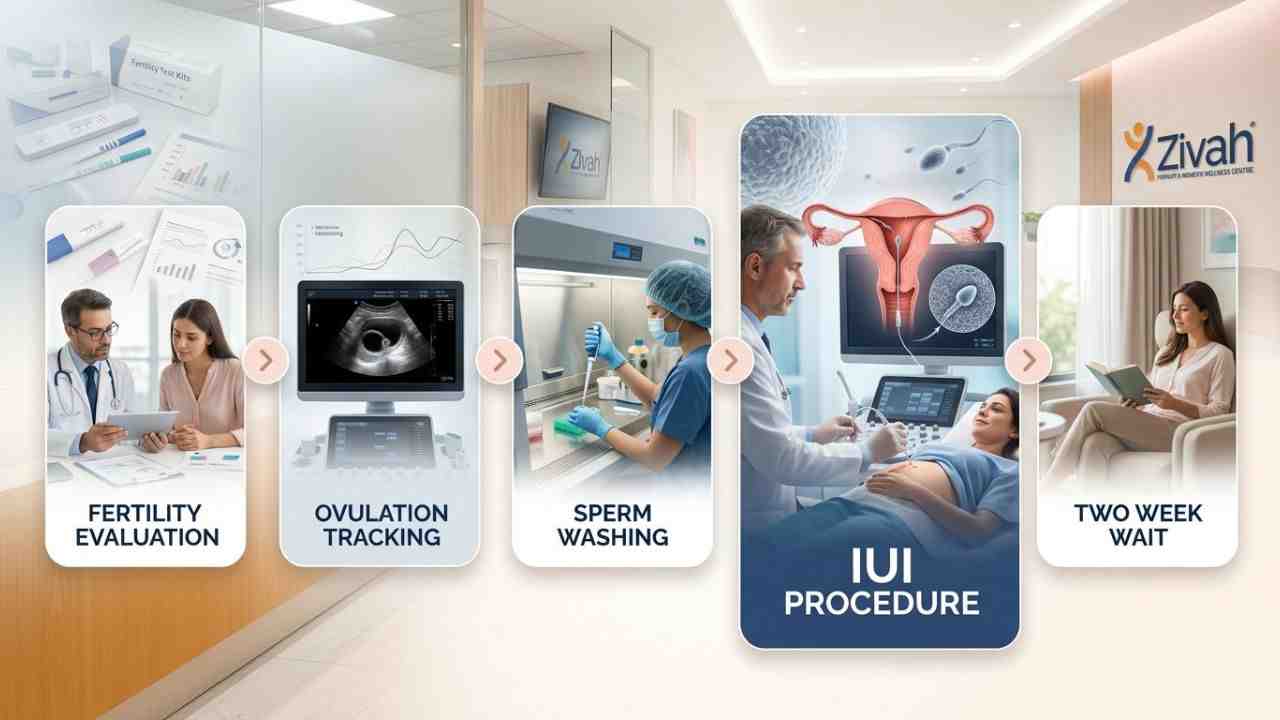
Step 1: Initial Fertility Tests and Evaluation
Both partners have a few basic fertility tests before starting an IUI cycle. These help your doctor find the underlying issue, plan the proper timing and decide if IUI treatment is the best for you. Most of these tests are short, painless and done in a few visits. Here’s what a typical IUI workup looks like:
| For the Female Partner |
For the Male Partner |
|---|---|
| AMH test - to check egg reserve |
Semen analysis - to assess sperm count, motility, and shape |
| HSG test - to see if fallopian tubes are open |
Hormonal profile - testosterone, FSH, LH |
| Transvaginal ultrasound - to monitor follicles |
Sperm health screening - for infection or DNA issues |
| Hormonal panel - FSH, LH, estradiol, thyroid |
STI and infection screening |
| STI and infection screening |
Lifestyle and medical history review |
Step 2: Ovulation Tracking and Stimulation
Timing is the most important factor in IUI. Some women have a natural cycle, others take basic fertility medications like Clomid or Letrozole for 5 days or FSH injections for up to 2 weeks to stimulate the growth of 1 or more healthy eggs in the ovaries.
Your doctor will monitor this with ultrasounds and LH surge test kits. When the eggs are ready, they are released at the right moment with an hCG trigger shot.
Step 3: Sperm Collection and Sperm Washing
On the day of IUI, a sample of sperm is taken from the male partner or thawed if it is a frozen donor sample. The next stage is preparing the sample in a short process in the lab called sperm washing, where the best sperm is separated from the remainder. What’s left is a small, dense supply of strong and viable sperm, giving fertilisation the best possible chance.
Step 4: The Insemination Procedure
This is the major step in intrauterine insemination. The doctor slips a soft, thin catheter through the cervix and into the uterus and releases the cleansed sperm. The whole process is rapid, typically five to 10 minutes, and doesn’t require anaesthesia.
At Zivah, IUI is done by trained fertility professionals in a peaceful, clean clinical setting, so you feel safe and comfortable the whole way through.
Step 5: After the Insemination
After the procedure, you will relax for a little while before you go home. Your doctor may also put you on progesterone support to help with implantation. Then comes the two-week wait, the most emotional part of the cycle, and the one couples seem to have the most questions about.
What's the Real Success Rate of IUI?
Before starting IUI, most couples want to know one thing: how well does it actually work? To be honest, the success rate of IUI depends on a lot of things, but the main ones are age and general fertility health. The usual success rate of IUI is about 10–20% every cycle, although cumulative success might reach 70–80% after 6 cycles for younger couples. Here's a closer look at what those numbers really mean.
IUI Success Rate by Age: What the Numbers Show
Age is the main factor in the IUI success. Pregnancy chances are generally better for younger women, and success rates decline significantly after age 38. Quick breakdown here:
| Age Group |
Success per Cycle |
Cumulative Success after 6 Cycles |
|---|---|---|
| Under 35 |
15–20% |
Up to 80% |
| 35–37 |
10–15% |
60–70% |
| 38–40 |
8–10% |
40–50% |
| Over 40 |
3–5% |
15–20% |
These numbers help you set realistic expectations and guide your decisions about how many cycles you try before moving on to IVF.
What Affects Your IUI Success Rate?
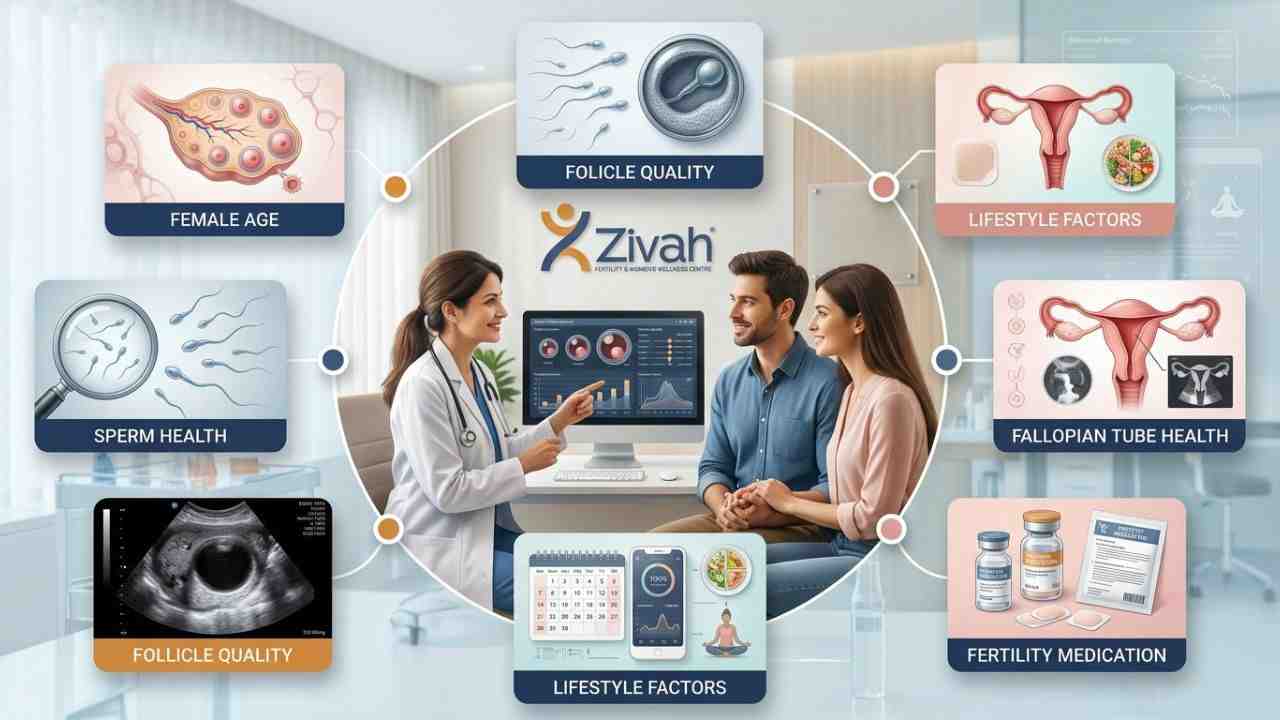
There are several factors that affect the chance of conception from an IUI cycle. Some are medical, some are lifestyle-based, and many can be addressed with good care:
- Age of the women - younger eggs give greater results
- Sperm count and motility - healthier sperm represent better chances of getting pregnant
- Number and quality of follicles - the more developed follicles, the better the success
- Fallopian tube health - open, healthy tubes are essential
- Accurate timing of ovulation - IUI needs to be timed properly
- Lifestyle factors - smoking, drinking, stress and BMI all play a part
- Use of fertility medication - it can increase the success rate greatly if needed
The good news is that many of these are within your control, and the correct plan may make a huge difference.
What to Expect After IUI Treatment
It can be hard to know what to expect in the days after an IUI. Good news: getting better is easy, and what to expect after IUI is generally mild and can be dealt with. In this picture, you can see the clear timeline after the operation.
Immediate Recovery and First 24 Hours
You don't have to stay in bed after an IUI; most women feel fine in just an hour. You can go back to work and do other light daily tasks the same day. It's normal to have mild cramps or spotting in the first 24 hours.
Just remember these:
- Stay away from heavy lifting and hard workouts.
- Don't drink or take hot baths or spas.
- Drink water and take breaks when you need to.
- Keep taking any drugs your doctor has given you.
The Two-Week Wait and Pregnancy Test
The hardest part is often the time you have to wait after an IUI. Implantation after IUI usually happens between 6 and 12 days after the treatment. It's normal for many women to have no symptoms. Do not take a home pregnancy test too early, as it may not be accurate. The simplest response is a blood beta hCG test taken around day 14. Early signs, such as cramps or breast tenderness, are typically similar to those of normal PMS.
When to Contact Your Doctor at Zivah
While most recoveries go easily, there are certain symptoms you shouldn't overlook. If you see any of the following, call your doctor straight away:
- Severe abdominal or pelvic pain
- Heavy bleeding (more than just spotting)
- Sudden swelling or shortness of breath (potential signs of OHSS)
- Fever, high or signs of infection
- Severe nausea, vomiting or feeling dizzy
Knowing what's typical helps you keep calm, but so does knowing the larger context of IUI risks, benefits, and side effects.
Risks, Benefits & Side Effects of IUI
As with any fertility procedure, there are advantages and disadvantages to IUI. The good news is that IUI risks are limited and side effects are usually moderate. Here’s a balanced look at what IUI offers, and what to keep in mind before starting.
Key Benefits of IUI Treatment
That’s why doctors generally recommend IUI as the first fertility treatment; it’s gentle, successful and easier to handle than more complex procedures. Some of the main benefits of IUI include:
- Less invasive than IVF/ICSI
- No anaesthetic or surgery needed
- Minimal downtime, most ladies return to their usual activities on the same day
- More affordable than other fertility treatments
- Works with donor and partner sperm
- Mild Fertility medicine can be used in combination for better results
- Great beginning for couples new to fertility care
Side Effects and Multiple Pregnancy Risk
IUI is generally safe, and most IUI side effects are modest and don't last long. Some women may experience the following:
- Mild cramping during and after the procedure
- Light spotting for 1-2 days
- Mild bloating with fertility medications
- There is a small probability of OHSS if stimulation medications are used
- Pelvic infection, very rare chance
When it comes to multiple pregnancies, IUI on its own doesn't increase the chances of twins. However, fertility medicines used along with IUI can stimulate more than one egg, which slightly raises the chance of a multiple pregnancy.
Why Choose Zivah for IUI Treatment

Choosing the correct fertility partner is an important factor for the success of IUI treatment in India. Zivah is one of the most trusted IUI clinics in India, providing personalised care with advanced reproductive technology. What’s different about Zivah is:
- Individualised IUI protocols for every couple
- Modern fertility lab with high-quality standards
- Fertility experts will guide you through every stage of the way
- Open, honest treatment with clear explanations along the way
- Evidence-based add-ons, only when clinically needed
Our specialists are a phone call away to help you learn more about the IUI procedure, eligibility or pricing. Book your free consultation today and take the first step with Zivah.