
Considering genetic counselling for your family planning is a thoughtful, reasonable move. Whether you are struggling with reproductive issues, preparing for IVF, or trying to understand an unexpected prenatal screening result, a skilled genetic counsellor helps you make sense of it all, in plain words.
At Zivah, our specialised genetic counselling services transform difficult genetic and test data into straightforward, actionable next steps, so you never have to face a confusing diagnosis alone.
This overview covers what happens in a session, who benefits most and what testing pathways may be involved.See how an honest talk can bring true clarity and peace of mind for your journey.
What Is Genetic Counselling?
Genetic counselling is specialist advice that helps you understand genetic diseases, how they are inherited, your potential risk and the options available to you. Genetic counselling is an informative, helpful discussion to help you make decisions regarding testing and pregnancy. It is complemented by genetic testing, which provides data that your counsellor helps you understand.
What Does a Genetic Counselor Do?
A genetic counsellor will take you through the complete process, step by step. They look into your family history, how a condition may be inherited and calculate the chance of it coming back. They also explain which tests are available and what they can and can’t tell you, walk you through the results, and send you to the correct specialists when needed.
Is a Genetic Counselor a Doctor?
A genetic counsellor may be a doctor with specialised training in genetics and genetic counselling, such as a clinical geneticist, or a professional who has completed intensive, dedicated training in genetics without being a medical doctor.
In other words, the role can be filled by people from different backgrounds. Whichever the case, a genetic counsellor works closely with clinical geneticists and obstetricians, so every aspect of your care comes together seamlessly.
Why Genetic Counselling Is Important
Genetic counselling is important because the more you know, the more control you have over your options. Around 2-3% of babies are born with a congenital condition, may carry a genetic condition, and counselling only helps you understand where you truly stand, instead of worrying about the unknown.
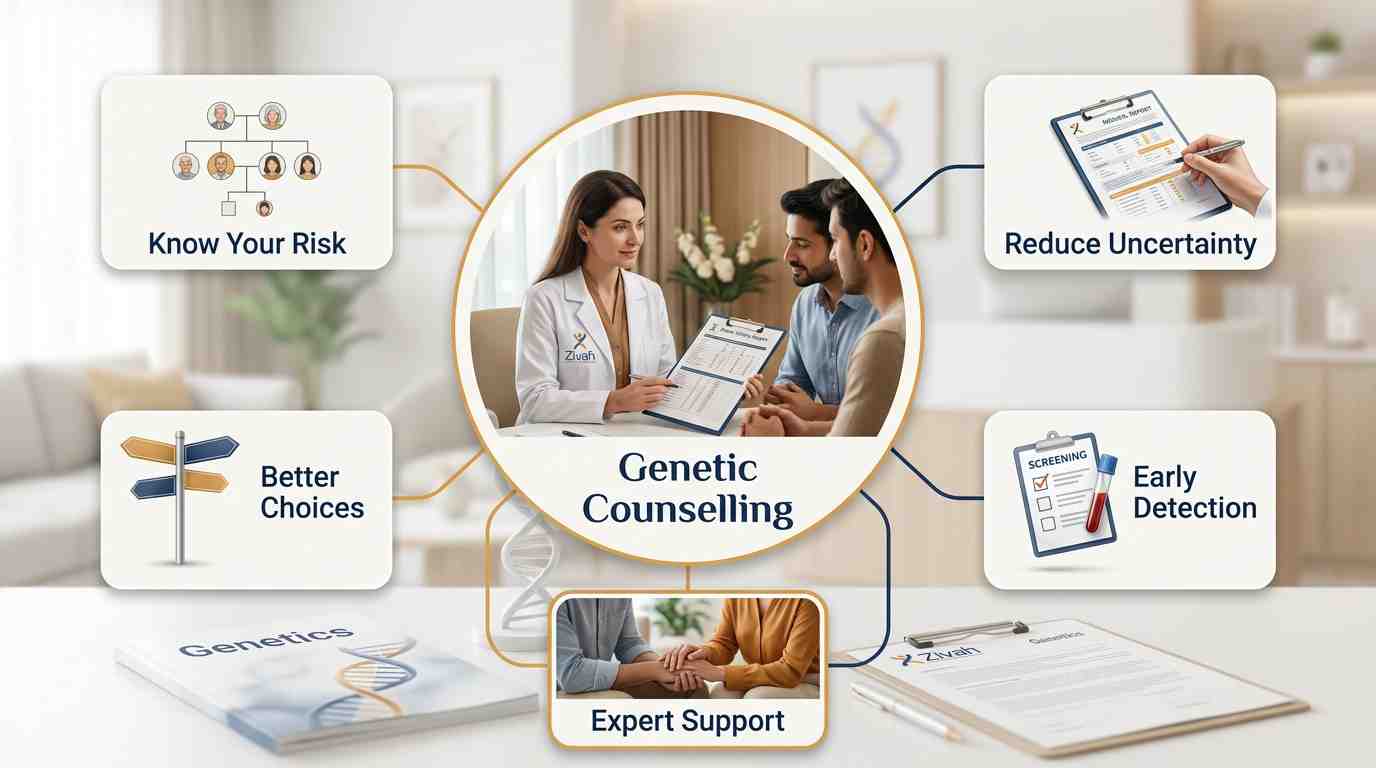
Genetic counselling is never about fear; it’s about clear, honest information that you can act on. Here is the importance of genetic counselling and the benefits of genetic counselling before pregnancy:
- Understand your risk - clear answers on what might be inherited and how likely it is
- Less ambiguity - facts instead of guessing and worry
- Knowledgeable choices - confident decisions on testing, IVF or pregnancy
- Early detection - problems are discovered and treated sooner when more can be done
- Real support - emotional and practical guidance, not only a test report
The objectives of genetic counselling are simple: understanding, confidence and the correct support you need so you can plan your family with true peace of mind. It’s not about pressure; it’s about feeling ready.
Who Should Consider Genetic Counselling?
Genetic counselling is not just for those with a known genetic issue; it can help anyone looking for clearer answers before or during pregnancy. So who should look for genetic counselling? This is especially something to consider if you think about a pregnancy or starting fertility treatment. You may be offered genetic counselling if you:
- You are planning or expecting a baby and are 35 or older (either partner)
- Have a family history of hereditary disease
- Are you and your partner blood relatives (consanguineous couples)
- Be of an ethnic group with a higher probability of being a carrier
- Repeated miscarriage or difficulty in conceiving
- Have a child with a genetic problem already
- Received an abnormal prenatal screen result
- Are you in IVF or another fertility treatment
In short, genetic counselling for family planning is for anyone who wants to know their risks early and prepare with confidence, whether you're just starting to think about a baby or you're already on a reproductive journey.
When Genetic Counselling Is Recommended
| Situation |
Why Counselling Helps |
Recommended Timing |
|---|---|---|
| Family history / planning pregnancy |
Assess inheritance & recurrence risk |
Before conception |
| Age 35+ at delivery |
Higher chromosomal-risk guidance |
Pre/early pregnancy |
| Recurrent miscarriage / infertility |
Identify possible genetic causes |
Before next attempt |
| Abnormal prenatal screening |
Explain results & next-step options |
During pregnancy |
Where you are on this list, the kind of counselling you need changes with each step of your journey, and that's exactly what Zivah's spectrum of genetic counselling services is built around.
Types of Genetic Counselling Services at Zivah
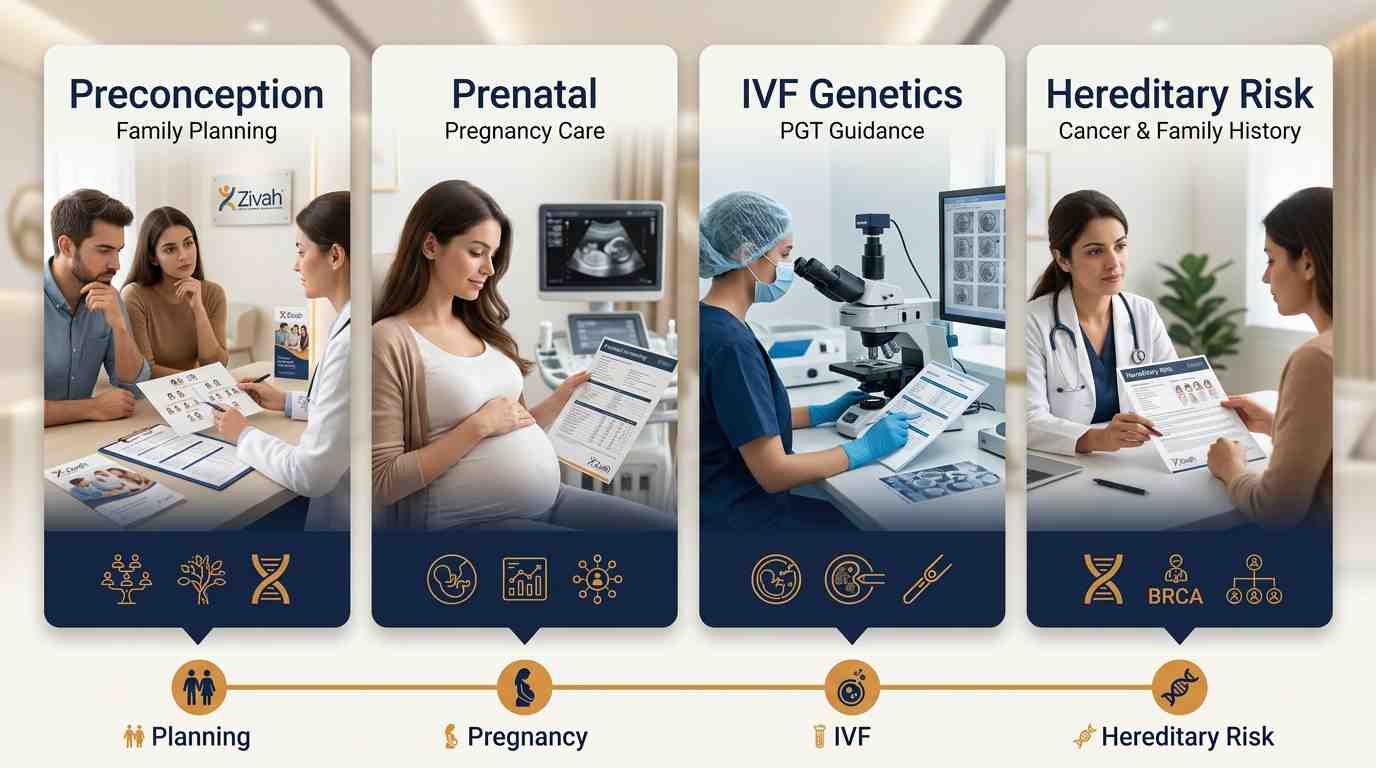
Genetic counselling is not a one-size-fits-all. At Zivah, we provide genetic counselling services targeted to where you are, whether you’re planning a family, already pregnant, undergoing IVF, or managing an inherited illness. How reproductive genetic counselling applies to each stage.
1. Preconception & Family Planning Genetic Counselling
Preconception genetic counselling gives you a heads-up before you start trying. A counsellor will analyse your family history and order carrier screening to see if you or your partner could pass on a genetic problem. It’s the best way to be prepared: genetic counselling before pregnancy equals fewer shocks afterwards.
2. Prenatal Genetic Counselling
Already expecting? Prenatal genetic counselling can help you understand your test results during your pregnancy. If a test shows you are at higher risk, your counsellor will explain what that suggests and will review your options with you, especially important when you are having a high-risk pregnancy.
3. Fertility & IVF Genetic Counselling
This is where Zivah’s IVF genetic counselling expertise comes in. IVF Genetic Counselling: The genetic part of IVF treatment explained in simple words. Your counsellor will guide you through the PGT results (preimplantation genetic testing of embryos, including PGT-A (chromosome number), PGT-M (single-gene conditions) and PGT-SR (structural rearrangements)) so you can find the embryos with the best chances of success.
They also test for chromosomal translocations (rearranged chromosomes that might influence fertility), explain things like skewed X-inactivation, and talk you through recurrent implantation failure (RIF) and recurrent pregnancy loss (RPL).
If you have previously tried IVF without success, this genetic insight can frequently assist in explaining why and what to do next.
4. Hereditary & Cancer Genetic Counselling
Genetic counselling for those with a family history of genetic diseases or hereditary cancers (such as BRCA risk) assesses your risk and can provide testing to family members who would benefit.
Types of Genetic Counselling Services
| Service Type |
Focus |
Who It's For |
|---|---|---|
| Preconception |
Risk + carrier screening |
Couples planning pregnancy |
| Prenatal |
Screening results & options |
Expecting parents |
| Fertility / IVF |
PGT-A/M/SR, RIF/RPL, donor |
IVF & fertility patients |
| Hereditary / Cancer |
Inherited & cancer risk |
Family-history cases |
Genetic Counselling and Genetic Testing: How They Work Together
Genetic testing and genetic counselling are mutually dependent. The main difference between genetic testing and genetic counselling is that genetic testing involves checking your DNA for particular mutations, and genetic counselling helps you understand what those results mean for you and your family.
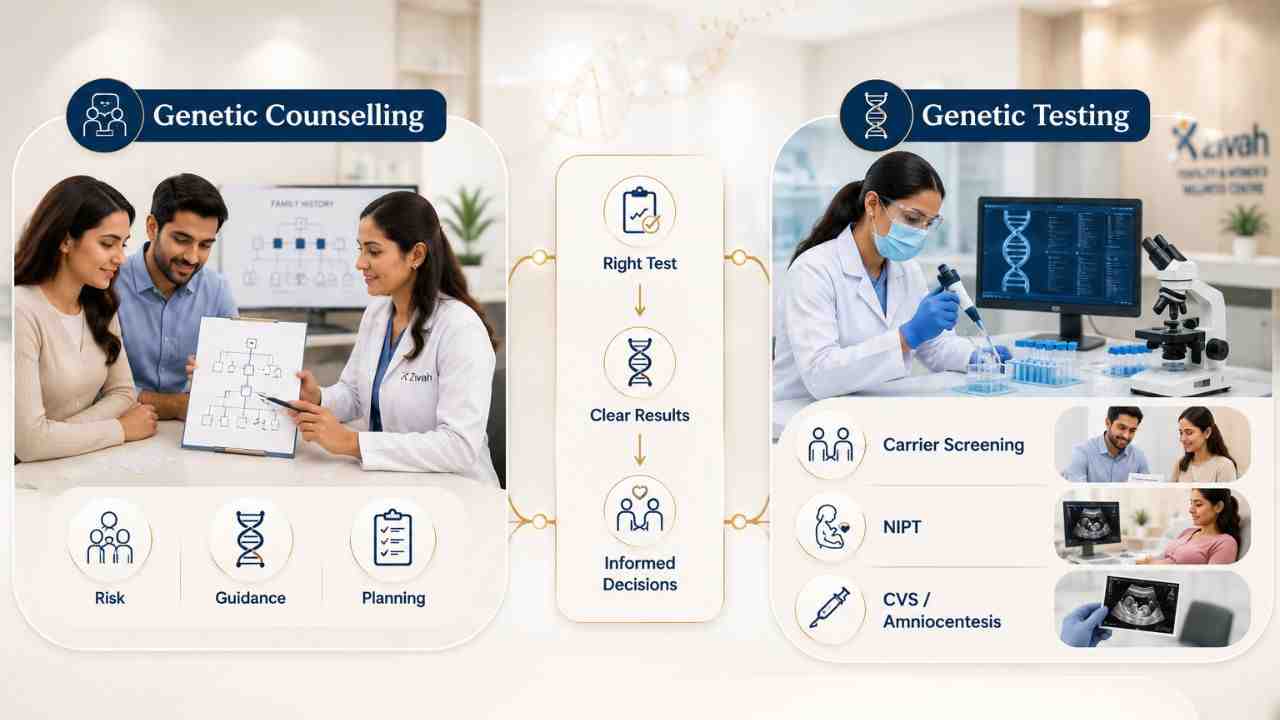
Your counsellor will suggest tests based on your history, never more than you need, during genetic counselling. Here’s a quick summary of the primary tests, with complete details on our dedicated page.
Carrier Screening Before Pregnancy and IVF
One of the most useful tests in genetic counselling is carrier screening. It looks for a DNA alteration that you might pass on to your baby, often without symptoms in yourself. Both partners are routinely checked because the condition is passed on only if they both have the same alteration. Genetic screening is performed before conception or IVF. The results allow you to prepare ahead with clear options.
Prenatal Genetic Testing: Screening vs Diagnostic Tests
Genetic testing can be done before birth or throughout a pregnancy in two ways. Non-invasive screening, NIPT (cell-free DNA), the NT scan and marker tests are safe and examine your baby’s risk without risk to your pregnancy.
Diagnostic techniques such as amniocentesis and chorionic villus sampling (CVS) can confirm a problem for sure; however, they do carry a minor (~0.5-1%) miscarriage risk. Counselling allows you to consider the benefits and hazards of each.
Genetic Tests Used in Counselling
| Test |
What It Checks |
When It's Used |
|---|---|---|
| Carrier screening |
Passed-on gene changes |
Before/early pregnancy, IVF |
| NIPT / cell-free DNA |
Chromosomal risk (non-invasive) |
During pregnancy |
| Amniocentesis / CVS |
Confirms certain conditions |
Higher-risk pregnancies |
| PGT |
Embryo genetic status |
During IVF |
What Happens in a Genetic Counselling Session
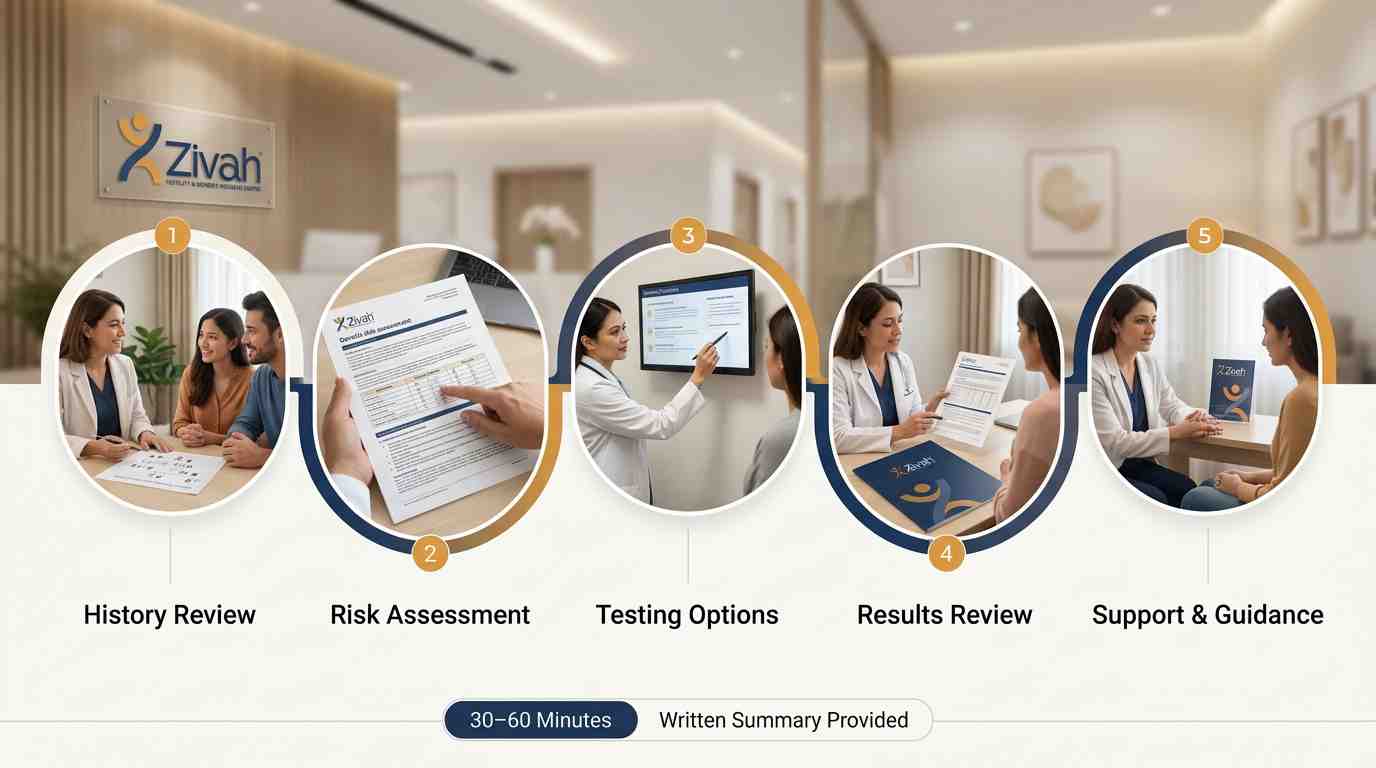
Want to know what happens in a genetic counselling session? This isn’t a test you may fail. It’s a pleasant, supportive conversation. Knowing how genetic counselling works ahead of time helps a lot. It feels a lot more manageable. Most people have at least two sessions, one before any testing and one after.Here is what normally occurs, step by step:
- Family and medical history: Your counsellor begins by collecting information about you and your family’s health, looking for patterns that matter.
- Risk Assessment: They explain in simple words how a condition might be inherited and what your actual chance of it is.
- Testing options: you and your doctor will explore what tests (if any) make sense, what each can and cannot tell you, and what is best for you.
- Results meaning: If you decide to go ahead with the test, you will have a follow-up meeting where the results and what they mean will be gone over with you.
- Support and referrals: Your counsellor is there for you emotionally and can connect you with any other professionals you may need.
How long does genetic counselling take? It usually takes between 30 and 60 minutes. You’ll often get a written summary to take away, share with family, or send to your other doctors, so nothing is lost in the process.
Genetic Counselling Session: Step by Step
| Stage |
What Happens |
Who's Involved |
|---|---|---|
| Pre-session |
Family & medical history collected |
Genetic counselor |
| Risk review |
Inheritance & recurrence explained |
Counselor + patient |
| Testing options |
Tests, limits & choices discussed |
Counselor (+ clinician) |
| Post-test |
Results explained + support & referrals |
Counselor + specialists |
Genetic Counselling at Zivah
Knowing your genetic health doesn't have to be difficult, and with Zivah, it's not. Our genetic counsellors blend experience with reassurance, so you'll always know your next step.
- Board-Certified Genetic Counsellors: You are cared for by a competent genetic counsellor who works hand in hand with our fertility and prenatal teams, so nothing is seen in isolation.
- Integrated Testing and Imaging: Counselling, screening and scans all at one spot, fewer appointments, quicker answers, one team with the whole picture.
- Personalised Fertility & IVF Advice: Our IVF genetic counselling is customised to your goal, from PGT and carrier screening to recurrent-loss assistance.
If you're planning, expecting, or trying again, you don't have to make these decisions on your own. Start with clarity, experienced assistance and a staff that's truly on your side. Book a genetic counselling consultation at Zivah.