
At Zivah, the BRCA genetic test gives you peace of mind by letting you know for sure if breast or ovarian cancer runs in your family. People close to you may have been affected by cancer more than once. This could be due to a small genetic change that was passed down from a parent to a child before any symptoms appear.
Everything changes when you know. You don't have to wonder what to do because you have a plan, whether it's getting screened earlier, getting preventive care, or planning for your own children. Genetic testing for BRCA mutations is where hereditary breast and ovarian cancer care begins. Read on to learn about what the test does to your BRCA1 and BRCA2 genes and what it can tell you.
What Is BRCA Genetic Testing?
At Zivah, a BRCA genetic test is a simple blood or saliva test that checks your BRCA1 and BRCA2 genes for inherited changes linked to cancer. So what is BRCA genetic testing actually looking for? It reads the two genes often called the breast cancer genes and picks up the small faults that raise your risk of breast, ovarian and a few other cancers.
But what does the BRCA gene even do? There are two genes in each person called BRCA1 and BRCA2. Their job is to help repair broken DNA and control cell growth. When one of them has a bad change, the fix falls apart, and the risk goes up. We can tell if you have one of these changes by testing for the BRCA1 and BRCA2 genes.
| Gene We Test |
What It Normally Does |
Higher Risk When It Changes |
|---|---|---|
| BRCA1 |
Helps repair damaged DNA |
Breast, ovarian, prostate, and pancreatic cancers |
| BRCA2 |
Helps repair damaged DNA |
Breast (including male breast), ovarian, prostate, and pancreatic cancers |
What Is the Difference Between BRCA1 and BRCA2?
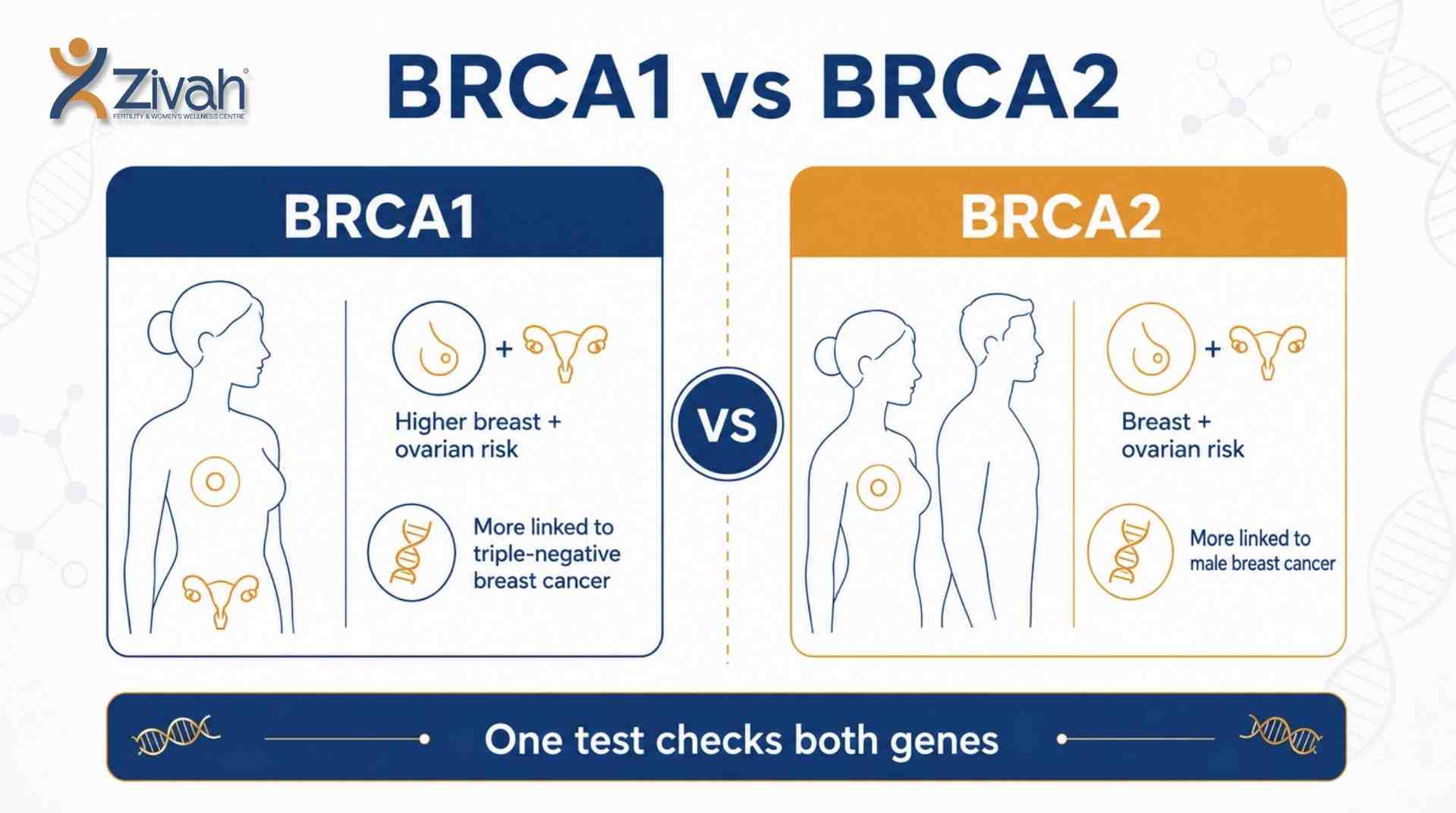
So what is the difference between BRCA1 and BRCA2? Both are breast cancer genes, and both repair DNA; the difference is in how much risk they carry and where. A BRCA1 change tends to push breast and ovarian cancer risk higher and is more often linked to triple-negative breast cancer. As for BRCA2, it carries a real risk too, and it is the one more related to male breast cancer. A single test reads both, so you never have to choose between them.
So genetic testing for BRCA mutations turns something you cannot see into something you can plan around, and the next question is what a change in your risk really means.
Which Cancers Are Linked to BRCA1 and BRCA2 Gene Changes?
So, which cancers does a BRCA mutation increase the risk of? A harmful change in a BRCA1 gene or BRCA2 gene is best known for breast and ovarian cancer, but its reach is wider than we think. The same inherited fault can also raise the risk of male breast, pancreatic (a disease where harmful, out-of-control cells grow in the pancreas) and prostate cancers, which is why genetic testing for breast cancer often opens a fuller picture of family risk, not just one disease.
Researchers have found that more than 60% of women who carry a BRCA change will develop breast cancer in their lifetime, against around 13% in the general population. The table below sets the cancers linked to BRCA mutations side by side.
| Cancer |
General Population Risk |
Risk with a BRCA1/BRCA2 Change |
|---|---|---|
| Female Breast |
~13% lifetime |
Over 60% lifetime |
| Ovarian |
~1.1% lifetime |
BRCA1: 39–58% BRCA2: 13–29% |
| Male Breast |
~0.1% by age 70 |
Up to ~7% (BRCA2) |
| Pancreatic |
~1.7% lifetime |
BRCA1: Up to 5% BRCA2: 5–10% |
| Prostate |
~10.6% by age 80 |
BRCA1: 7–26% BRCA2: 19–61% |
Behind those numbers, each cancer affects what you do next:
- Breast cancer: It is most likely to happen if you have a BRCA change, and getting screened younger and more often is the best way to help.
- Ovarian cancer: There is no good screening test, so finding it early gives you options to prevent it.
- Male breast cancer: It is very rare, but a change in BRCA2 makes it more likely. This is why men also have these genes.
- Pancreatic and prostate cancer: If you have a family history, you may need more tests.
What Is Hereditary Breast and Ovarian Cancer (HBOC) Syndrome?
So what is hereditary breast and ovarian cancer syndrome? When a BRCA1 or BRCA2 mutation runs in a family, the pattern it causes is called HBOC (Hereditary Breast and Ovarian Cancer syndrome). It means breast and ovarian cancer appearing earlier and more often across generations because of changes that are inherited, not by chance.
Recognising that pattern is what tells you whether a test is worth doing, and why one person's result can matter for the whole family. Knowing which cancers are in play is one half of the picture you need. The other half is knowing whether a test is right for you, which is where we turn next.
BRCA Test vs Hereditary Cancer Panel - What's Included at Zivah?
At Zivah, we match you with the right test based on your past. So what is the difference between a BRCA test and a multigene panel? A BRCA1 & BRCA2 test looks at the two main genes for breast cancer. A hereditary cancer panel test looks at those two genes, plus a larger group of genes linked to cancer that run in families. We offer both, and they both use the same simple blood or saliva sample. The only different thing is how far we look.
It depends on what your family already knows. The two choices and who each one fits are shown in the table below.
| Option |
Genes We Check |
Best Suited For |
|---|---|---|
| BRCA1 & BRCA2 Test |
BRCA1 and BRCA2 |
People with a known BRCA variant in the family or those needing a focused assessment |
| Hereditary Cancer Panel |
BRCA1, BRCA2, PALB2, TP53, CHEK2, ATM, and other cancer-risk genes |
People with a strong family history of cancer but no known genetic variant |
When Do You Need a Hereditary Cancer Panel Instead of a BRCA Test?
So when does a panel make more sense than a BRCA mutation test alone? If a relative already carries a known BRCA change, we start with the focused BRCA1 & BRCA2 test; we know exactly what to look for. But when cancer runs strongly through your family, and no gene has been pinned down, testing across more cancer genes gives a clearer answer.
Our genetic counsellor reviews your history and recommends the right scope, no more, no less. Once you know which test fits, the next question is whether you should be tested at all.
Who Should Consider BRCA Genetic Testing?
So do you actually need a BRCA test? Most people don't; a BRCA gene mutation test isn't routine, and an average risk doesn't call for one. It becomes worth considering when your personal or family history points to an inherited pattern, the kind that makes a BRCA1 or BRCA2 mutation more likely.
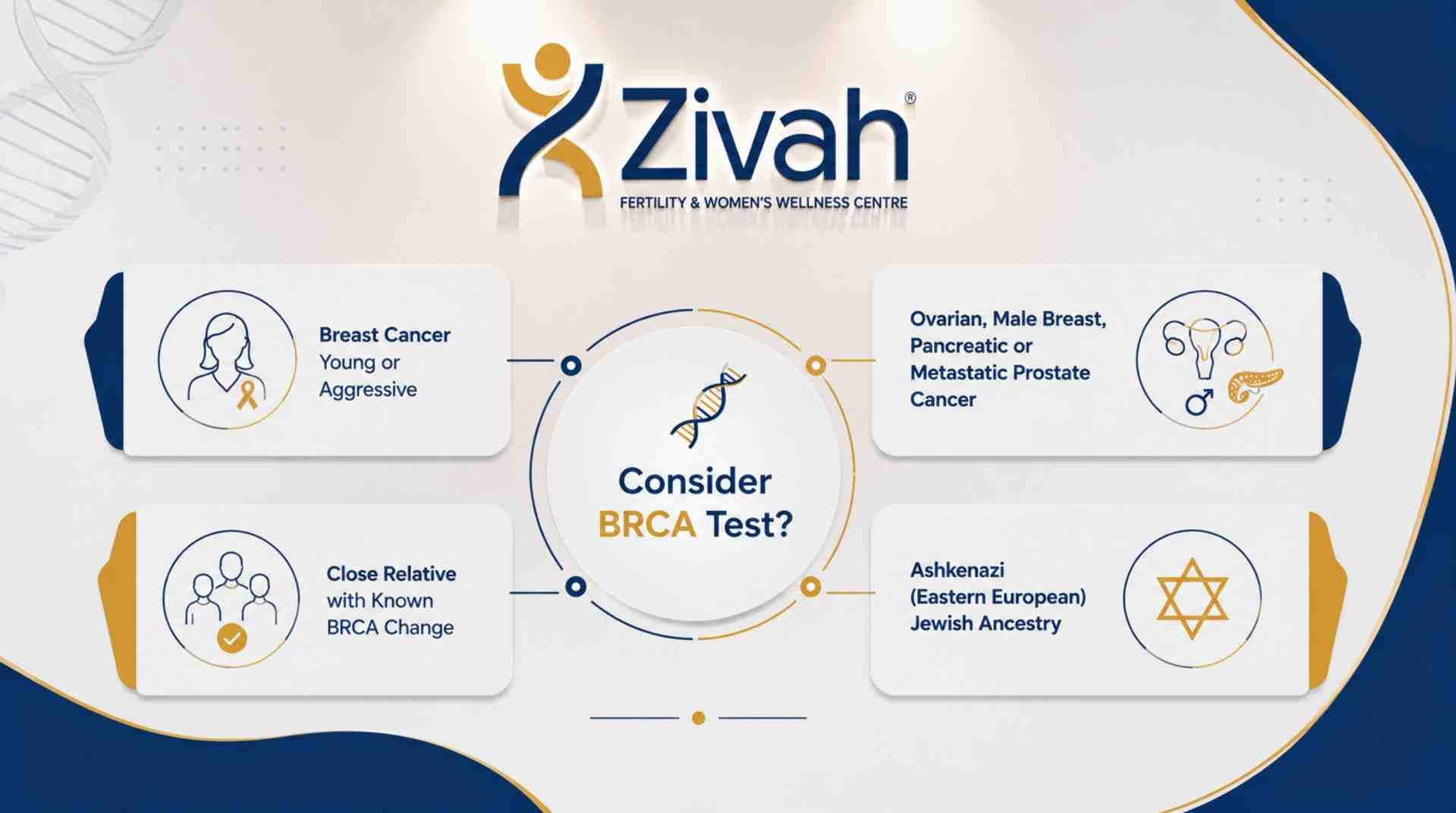
A few situations raise the odds enough that BRCA1 or BRCA2 testing is usually recommended:
- Breast cancer young or aggressive: diagnosed under 50, or triple-negative under 60, in you or a close relative.
- Ovarian, male breast, pancreatic or metastatic prostate cancer: any of these in your personal or family history.
- A close relative with a known BRCA change: a parent, sibling or child already found to carry one.
- Ashkenazi (Eastern European) Jewish ancestry: BRCA changes are far more common in this group.
The table below groups these into the three factors we consider when weighing whether a BRCA screening test is right for you.
| Category |
Higher BRCA Risk If You Have... |
|---|---|
| Personal History |
Early breast, ovarian, male breast, prostate, or pancreatic cancer |
| Family History |
A close relative with BRCA-related cancer or a known BRCA mutation |
| Ancestry |
Ashkenazi (Eastern European) Jewish heritage |
If you see yourself here, it doesn't mean you have a change; it just means you should talk to someone. And that's exactly what we offer: that talk, along with genetic counselling.
Who Should Book BRCA Testing at Zivah?
So who should book BRCA genetic testing in India with Zivah? If your history fits any pattern above, this is the moment to act, and you don't have to weigh it alone. Our genetic counsellor walks through your family tree first and helps you decide before anything is drawn.
Whether you're planning a family, recently diagnosed, or carrying a worry that's followed you for years, becoming a known BRCA carrier, or ruling it out, gives you something solid to plan around.
Knowing whether a test is right for you is one thing. Knowing what the visit looks like is the next, and it's simpler than most expect.
What Happens During a BRCA Test?
So what should you expect during a BRCA test? It's simpler than the worry that comes before it: one short sample, a lot of guidance, nothing invasive.
It starts with a conversation. Before any sample is taken, you sit with our genetic counsellor, who walks through your family history and explains what the test can and can't tell you. Then the sample: how is BRCA testing done? Usually a small blood draw from your arm, or a saliva sample if that suits you better; a blood or saliva BRCA test reads your genes equally well. It goes to the lab, where your BRCA1 and BRCA2 genes are checked for inherited changes. When the results are ready, you come back to go through them with the counsellor, never reading a report on your own.
How Do You Prepare for a BRCA Genetic Test?
So how do you prepare for a BRCA test? Very little is needed on the day, but a few things make your BRCA genetic counselling session far more useful:
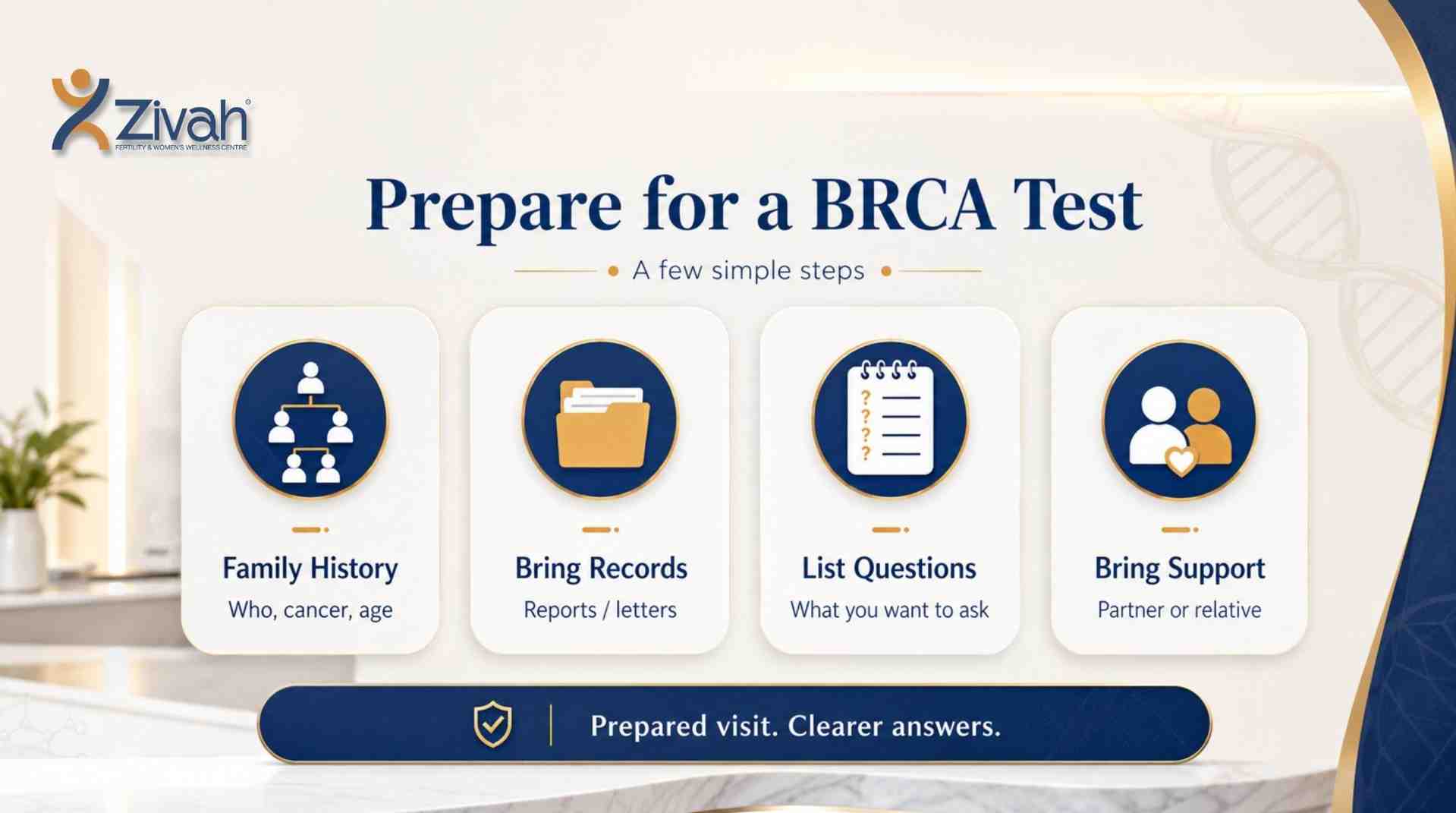
- Gather your family's cancer history: who, which cancer, at what age.
- Bring records: earlier genetic results or specialist letters, if available.
- Write down your questions: anything you want cleared up.
- Bring someone with you: a partner or relative to take it in alongside you.
A little preparation means your time is spent on answers, not paperwork. With the sample sent, the next step is understanding what your result actually says.
What Do BRCA Test Results Mean?
So what do your BRCA test results actually mean? A BRCA mutation test comes back in one of three ways: positive, negative, or uncertain, and each one points to a different next step rather than a verdict. This is exactly why you go through your result with a counsellor, because the same word can mean different things depending on your family history. The table below sets out the three results and what each one leads to :
| Result |
What It Means |
What We Do Next |
|---|---|---|
| Positive |
A harmful BRCA change is found |
Create a personalised screening and risk-reduction plan |
| Negative |
No harmful BRCA change detected |
Review your family history and advise routine follow-up |
| Uncertain (VUS) |
A gene change with an unclear meaning |
Manage based on family history and review as new evidence becomes available |
A positive result is the one people fear most, but it's worth being clear about: it raises your risk, it doesn't promise cancer. A negative is reassuring only when your family's exact change is already known; otherwise, your risk remains determined by your personal and family history. And an uncertain result means the science hasn't yet caught up with that particular change.
What Does a Variant of Uncertain Significance (VUS) Mean?
So what does a variant of uncertain significance mean for you? It means the test found a change in your BRCA gene, but there isn't yet enough evidence to say whether it raises your risk. It sits in a grey zone, neither labelled harmful nor cleared as harmless.
For now, we guide your care based on your family history rather than the variant itself, and we stay in touch as research progresses, because most of these changes are eventually reclassified one way or the other. A VUS is an "answer pending," not a dead end. Whatever your result, the real value is in what comes next, and that's clearest when the result is positive.
Can BRCA Carriers Avoid Passing It to Their Children?
So if you carry a BRCA change, can you stop your child from inheriting it? This is the question most cancer centres never answer, but as a fertility clinic, we can help with it. A BRCA gene change is passed from parent to child with about a 1-in-2 chance in each pregnancy. The reassuring part: family planning today gives carriers a real way to lower those odds, long before a baby is on the way.
The route is PGT-M (preimplantation genetic testing for a known gene change), used alongside IVF. Embryos are created through IVF; each is checked for the specific BRCA change you carry, and only embryos without it are chosen for transfer, so a known BRCA carrier can plan a family with that inherited cancer risk left behind.
Is PGT-M for BRCA Right for You?
How about PGT-M for BRCA? Is it right for your family? If you know you have a BRCA1 or BRCA2 mutation and want to plan a pregnancy without passing it on, this is something to consider.
It's not the only way to get pregnant; some women choose to have children naturally, and others would rather not use IVF. There is also no one right answer. It's important to know you have a choice, and our team can explain how [PGT-M and IVF] work together so you can make your choice with peace of mind.
It's comforting to know what your future choices are. The next question most people have is easier to answer: how much does a BRCA test cost?
How Much Does BRCA Genetic Testing Cost in India?
How much does it cost to get a BRCA test? At Zivah, the price of your BRCA genetic test depends on how detailed you want the test to be. A focused BRCA1 and BRCA2 test costs less than a full hereditary panel test, and your counsellor will help you choose the right scope before you book anything. We make this clear from the start so there are no surprises when you get your answer.
A few things shape your final BRCA testing cost, and the table below lays them out.
| What Affects the Price |
Why |
|---|---|
| Test Scope |
BRCA-only test or a full hereditary cancer panel |
| Sample Type |
Blood or saliva sample collection |
| Counselling |
Pre- and post-test genetic counselling sessions |
Because the right test differs from person to person, we share your exact BRCA gene testing price during your first counselling session, matched to what you actually need, not a one-size figure.
Is BRCA Testing Covered by Insurance or Government Schemes?
So is BRCA testing covered by insurance? In many cases, it can be, especially when a strong personal or family history makes the test medically advised, though coverage varies from one insurer and policy to the next. It's worth checking your plan before you book, and our team can tell you what your insurer may need. Where coverage doesn't apply, we keep your BRCA genetic test costs transparent so you can plan with no guesswork. Once cost is clear, all that's left is choosing where to test, and why that choice matters.
Why Choose Zivah for BRCA Genetic Testing?
So why choose Zivah for your BRCA genetic testing in India? Because you're led from the first question to the next plan, we don't just give you the answer and send you on your way. Some things make us different:

- Counsellor-led from day one: You decide whether to test and what scope fits with the help of an expert, not by yourself.
- End-to-end care: Means that one team sees the whole picture, not just the test, from the first meeting to when you understand your answer.
- You can get both types of tests in one place: a focused BRCA1 and BRCA2 test or a full hereditary cancer testing set that is tailored to your family history.
- A fertility clinic's edge: We can take your test results all the way through to family planning, so a genetic risk doesn't have to be passed on to future generations.
This last point is something that not many places can offer, and it's the most important one for many families.
Book a BRCA Genetic Test at Zivah
Are you ready to find out where you stand? At Zivah, getting your BRCA test started is as easy as talking. There is no pressure or hurry, just a clear look at whether testing is right for you and what it could tell you. Reach out today, and take the first calm step toward an answer you can plan around.