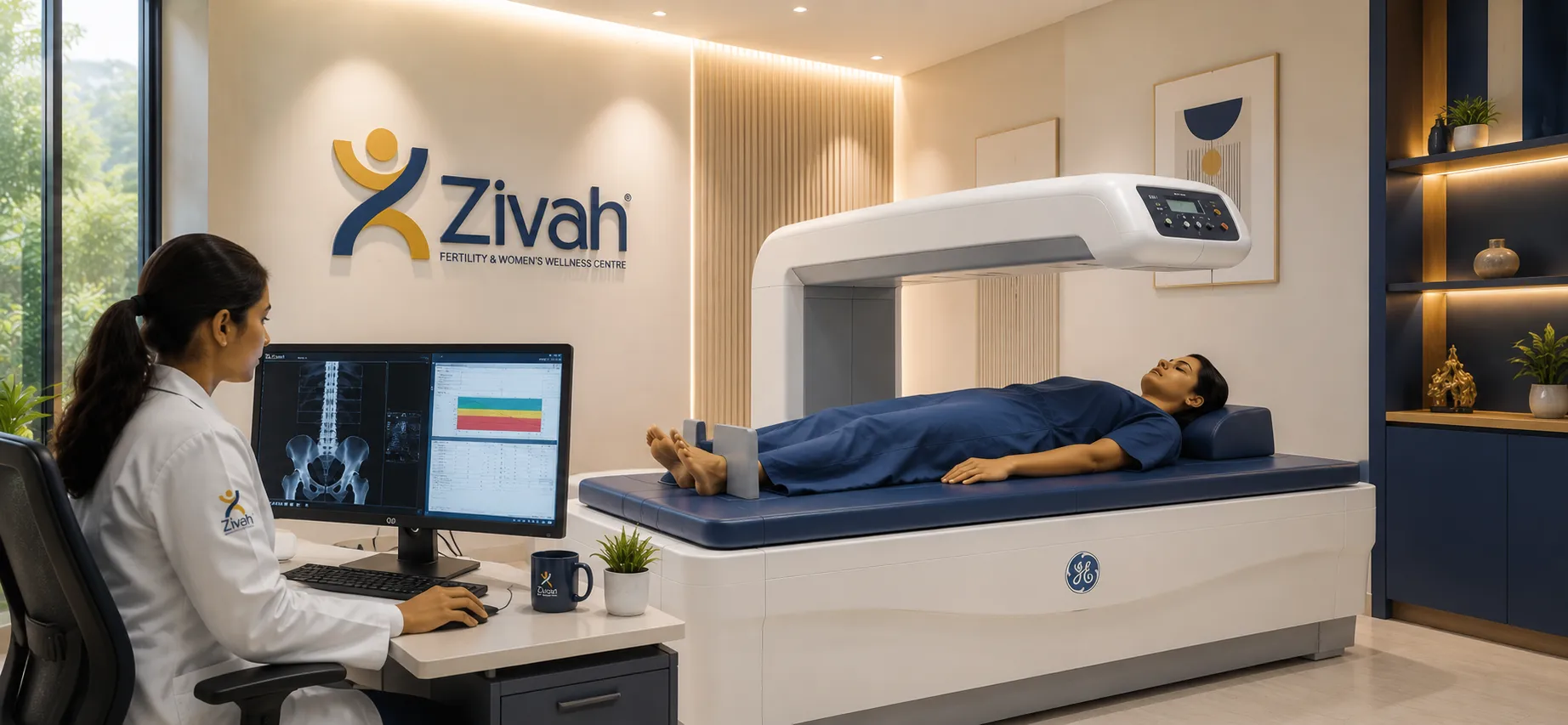
A bone density scan is one of the simplest ways to protect your bones with age, and at Zivah Fertility & Women's Health, it's central to how we care for women through menopause. Also called a DEXA scan, it measures bone strength with a quick, low-dose X-ray, no needles, just a few minutes on a padded table.
Loss of bones is silent. Most women don't feel anything until they break a bone that shouldn't have broken because of a small fall or a hard cough. A bone density scan catches that loss early, shows your real fracture risk, and helps our specialists act in time. This is what it is and how it works.
What Is a Bone Density Scan?
At Zivah, we use a low-dose X-ray to look at the amount of calcium and other minerals in your bones. Your bones are thicker, stronger, and less likely to break if they have more minerals in them. This scan, also called a DEXA or DXA scan (short for dual-energy X-ray absorptiometry), turns that strength into a clear, trackable number known as your bone mineral density.
It's quick and painless, yet it tells our specialists a great deal, whether your bones are healthy, thinning, or already at risk of a fracture. The care we plan for you is often based on that one reading.
Is a DEXA scan the same as a bone density test?
A DEXA scan, a DXA scan, a bone density test, and a BMD (bone mineral density) test are all names for the same non-painful scan. It might also be written as bone densitometry. No matter what it's called on your prescription, it only tests one thing: how strong your bones are and how many minerals they contain.
| Feature |
Detail |
|---|---|
| Test Type |
Low-dose dual-energy X-ray (DEXA / DXA) |
| Also Known As |
BMD test, bone densitometry, bone mineral density test |
| What It Measures |
Calcium and mineral content (density) of your bones |
| Bones Scanned |
Lower spine, hip, forearm, or whole body |
| Time Taken |
10–30 minutes, painless, and no injection required |
| Radiation Level |
Much lower than a standard chest X-ray |
Knowing what the scan measures is the first step. The next is recognising when your body might be asking for one.
Signs You May Need a Bone Density Test
Weak bones rarely announce themselves, but the body does leave a few clues. You should pay attention if you see:
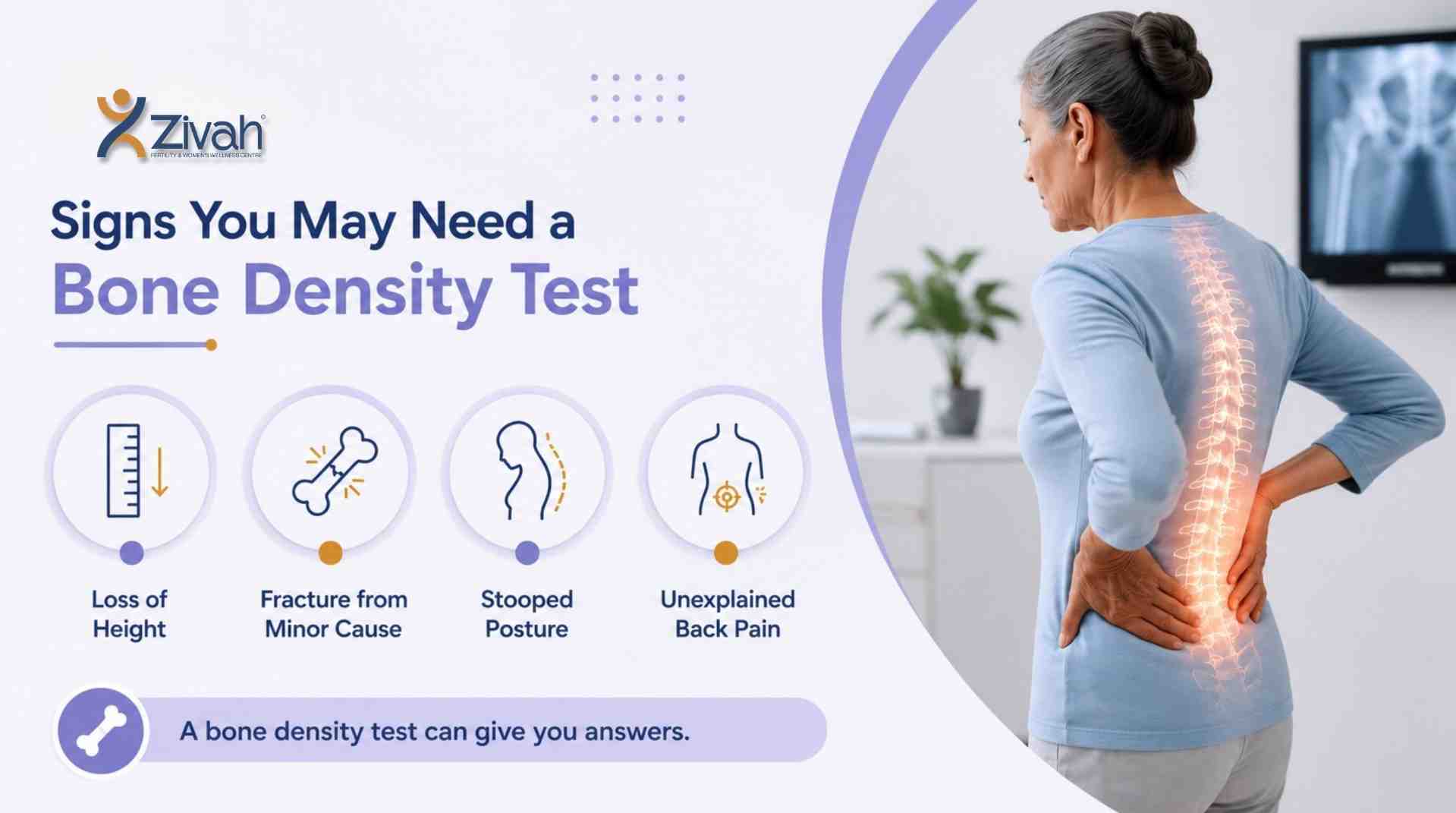
- If your height drops by 1.5 inches (4 cm), it could mean you have a small spine fracture.
- In this case, the bone breaks because of something as small as a fall from standing up, a hard cough, or a sneeze.
- A posture that has slowly taken over time and is stooped or rounded.
- Ongoing back pain with no clear cause.
If any of these sound familiar, a bone density test can show you what's really happening inside your bones.
Should you wait for symptoms to get a bone density test?
No, by the time symptoms appear, bone loss is often well advanced. People with osteoporosis (a disease that weakens bones, making them brittle, fragile, and highly susceptible to sudden fractures) don't feel any pain or other symptoms until a bone breaks.
You don't have to wait for the first break to figure out that your bones are weak; a bone density test can tell you about it early on, while you still have time to protect them. Some people are at higher risk long before any symptoms appear, and the scan is designed to detect them.
Who Should Get a Bone Density Scan at Zivah
Some people lose bone faster than others, often with no warning. At Zivah, we usually suggest a bone density scan once a woman reaches 65 or a man reaches 70, and earlier for women past menopause, when falling oestrogen speeds up bone loss. Your risk also rises with a family history of osteoporosis, long-term steroid use, a low body weight, or an early drop in hormones after a hysterectomy or certain cancer treatments. Recognising yourself in any of these is a good moment to act, so our specialists can check your bones before a fracture does it for you.
At what age should women get a bone density test?
Most women should have their first bone density test by the age of 65, but several situations call for starting earlier:
| Your Situation |
When to Get Your First Scan |
|---|---|
| Women with No Risk Factors |
By age 65 |
| Men with No Risk Factors |
By age 70 |
| Early or Surgical Menopause |
Soon after it begins |
| Long-Term Steroid Use (3 Months or More) |
Within months of starting treatment |
| A Previous Fragility Fracture |
As soon as advised by your doctor |
| Strong Family History of Osteoporosis |
Earlier, based on specialist guidance |
If any of these apply, our specialists will help you decide the right moment to begin, because catching bone loss early always leaves you with more ways to protect it. Once you know a scan is right for you, it helps to understand exactly what it can reveal.
What a Bone Density Scan Reveals About Your Bone Health
Not only does a bone density scan tell you if your bones are strong, but it also finds the stage in between. A slightly low reading points to osteopenia, bones that have begun to thin but haven't yet reached osteoporosis. A lower number means you have osteoporosis, which makes your bones very weak and more likely to break. Knowing which stage you're at means trouble can be caught and slowed before it grows.
When you get the same scan again, it lets your doctor know if the treatment for bone loss is working, so they can make changes to your care right away.
Can a bone density scan predict fracture risk?
Yes, predicting fracture risk is one of the main reasons the scan exists. The lower your bone density score, the higher your chance of a future break, especially in the hip, spine, or wrist. A bone density DEXA scan puts a number to that risk, so you and your specialist can act early and protect the bones most at risk, long before a fracture happens. If a scan sounds like the right step, a little preparation helps it go smoothly.
How to Prepare for a DEXA Scan
Preparing for a DEXA scan takes almost no effort; it's one of the easiest tests you'll ever have. A few simple steps just help keep your results accurate:
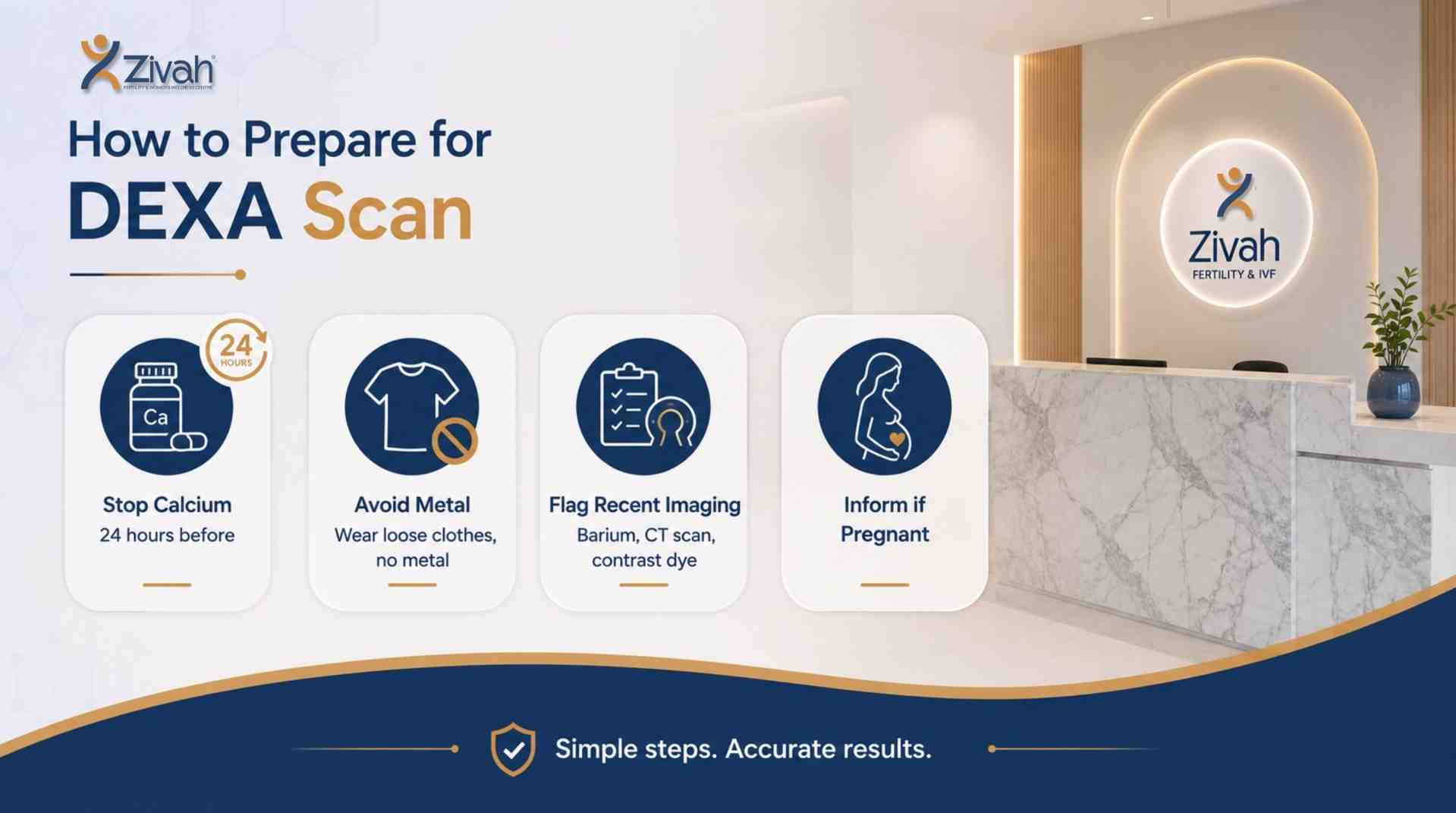
- Stop calcium supplements for 24 hours before your scan, as they can affect the reading.
- Avoid metal; wear loose, comfortable clothes without zips, buttons, or belts, and leave jewellery at home.
- Flag any recent imaging a barium test, CT scan, or contrast dye- that can interfere with results.
- Tell us if you may be pregnant, so we can take the right precautions.
What should you not do before a DEXA scan?
Very little, in truth. You don't have to fast, stop taking your regular medicines, or change your schedule. Right up until your meeting, you can eat and drink as usual. The only things you should not do are take calcium pills 24 hours beforehand and wear any metal on the day of. Everything else stays the same, and from then on out, the scan is quick and easy.
What Happens During a Bone Density Scan
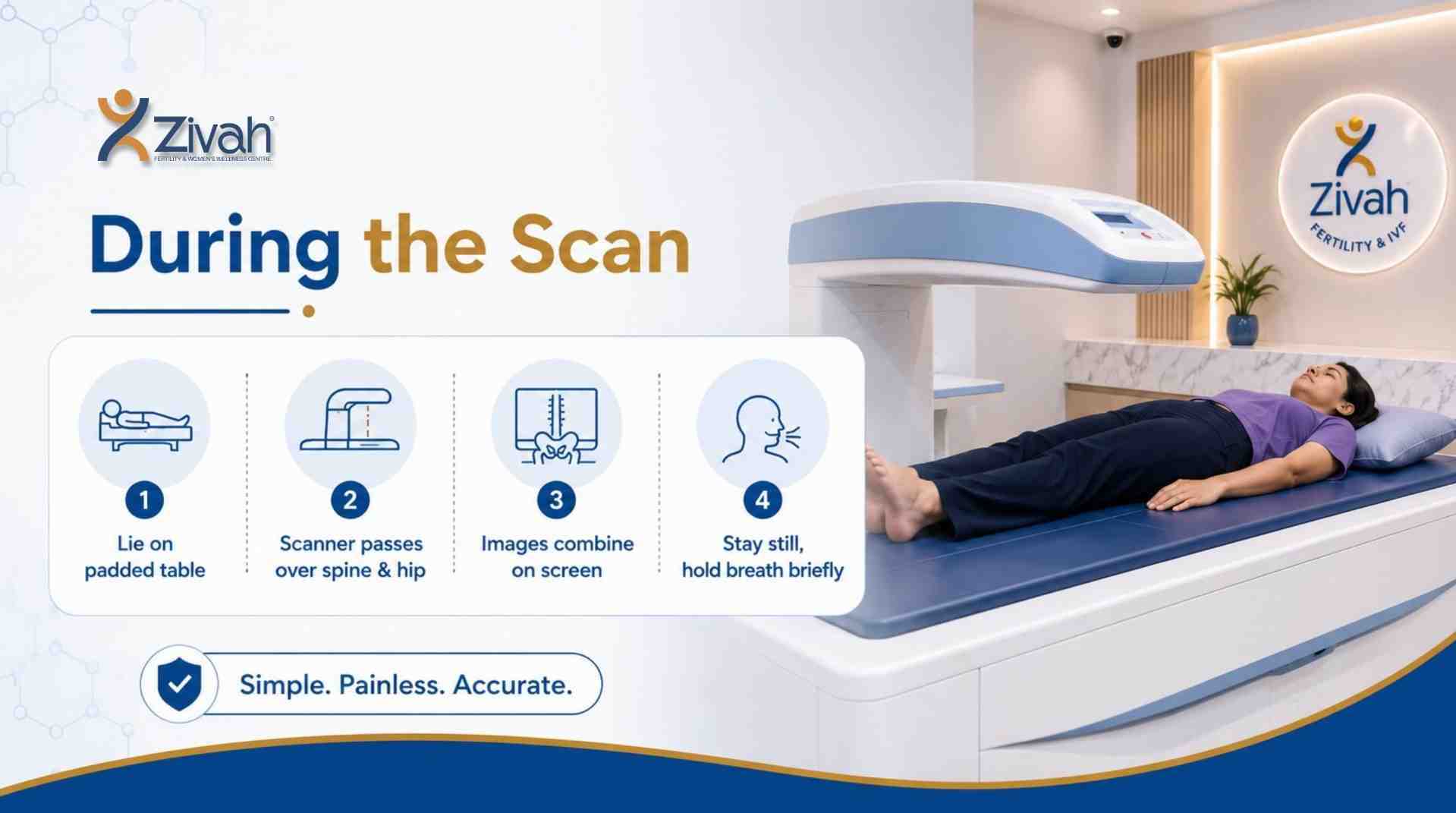
A bone density test is simple and completely painless, with no needles, injections, or anything to feel. For a central DEXA scan, the most accurate kind, you lie back on a padded table, usually in your own clothes.
A scanning arm passes slowly over your spine and hip while a second scanner moves beneath you, and the two images combine into a clear picture of your bone density on a screen. All you need to do is stay still, and you may be asked to hold your breath for a moment to keep the images sharp. There's a smaller version too.
A peripheral DEXA (p-DEXA) scan measures bone density at the edges of the body, such as the fingers, wrists, forearms, or heels, using a portable device often seen at health camps.
It's handy for a first look, but if it flags low bone density, a central DEXA scan is needed to confirm the result. Here's how the two compare:
| Feature |
Central DEXA |
Peripheral (p-DEXA) |
|---|---|---|
| Bones Checked |
Spine and hip |
Finger, wrist, forearm, or heel |
| Accuracy |
Most accurate; gold standard |
Good for screening, less detailed |
| Where It's Done |
Hospital or clinic on a padded table |
Portable device at camps, pharmacies, or clinics |
| Best Used For |
Diagnosing osteoporosis and tracking treatment |
Initial fracture-risk screening |
| Next Step |
Null | Positive results are usually confirmed with a central DEXA scan |
How long does a bone density scan take?
It depends on how many bones are checked that a bone density scan can take anywhere from 10 to 30 minutes. You can go about your day right away because there is no healing time. Results are usually ready in a few days. Here's what those numbers mean when they get here.
Understanding Your Results: T-Score and Z-Score
Your bone mineral density results are reported as two numbers: a T-score and a Z-score. A higher number means much Thicker, stronger bones; the lower the score, the higher your fracture risk. The T-score is the primary metric for most adults, comparing your bone density to that of a healthy young adult.
| T-Score |
What It Means |
What Zivah Does Next |
|---|---|---|
| −1.0 or Above |
Normal, healthy bone density |
We confirm your bones are healthy and provide guidance to maintain bone strength |
| −1.0 to −2.5 |
Low bone density (osteopenia) |
We recommend diet, exercise, and follow-up monitoring to help prevent further bone loss |
| −2.5 or Below |
Osteoporosis is likely |
We discuss treatment options and arrange repeat scans to monitor progress |
The Z-score works differently. It compares your bone density with that of others of your own age, sex, weight, and background. If it is much lower than expected, it suggests something other than normal ageing may be affecting your bones, so our specialists look for the cause rather than just the bone loss.
How does a specialist read your T-score at Zivah?
Your Zivah T-score is not just a number to us. We review it alongside your age, your medical history, and your risk factors. A healthy T-score for bone density is at least -1.0, but even a test that is close to that level is looked at in the context of your whole health history before a decision is made. That turns your report from a score on a page into a clear, personalised plan.
Please note: This information is for general guidance and isn't medical advice. Always discuss your DEXA scan results with your doctor, who will read them alongside your health history and risk factors.
Why Choose Zivah for Your Bone Density Scan
Every time you go to Zivah Fertility & Women's Health, your bones are checked out as part of your overall health. They are never checked out on their own. There are many reasons why women come to us for a scan:
- A central DEXA system that measures the spine and hip accurately. This is the gold standard way.
- Gynaecologists and doctors with a lot of experience who read your results, not just write them down.
- A women's-health and menopause focus, so your bones are understood alongside your hormones and history.
- Your own clear plan: you don't just get a number when you leave; you also get an explanation and next steps.
Why is a central DEXA scan more reliable?
A central DEXA scan is more reliable because it measures the spine and hip, the bones most likely to break and the truest guide to your overall bone strength. Peripheral devices that check the wrist or heel are suitable for a quick screen but can't match that accuracy. At Zivah, we use central DEXA, so your diagnosis is based on the most dependable reading available. If you're ready to take that step, here's what your scan costs and how to book it at Zivah.
Bone Density Scan Cost and How to Book at Zivah
If you are looking for a bone density scan near you, Zivah Fertility & Women’s Health has locations that all use the same accurate DEXA system. Our team will help you book by calling or emailing you to choose a time that works for you. They will then do the scan and explain the results to you clearly afterwards.
How much does a DEXA scan cost?
It costs different amounts depending on the type of scan and how many bones are checked. Each case is unique, so the best way to get an accurate quote is to contact our team. We will let you know the exact price before you book your bone density test, so there are no surprises on the way.
Protect Your Bone Health with Zivah
A bone density scan asks so little of you: a few short minutes, no needles, and only a trace of radiation, yet it tells you something that truly matters: how strong your bones are and how to keep them that way. Bone loss is far easier to slow when it's caught early, long before a fracture. At Zivah Fertility & Women's Health, our specialists are here to check, explain, and guide you every step of the way.