
ICSI treatment is one of the most modern treatments for fertility accessible today. It brings a new ray of hope to couples with male infertility, low sperm count or repeated IVF failures. As a specialised form of IVF, intracytoplasmic sperm injection has transformed how clinics approach difficult fertility cases, delivering higher precision, better fertilisation outcomes, and a clearer path to pregnancy.
At Zivah, every ICSI cycle is supported by professional embryologists and advanced lab standards and care that puts you first. This guide will bring you through all you need to know about ICSI, including what it is, who it is for, how the ICSI procedure works, the success rate, the risks and what to expect after recovery.
What Is ICSI? Meaning and Full Form
ICSI is one of the first things that many couples seeking fertility treatment learn about. So, what is ICSI exactly? It’s a specific lab procedure utilised during IVF to assist with fertilisation when natural conception or regular IVF aren’t sufficient. The ICSI full form is Intracytoplasmic Sperm Injection. ICSI abbreviation is the most often used abbreviation in the world of IVF. When you break it down, the ICSI meaning is clearer: intra (inside) + cytoplasm (the inner part of the egg) + sperm injection.
It’s a procedure where a single healthy sperm is inserted into an egg using fine microinjection instruments. Today, ICSI is one of the most reliable methods of ART (Assisted Reproductive technology) in the world and is the trusted method utilised by fertility clinics around the globe, as reflected in its widely used ICSI medical abbreviation.
ICSI Meaning in Simple Terms
In simple terms, ICSI is a fertility treatment where embryologists put one healthy sperm into an egg by hand to help fertilise it. It is also known as microinjection IVF or assisted fertilisation because the procedure offers nature a little push when the sperm cannot reach or enter the egg on its own. You may also find the term spelt differently in searches, iksy, icis or even ixy IVF, but they all refer to the same advanced sperm injection treatment used all around the world.
Who Needs ICSI Treatment? Indications & Eligibility
Not every fertility case is an ICSI situation, but for many couples, it's the easiest road forward. Who needs ICSI treatment usually simply depends on whether something is blocking natural fertilisation or stopping regular IVF from working. Doctors generally suggest ICSI in case of sperm problems, previous failures in IVF or some medical requirements. ICSI for fertility is recommended in the following four most common circumstances.
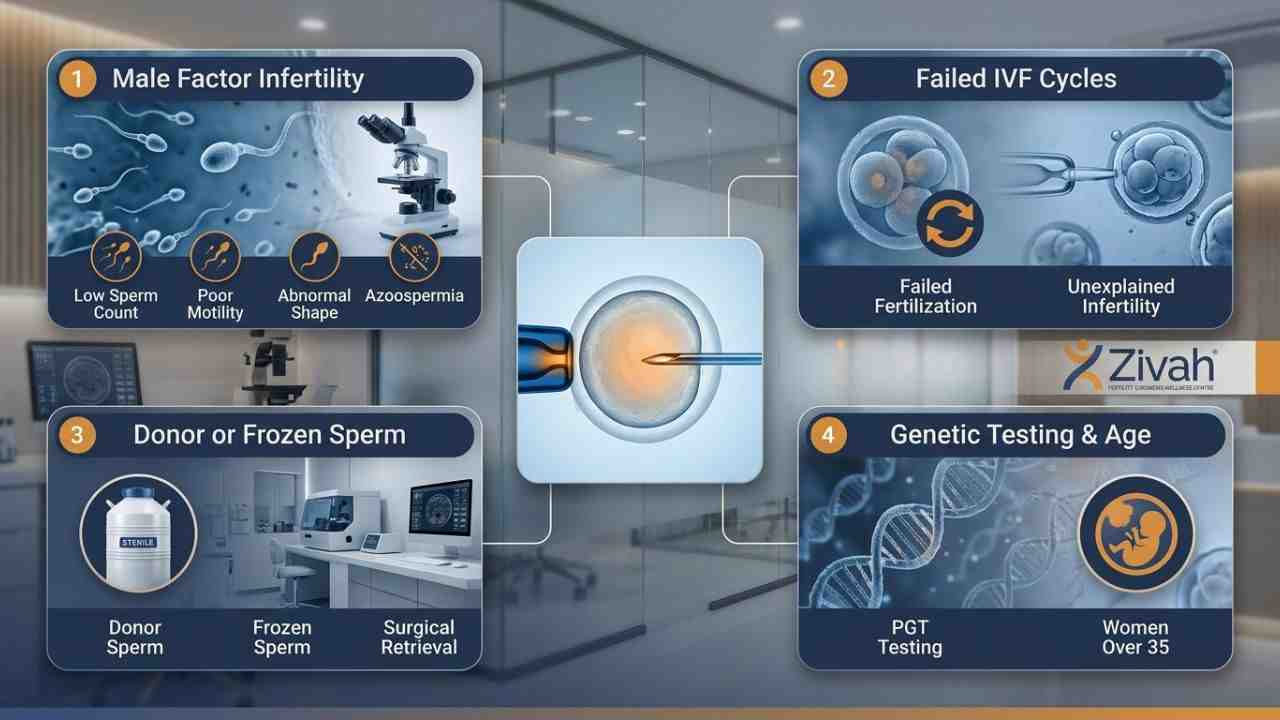
1. Male Factor Infertility (Low Sperm Count, Motility, Morphology)
The most frequent reason for ICSI for male infertility is poor sperm quality. ICSI is applied when sperm cannot fertilise the egg on their own.It's commonly used for:
- Low sperm count (Oligospermia) - ICSI for low sperm count can be effective even when the sperm are few
- Poor sperm motility (asthenozoospermia) – ICSI for Poor sperm motility means sperm don't have to swim to the egg
- Abnormal sperm shape (teratozoospermia) – embryologists will select the best-shaped sperm using high magnification
- Azoospermia – ICSI for azoospermia: surgical retrieval of sperm with TESA, PESA or micro-TESE
- Retrograde ejaculation or anejaculation
- Cases of post-vasectomy with surgically retrieved sperm
2. Failed IVF or Low Fertilization in Previous Cycles
If previous IVF cycles have not resulted in fertilisation, ICSI for failed IVF cycles is frequently the next step. Standard IVF is still a failure when it comes to fertilisation. ICSI bypasses that by injecting the sperm straight into the egg. It is also a good choice for unexplained infertility when no cause has been identified.
3. Donor Sperm, Frozen Sperm & Surgically Retrieved Sperm
ICSI is a good option if the sperm is not fresh or ejaculated naturally. Whether you are using donor sperm ICSI, frozen sperm IVF, or surgically retrieved sperm through IVF sperm retrieval, ICSI makes the most of every usable sperm, even when only a few are available.
4. Genetic Testing (PGT) and Older Couples
In the case of ICSI with genetic testing, there is just one sperm injected into each egg; there is no extra DNA to complicate matters. That’s why PGT with ICSI is the combo of choice. It is also recommended in ICSI for women over 35, as egg quality may be lower.
Difference Between IVF, IUI and ICSI
It's a common question couples ask about the IVF and ICSI difference, and how they compare to IUI. The simplest way to understand it: ICSI vs IVF is not a competition, because ICSI is actually a step in IVF. What is changing is how fertilisation happens in the lab.
How Conventional IVF Works and Where ICSI Steps In
In standard IVF, the sperm and eggs are combined in a dish, and fertilisation occurs naturally. If the sperm quality is good, it works fine. But when sperm count, motility or shape is too low for natural fertilisation, that's when ICSI in IVF comes in.
With ICSI fertilisation, you aren't leaving things up to nature; an embryologist will place a single healthy sperm right into the egg in an intentional manner. This type of microinjection IVF avoids the male-factor hurdles that traditional IVF cannot overcome.
ICSI vs IUI: Which One Is Right For You?
ICSI vs IUI is a common question, although the two work quite differently. IUI is washing the sperm and putting it in your uterus so fertilisation occurs naturally, best for mild infertility. ICSI, on the other hand, happens entirely in the lab and is used when sperm quality can't support natural conception, making it the go-to for severe male-factor infertility.
IUI vs IVF vs ICSI: Quick Comparison
Here's how the three treatments compare.
| Parameter |
IUI |
IVF |
ICSI Add-on |
|---|---|---|---|
| Fertilization Location |
Inside the uterus |
In a lab dish (natural mixing) |
In a lab dish (manual injection) |
| Sperm Count Needed |
Moderate to high |
Moderate |
Works even with very low count |
| Best For |
Mild infertility, ovulation issues |
Tubal blockage, female-factor infertility |
Severe male-factor, failed IVF, frozen/surgical sperm |
| Invasiveness Level |
Moderately invasive |
Minimally invasive |
Moderately invasive (within IVF cycle) |
| Lab Involvement |
Low, sperm preparation only |
Moderate, fertilization happens in dish |
High, single sperm hand-picked and injected |
| Typical Fertilization Outcome |
10–20% per cycle |
60–70% per egg |
70–85% per egg |
Once you know which treatment is best for your situation, the next step is to learn what tests are involved before the actual ICSI cycle begins.
Tests Required Before ICSI Treatment
Both partners go through a quick fertility test before the ICSI period starts. These tests are essential before ICSI treatment and help doctors to formulate a personalised strategy and identify the optimal protocol for stimulation, sperm selection and embryo transfer. Fertility tests before ICSI are easy, non-invasive and usually performed within a few visits.
Tests for the Male Partner
In men, it is used to determine the sperm quality and to detect any underlying problems that might block fertilisation. Common tests are:
- Semen analysis – looks at sperm count, motility and shape
- DNA fragmentation index (DFI test) - Sperm DNA quality
- Male hormonal profile – testosterone, FSH and LH levels
- Scrotal ultrasound – only if you think you have a structural issue
Tests for the Female Partner
For women, it's egg reserves, hormonal balance, and uterine health. As part of the usual workup:
- AMH test - to analyse ovarian reserve
- Transvaginal ultrasound - to check the ovaries and count the eggs
- HSG test or hysteroscopy - checks the uterus and fallopian tubes
- Hormonal panel - thyroid markers, FSH, LH, and estradiol
- Endometrial assessment - to make sure the uterus is ready for embryo transfer
After reviewing these data, your doctor creates a specific ICSI plan. The real treatment process begins with the step-by-step procedure.
ICSI Procedure: Step-by-Step Process
The ICSI process is a guided process that happens over a few weeks. All the steps aim toward the end goal, a healthy embryo for transfer. Here are five easy-to-understand steps in the ICSI procedure.
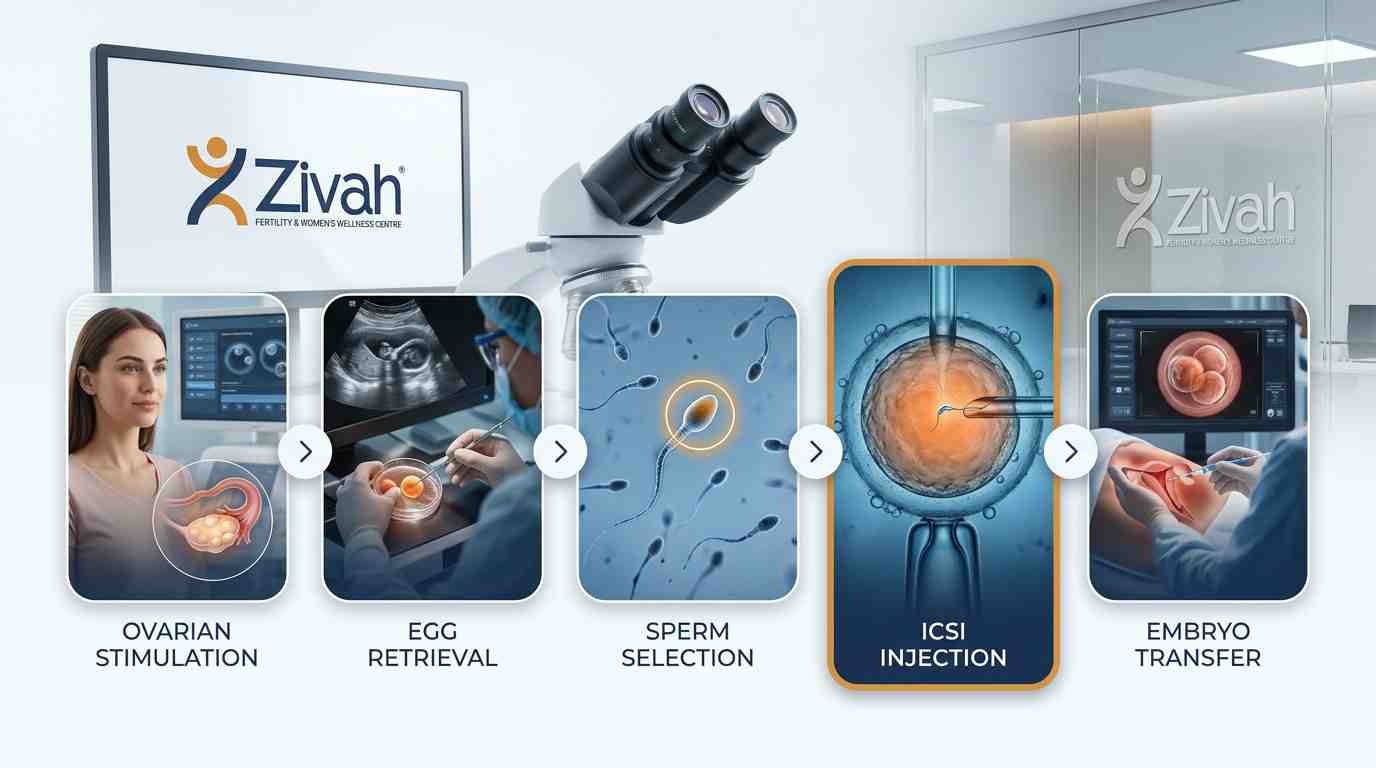
Step 1: Ovarian Stimulation
The cycle starts with ovarian stimulation, during which the female partner gets FSH and LH hormones injected into her ovaries every day for 8 to 14 days. These hormones help the ovaries in making several fully developed eggs at the same time. The doctor will closely monitor the growth of your eggs with periodic blood tests and ultrasounds until the eggs are ready.
Step 2: Egg Retrieval
Once the eggs are ready, egg retrieval is done under mild anaesthesia, and this is a short and comfortable phase. Then, those eggs are collected with the help of ultrasonography, which guides a small needle through the vaginal wall. The total oocyte retrieval procedure takes roughly 15-20 minutes. Most of the patients go home the same day.
Step 3: Sperm Collection, Preparation & Selection
On the same day, a sperm sample is collected from the male partner. In azoospermic men, sperm is retrieved using TESA, PESA or micro-TESE; therefore, sperm can be obtained for IVF even if there is no sperm in the ejaculation. Here, too, frozen samples can be used.
The sample is then washed (often called ICSI washed) to differentiate healthy sperm from the rest. During ICSI sperm selection, embryologists manually select the best sperm under a high-magnification microscope. Sometimes, a Sperm DNA Fragmentation Test is used to check sperm health.
Step 4: The ICSI Injection (Sperm Into Egg)
This is the heart of the procedure. A holding pipette is the egg stable, and a fine needle takes up one healthy sperm. The embryologist then carries out the intracytoplasmic sperm injection process, carefully putting the sperm into the egg's cytoplasm.
At Zivah, our trained embryologists perform this stage of sperm injection into the egg using high-quality lab equipment.
Step 5: Post-Injection (Fertilization Check, Embryo Culture & Transfer)
About 16–18 hours later, the eggs are examined for fertilisation check, and ICSI to confirm that an embryo has formed. The embryos are then grown in embryo culture ICSI for 3 to 5 days until they reach the blastocyst stage. Finally, the ICSI embryo is transferred, and a healthy embryo is inserted into the uterus via a soft, thin catheter. The treatment is short and painless.
Then you wait 10-14 days and do the pregnancy test. Once the cycle is over, the next item on every couple's mind is success, so let's look at what the numbers actually show.
ICSI Success Rate: What to Expect
Before starting treatment, most couples want to know one thing: what are the real chances of ICSI working? On average, the success rate of ICSI has a 70% to 85% fertilization, suggesting 7 to 8 out of every 10 mature eggs fertilise successfully. But how successful ICSI treatment is overall depends on more than just fertilisation.
Fertilization Rate vs Pregnancy Rate vs Live Birth Rate
These three numbers are easy to confuse, but each one measures something distinct. Here’s a quick breakdown:
| Success Metric |
What It Measures |
Typical Range |
|---|---|---|
| Fertilisation Rate ICSI |
Eggs fertilized after injection |
70–85% |
| Pregnancy Through ICSI |
Embryos leading to pregnancy |
40–55% |
| ICSI Live Birth Rate |
Pregnancies ending in a healthy baby |
30–45% |
So while the fertilisation rate of ICSI is high, pregnancy from ICSI and the ICSI live birth rate rely on the egg quality, embryo health and the age of the woman.
Factors That Affect ICSI Success
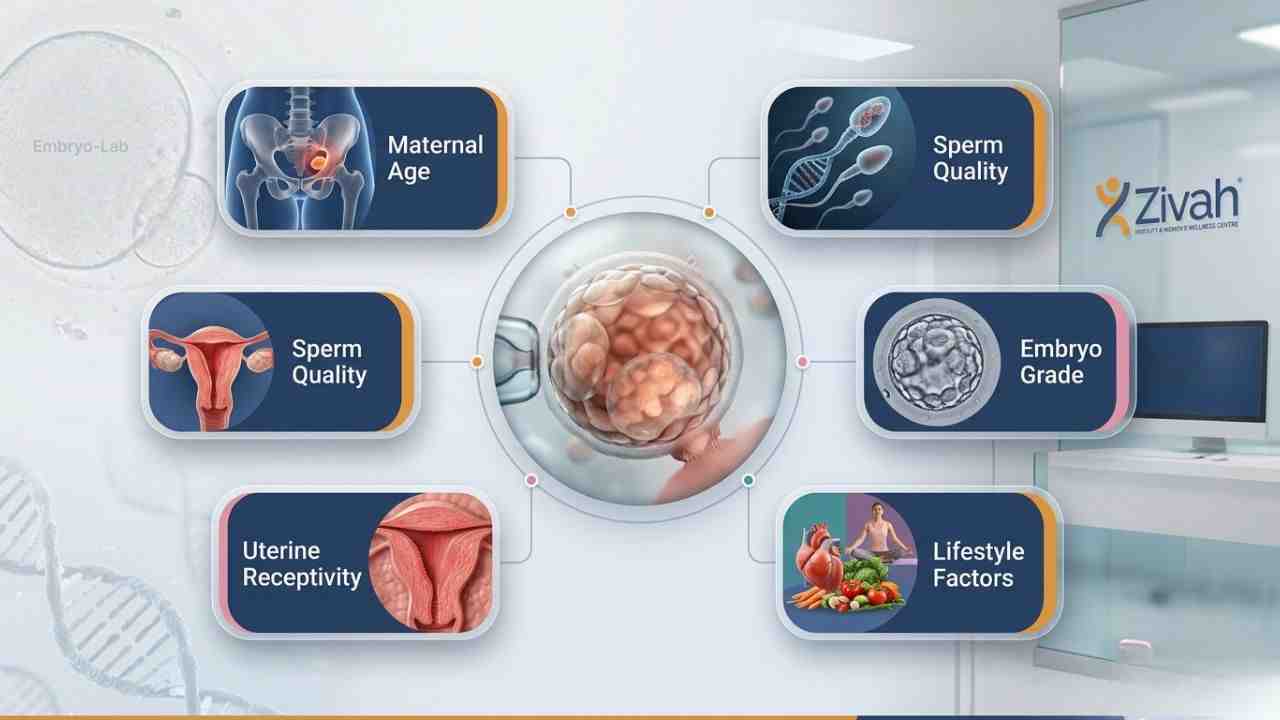
There are various factors that can influence the success of ICSI, some medical, others lifestyle:
- Maternal age - younger eggs have more success
- Sperm Quality and DNA Fragmentation – Yes, sperm quality may affect ICSI results
- Embryo grade – higher grade blastocysts have greater implantation rates
- Uterine receptivity - a functional endometrium enables implantation
- Lifestyle factors – smoking, BMI, alcohol and stress are all lifestyle factors that can impact ICSI results
It’s comforting to know the numbers, but it’s just as important to know what occurs after the embryo transfer.
What to Expect After ICSI: Recovery & Two-Week Wait
The days after embryo transfer can feel like the longest phase of the journey. Knowing what to expect after ICSI makes the wait easier. A short look at the recovery after ICSI and the two-week wait ICSI phase, from early recovery to pregnancy test.
Immediate Recovery After Embryo Transfer
Recovery after ICSI embryo transfer is generally smooth and even. Most women feel fine within a few hours and don't need to stay in bed. Just keep these in mind:
- Mild cramping or light spotting is normal
- Continue prescribed medications (like progesterone)
- Avoid heavy lifting, intense workouts, and alcohol
- Stay hydrated and rest well
The amount of rest you require after ICSI varies. Gentle activity is usually enough.
The Two-Week Wait: From Transfer to Pregnancy Test
The two-week wait for ICSI is the time between transfer and the pregnancy test. Implantation occurs 1-5 days after pregnancy and typically has no symptoms, and that's normal. The most accurate result comes from a blood beta-hCG test, done around days 10-14. Pregnancy tests after ICSI done too early may not be valid.
When to Contact Your Doctor
Most recoveries are good, but when to call a doctor after ICSI depends on the symptoms. Reach out if you notice:
- Bleeding heavily or with huge clots
- Severe abdominal pain
- Sudden bloating, weight gain or dyspnea (signs of OHSS)
- High fever or signs of infection
- Mild cramping or mild spotting is typical; anything sharp or worsening needs to be checked out
While most ICSI journeys are comfortable, it's also good to know the probable risks and side effects.
Risks, Benefits & Advanced Techniques of ICSI
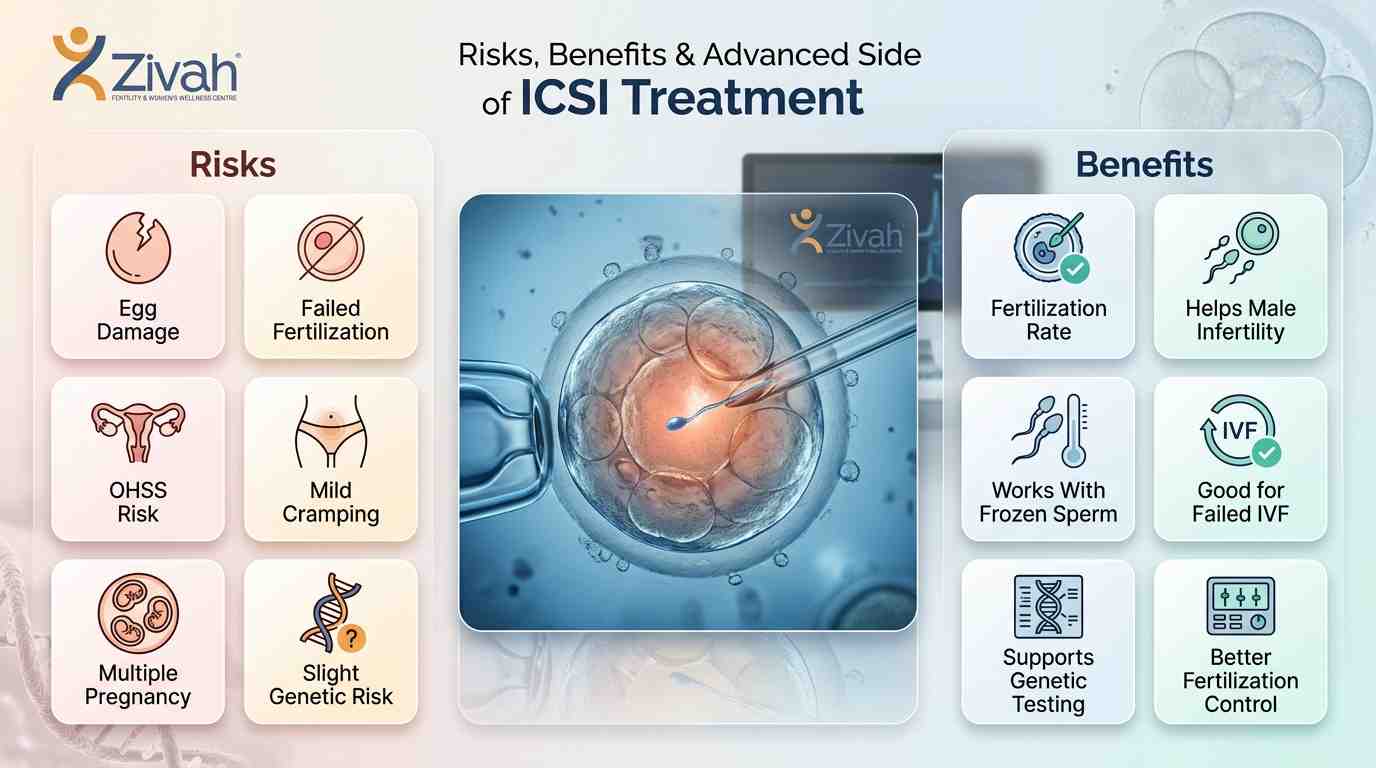
Like every medical technique, ICSI has its own risks, but it also has different benefits, particularly for couples with male infertility or failed IVF cycles. Learning both points of view can help you make an informed decision. Here’s a fair view of the dangers of ICSI, its advantages, and the advanced ICSI techniques that improve outcomes today.
Possible Risks and Side Effects of ICSI
ICSI is a very safe procedure; however, there are certain risks. Most are rare and are well cared for by educated fertility specialists.
Procedural Risks:
- Some eggs may not survive the injection (damage to eggs during ICSI)
- Even after injection, fertilisation may not occur
- Some embryos might stop developing in advance of transfer
Risks to the Mother:
- Ovarian Hyperstimulation Syndrome (OHSS) due to stimulation medication
- Light cramping or bloating after embryo transfer
- Slightly increased risk of multiple pregnancy if more than one embryo is transferred
Risks to the Baby:
Research suggests that ICSI babies have just a little greater probability of congenital abnormalities, roughly 1% above the typical 2–3% baseline. Most specialists connect this to the causes of infertility rather than the treatment itself.Some of the conditions commonly cited in research include hypospadias, Angelman syndrome, and Beckwith-Wiedemann syndrome, but the absolute risks are quite low.
Key Benefits of ICSI
This is why the benefits of ICSI treatment make it preferred for many fertility cases:
- High fertilisation rate despite low sperm quality
- Can work with frozen, donor or medically obtained sperm
- Effective for Unexplained Infertility and Failed IVF
- Great for couples who are planning PGT (genetic testing)
- Overcomes obstacles that hinder the normal fertilisation of sperm and egg
- A strong option for severe male infertility
Advanced ICSI Techniques
Today's fertility labs have newer versions of ICSI that are more precise and give better outcomes:
| Technique |
Clinical Benefit |
|---|---|
| Piezo ICSI |
Uses gentle vibrations to reduce egg trauma during injection |
| IMSI |
Magnifies sperm up to 6000x for finer shape and quality selection |
| Laser-Assisted Hatching |
Thins the embryo shell to support better implantation |
We don't upsell these advanced treatments; we only use them when they are clinically effective at Zivah.Once you have considered the dangers and rewards, the next step is to find the right fertility partner, and that is where Zivah comes in.
Why Choose Zivah for ICSI Treatment
In terms of ICSI treatment in India, the appropriate choice of a fertility partner makes all the difference. Among the leading ICSI clinics in India, Zivah is a trusted name for quality care with advanced reproductive technology. What makes Zivah different:
- Individualised ICSI methods for every couple
- Modern embryology laboratory with strict quality standards
- Monitoring on each vital step by a senior embryologist
- Evidence-based add-ons, only if clinically indicated
- Expert help for your ICSI fertility treatment
Want to know more about the ICSI process, cost or eligibility? Our specialists are a call away."Contact us today for your free consultation and take the first step with Zivah."