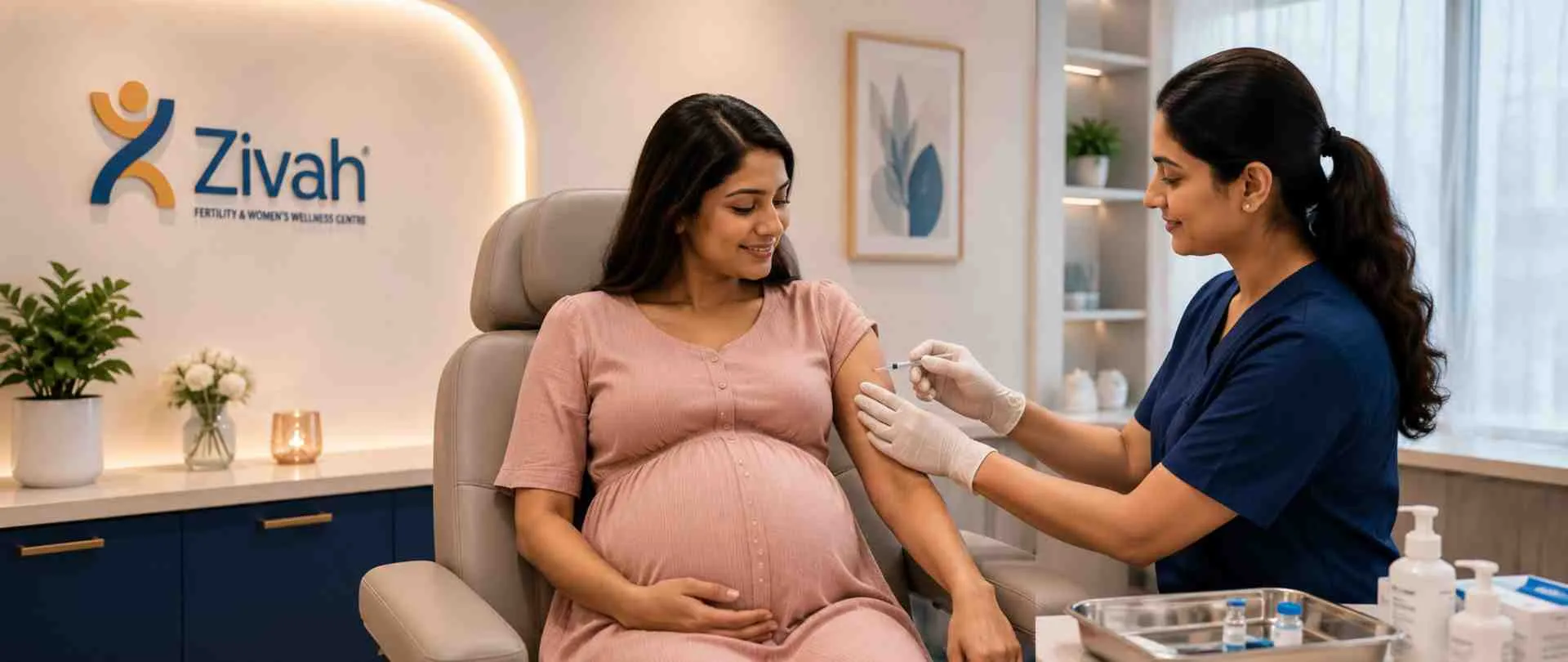
Antenatal vaccines make it easy to protect two lives at once during pregnancy. These pregnancy shots, which are provided as part of Zivah’s gentle, well-timed care, are one of the best things you can do for yourself and your growing baby. Our experts will help you figure out which vaccines are best for you, when to get them and how each one fits in with your pregnancy. This way, you won't feel rushed or confused.
Vaccination during pregnancy works best as a shared, caring decision, and that is exactly how it feels here. From the first time you talk to them, you are cared for by a team that treats safe immunisation for mom and baby with kindness and quiet skill. It's important to protect this special time while you're pregnant. Zivah is here to walk with you and make every step feel calm and clear.
What Are Antenatal Vaccines?
Antenatal vaccines at Zivah are the vaccines given during pregnancy to protect your health and shield your baby during the first, most fragile months. Simply put, maternal vaccination helps your body build immunity against specific infections and pass some of that immunity to your baby via the placenta, so your baby is born with a helpful layer of protection already in place.
Why Do Pregnant Women Need Vaccines?
Pregnancy can change how your body reacts to infection and make some illnesses worse for you and your baby. Vaccines are important during pregnancy because they lower that risk on both sides and keep your newborn protected in the first weeks, before their own vaccination schedule begins.
The table below shows the antenatal vaccines we commonly provide at Zivah, what each protects against, and when they are usually advised.
| Vaccine |
Protects Against |
Typically Advised |
|---|---|---|
| Tdap |
Tetanus, diphtheria, and whooping cough |
Third trimester (27–36 weeks) |
| Influenza (Flu) |
Seasonal flu and its complications |
Any trimester, during flu season |
| Tetanus Toxoid (TT) |
Maternal and neonatal tetanus |
As advised by your doctor |
| COVID-19 |
Severe COVID-19 illness |
As advised by your doctor |
| Hepatitis B |
Hepatitis B infection |
As advised for women at risk |
Your Zivah specialist confirms the right vaccines and timing after a gentle look at your health and history. Next, we look at the real benefits these vaccines bring.
Benefits of Antenatal Vaccination - And What to Weigh
The benefits of pregnancy vaccines which reach far beyond your own health, which is what makes them such a caring choice. When you get a shot while you're pregnant, the protection works in a few important ways behind the scenes:
- Your body builds antibodies that protect your baby in the first few weeks of life, before they get their own shots.
- You are safe from infections that are more likely to happen to pregnant women.
- It's less likely that problems will affect both of you.
These antenatal vaccine advantages are gentle but real, and they are one of the clearest ways maternal vaccines protect your newborn baby. Every decision is carefully weighed, and your Zivah specialist considers the full picture before advising you.
Are There Any Risks to Vaccinating During Pregnancy?
It makes sense to wonder if getting vaccinated while pregnant is dangerous. The answer is no; it is not. The vaccines that are recommended for pregnant women are chosen because they are safe for both you and your baby. Live vaccines, on the other hand, are put on hold until later. Because most small problems are mild and don't last long, we always weigh the clear benefits against a few careful checks first.
You can see that both the pros and cons are matched in the table below, which shows the benefits and what your doctor looks at before recommending a vaccine.
| Benefits |
What Your Specialist Checks First |
|---|---|
| Passes protective antibodies to your baby |
Reviews your allergy and vaccination history |
| Protects your newborn before early vaccinations |
Confirms the right vaccine for your stage of pregnancy |
| Helps protect you from serious infections |
Plans the safest timing for each vaccine |
| May reduce the risk of pregnancy complications from infections |
Checks for vaccines that should be avoided during pregnancy |
All of these tests are done by hand, and your Zivah specialist weighs each one individually to ensure each vaccine fits you perfectly. Next, we'll look at which shots are suggested and when they should be given.
Which Vaccines Are Recommended and When?
A gentle pregnancy vaccination plan gives you each shot at the best time for you and your baby, based on the stages of your pregnancy. Some are given early, some closer to the due date, and some only if your health history says they should be. The timing of your prenatal vaccines is always based on you, not on rules. That's why your Zivah specialist will tell you which vaccine and which week are right for your stage.
What Is the Best Time to Take the Tdap Vaccine?
The Tdap vaccine is usually advised in the third trimester, when protective antibodies transfer most strongly to your baby before birth. The ideal week can vary from one pregnancy to another, so your specialist confirms the timing that gives your little one the best cover. The table below shows how the wider schedule comes together.
| Pregnancy Stage |
Vaccine Considered |
Purpose |
|---|---|---|
| First Trimester |
Influenza (if in season) |
Early protection against seasonal flu |
| Second Trimester |
Influenza or TT (as advised) |
Continued maternal protection |
| Third Trimester (27–36 Weeks) |
Tdap |
Maximises antibody transfer to the baby |
| Any Stage (When Indicated) |
Hepatitis B or COVID-19 |
Protection based on individual risk |
These stages are a general guide, and the exact timing is always confirmed by your Zivah specialist.
Which Vaccines Are Avoided During Pregnancy?
Just as some vaccines are encouraged, certain immunisations are deferred until after delivery to keep your baby fully safe. These are mostly live vaccines, the main difference between pregnancy and normal adult vaccines, and they are given later rather than skipped. Our dedicated pages on the Influenza Vaccine, HPV Vaccine, and Pre-Pregnancy Vaccines explain each one in more detail.
| Generally Safe |
Usually Avoided (Live Vaccines) |
|---|---|
| Tdap (Inactivated) |
MMR |
| Influenza (Inactivated) |
Varicella |
| Tetanus Toxoid (TT) |
Live attenuated vaccines |
| Hepatitis B |
--- |
The shorter avoided list is a good sign, since most of the protection you need during pregnancy is both safe and encouraged. Your Zivah specialist confirms what suits you. Next, we look at who should book antenatal vaccines and when it matters most.
Who Should Book Antenatal Vaccines at Zivah?
Antenatal vaccination is helpful for almost every pregnant woman, but for some it matters even more. If you see yourself below, book early to give yourself and your baby the best protection:
- Women having their first baby who want to feel secure straight away.
- Women who look after long-term illnesses such as diabetes, asthma or heart problems.
- Women who want to travel while they are pregnant.
- Anyone who is pregnant and has a high risk of getting pregnant. Extra protection gives them peace of mind.
Whichever group you fall into, immunisation for a high-risk pregnancy is always tailored, and your Zivah specialist plans it alongside your wider antenatal care. If you are already in for your 3D/4D pregnancy scans or folliculometry scans, your vaccines can be arranged around the same visits. Booking with us means one caring team looking after every part of this journey.
What Happens During Your Antenatal Vaccination Visit
A pregnancy vaccination visit is quick, calm, and easy to follow from start to finish. You have a brief consultation to confirm your stage of pregnancy and reason for the vaccine. Then there is a short review of your health and any allergies to ensure the right vaccine is safely matched to you. Then you get the vaccine, usually a little shot in the upper arm, and you’re watched for a little while to make sure you’re feeling okay before you head home. You go home with simple aftercare guidance and know exactly who to contact if you have questions.
How Are Antenatal Vaccines Given?
Antenatal vaccines are given as a simple injection, most often into the upper arm, and the process takes only moments. There is nothing complicated to prepare for, and the short observation afterwards is purely a gentle precaution so you leave feeling reassured and looked after.
Note: Every antenatal vaccine is given only after your specialist has reviewed your health and confirmed it is right for you. The steps above are a general guide, and your visit is always tailored to your pregnancy and comfort.
Are Antenatal Vaccines Safe? Side Effects and Reassurance
Yes, the vaccines advised in pregnancy are safe for both you and your baby, and this is one of the most common worries we are glad to put to rest. The flu shot, for instance, is well studied and safe during pregnancy, and vaccines like Tdap are chosen precisely because they protect without putting your baby at risk.
Any reactions that do appear are usually mild and pass on their own within a day or two. Most women feel completely normal soon after, and a few notice only small, short-lived effects such as:
- Some pain at the injection site.
- A little tired for a short time.
- A little higher warmth that goes down quickly.
These small effects are your body building protection, and they fade quickly. Serious reactions are very rare, and you are always told exactly what to watch for before you leave.
When Should I Call My Specialist After a Vaccine?
Most side effects need no attention at all, but a few warning signs are worth a quick call so you are never left wondering. If anything feels beyond the mild effects above, reaching out early is always the right choice. The table below sets the usual, expected effects beside the signs that mean you should contact us.
| Usually Mild & Expected |
When to Contact Zivah |
|---|---|
| Soreness at the injection site |
High or persistent fever |
| Mild tiredness |
Signs of an allergic reaction |
| Low-grade fever |
Unusual swelling or difficulty breathing |
Always go with your gut and don't be afraid to talk to your Zivah specialist if something doesn't feel right. Next, we'll talk about why so many moms choose Zivah for their prenatal shots.
Why Choose Zivah for Your Antenatal Vaccination
Where you get your pregnancy shots really comes down to who you trust with this important time, and Zivah is built around that kind of care. Because you can trust us to provide a pregnancy vaccine, we make sure every visit is warm and full of quiet knowledge, so you never feel rushed.
Here are some easy reasons why moms pick us:
- Experienced women's health specialists who understand pregnancy vaccines inside out.
- An individualised schedule, planned around your stage and history rather than a fixed list.
- Gentle, unhurried care that gives you space to ask anything.
- Vaccines coordinated neatly with your wider antenatal check-ups, all under one roof.
All of these things make Zivah a kind option for gentle prenatal immunisation, where your safety and happiness always come first. When you're ready, our team will make each step feel calm, clear, and safe.
Your Baby's First Protection Begins with You
Antenatal vaccines are one of the kindest, simplest ways to protect both you and your baby through pregnancy and into those first tender weeks of life. With the right vaccine at the right time, you give your little one a head start on safety while keeping yourself well. At Zivah Fertility, that protection comes wrapped in gentle, personal care from specialists who treat your pregnancy as something truly worth looking after. If you are expecting and want to keep this journey safe, our team is ready to guide you, one caring step at a time.