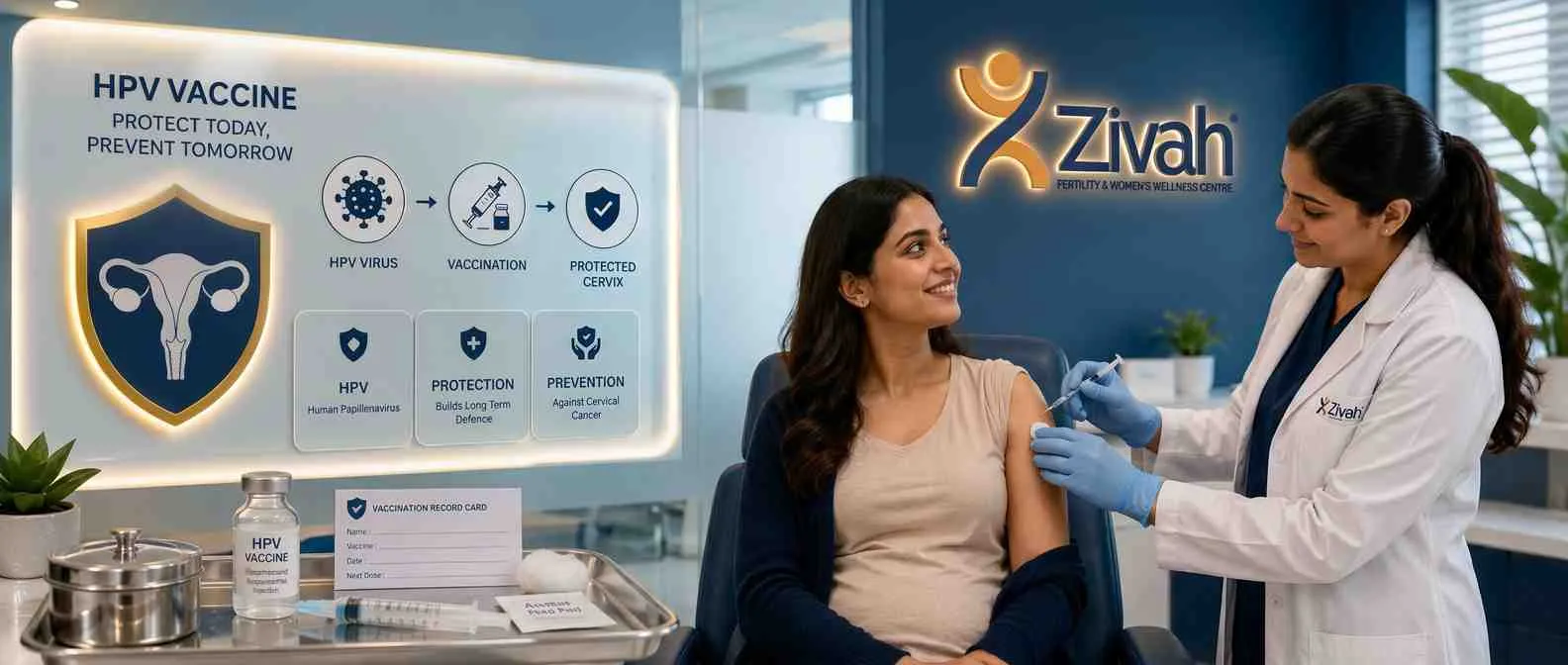
The HPV vaccine is one of the best strategies to prevent cervical cancer and other cancers caused by the human papillomavirus. It is a cervical cancer prevention vaccine, and it works by keeping you from getting HPV infections that can develop into cancer over many years. That is why HPV vaccination is now so frequently recommended for both women and men.
On this page you'll find out what the human papillomavirus vaccination protects against, which vaccine is used, who should receive it and at what age, how many doses you need, how successful it is, how safe it is, and why you still need Pap tests after that. And here's the amazing thing about it: It's one of the very few vaccines that can actually prevent cancer.
What Is the HPV Vaccine and How Does It Work?
The HPV vaccination is a shot that protects you from human papillomavirus. It's a common virus that has been linked to cervical cancer and numerous other cancers. Rather than treating infection, it stops it before it can take hold, making it a rare vaccine that prevents cancer.
How the HPV Vaccine Protects Against Cervical Cancer
HPV is one of the most common sexually transmitted viral infections, transmitted by simple skin-to-skin contact. Many infections heal up on their own, but some do not and can last for years and, in certain instances, lead to cervical cancer.
So how does the HPV vaccination work? It uses virus-like particles that look like HPV on the outside but don't contain any of the virus's genetic information, meaning the vaccination cannot trigger an infection. Instead, those particles teach your body to make antibodies so if you ever encounter the genuine virus, you're ready to fight it off.
Timing is everything. The vaccination prevents new infections, but it can't treat an infection you already have; therefore, it works best given before any exposure. Alongside regular screening, vaccination is the single most effective way to prevent HPV and the cancers it causes.
HPV-Related Cancers and Conditions the Vaccine Helps Prevent
| Condition |
HPV strains involved |
Who it affects |
|---|---|---|
| Cervical cancer |
16, 18 and others |
Women |
| Vaginal & vulvar cancer |
16, 18 |
Women |
| Anal cancer |
16, 18 |
Women and men |
| Penile cancer |
16, 18 |
Men |
| Throat (oropharyngeal) cancer |
16, 18 |
Women and men |
| Genital warts |
6, 11 |
Women and men |
Understanding what the vaccine guards against leads to the next question, which vaccine actually does the guarding.
Which HPV Vaccine Is Used: Gardasil 9 and What It Protects Against
Currently, the most widely used HPV vaccine is Gardasil 9, which provides the broadest coverage. It’s what most clinics use to prevent cervical cancer, several more HPV-related malignancies and genital warts in one fell swoop.
HPV Strains Gardasil 9 Covers, and Other Vaccines Available in India
As the name suggests, the Gardasil 9 HPV vaccination protects against nine types of the virus, the ones that do the greatest harm:
- HPV 16 and 18 - the high-risk strains that cause ~70% of cervical cancers
- HPV 31, 33, 45, 52 and 58 - five other high-risk strains which account for a further 10 to 20%
- HPV 6 and 11 - low-risk strains that cause around 90% of genital warts
You can also see additional possibilities. Older vaccinations such as Gardasil (4-strain) and Cervarix (2-strain) are still available, and India now has its own vaccine, Cervavac.
Both protect, but Gardasil 9 protects against the most strains, which is why it is typically favoured for both younger recipients and adults.
Now that you know what Gardasil 9 prevents, the true question is whether the vaccination is good for you. And that depends on your age and eligibility.
Who Should Get the HPV Vaccine? Age and Eligibility
The HPV vaccination works best when given early, but it’s not only for the young. Who gets it and when depends a lot on your age and whether you’ve already been exposed to the virus.
Best Age for HPV Vaccination in Girls and Boys
The best age for HPV vaccination is around 11 or 12, although it may be given as young as 9. To summarise, the vaccine works best when it is given before any exposure to the virus; therefore, vaccinating the person before they become sexually active is the best way to protect them.
And it's not just for girls, either. Boys and men also benefit since HPV may cause throat, penile and anal cancers. Vaccinating boys also helps protect their future relationships through herd protection. Catch-up vaccination is generally recommended for anyone who missed vaccinations in the early years, up to age 26.
HPV Vaccine for Adults, Married and Sexually Active Women
The vaccination is licensed for people up to 45, but there’s a big difference. It’s not a blanket suggestion for ages 27 to 45. It’s really a collaborative choice between you and your doctor depending on your history and your risk.
If you are married or already sexually active, that’s okay. Even if you’ve been exposed to one kind of HPV, the vaccination can help protect you from the types you haven’t been exposed to yet. It can’t do one thing, though: treat an illness you already have.
HPV Vaccine: Who It's Recommended For, by Age Group
| Age group |
Recommendation status |
Notes |
|---|---|---|
| 9–14 |
Routinely recommended |
Best age; strongest protection |
| 15–26 |
Routine catch-up |
For those who missed earlier doses |
| 27–45 |
Shared decision |
Decided with your doctor, based on history |
Once you’ve decided the vaccination is correct for you, the next thing to figure out is how many doses you really need, and that, too, depends on your age.
HPV Vaccine Dose Schedule: How Many Shots Do You Need?
How many HPV shots you need comes down to the age at your first dose; younger recipients need fewer. The whole HPV vaccine schedule is over several months so your body generates strong, lasting protection.
2-Dose vs 3-Dose Schedule by Age
If you start vaccination before age 15, you’ll normally need just two doses, given 6 to 12 months apart, at this age, your immune system is strong enough for two shots to do the trick.
The Gardasil schedule for ages 15 onwards is three doses over six months, generally 0, 1 to 2 months, then 6 months. The three doses are required for everyone with a compromised immune system, regardless of age.
A few short notes: If you are interrupted while you’re working, you don’t start again; you just pick up where you left off. A new study reveals that even a single dose may provide significant protection, although the conventional 2- and 3-dose series remains the norm.
The shot is to the upper arm. The number of doses is fixed, but the obvious next issue is how effective that protection is and how long it lasts.
How Effective Is the HPV Vaccine and How Long Does It Last?
The HPV vaccination is a very effective tool and one of our best tools for protecting against cervical cancer. When used at the right moment, it provides powerful and long-lasting protection.
Effectiveness, Duration and Whether You Need a Booster
Knowing how effective it is helps explain why it is so commonly recommended. The take-home message on Gardasil’s effectiveness: The HPV vaccination can lower the risk of cervical cancer by up to around 90% when given before any exposure to the virus.
That "before exposure" bit is key because protection is optimal when the vaccination is administered early, before any HPV encounter. So does the HPV vaccine prevent cervical cancer? It gets quite close, along with frequent screening. Here are a few things to remember:
- Real-world results back it up - since vaccination went mainstream, HPV infections and linked cancers have gone down like a stone.
- Protection is durable - Gardasil has been proved to last at least 10 years, and there is no evidence of waning, which is why no booster is now indicated.
- It protects beyond the individual - since widespread immunisation creates herd protection, reducing the spread of the virus even among individuals who are not vaccinated.
HPV Vaccine: Protection Level and Duration at a Glance
| Measure |
Detail |
|---|---|
| Cervical cancer risk reduction |
Up to ~90% when given before exposure |
| Genital warts protection |
Around 90% (HPV 6 and 11) |
| When protection is strongest |
Given young, before any HPV exposure |
| How long it lasts |
10+ years, with no fading so far |
| Booster needed |
Not currently recommended |
The second question most people have regarding strong, enduring protection is if the vaccination itself is safe.
Is the HPV Vaccine Safe? Side Effects and Who Should Wait
The HPV vaccine has one of the strongest safety records of any vaccine, backed by more than a decade of close monitoring. Side effects do happen, but they're usually mild and short-lived, and a few people should simply wait.
Common HPV Vaccine Side Effects
Most people have minor side effects from the Gardasil vaccination that go away quickly. The most common are:
- Injection site – pain, redness or slight swelling
- General effects - headache, fatigue, slight fever or nausea
- Dizziness or fainting - (this is why you are encouraged to sit for around 15 minutes after your injection)
These usually clear up after a day or two. Importantly, years of study have not shown any long-term adverse effects, so the advantages of vaccination far outweigh its minor, transient risks.
Who Should Not Get the HPV Vaccine (Pregnancy, Allergies, Illness)
Vaccination is not for everyone all the time. If you must wait, it is better to: If you're pregnant, it's administered after pregnancy, yet if you got a dose before you knew you were pregnant, there's no known danger of issues. You should not have it if you’ve had a bad reaction or allergy to a prior dose or an ingredient like yeast.
If you are slightly or seriously ill, wait till you are well. Breastfeeding, on the other hand, is perfectly fine. But despite the powerful and safe protection, there is one key limitation to the vaccination, and that’s why it’s still vital to get cervical screening following your injections.
Why You Still Need Pap Tests After the HPV Vaccine
The vaccination is important, but you should always do the checkup part too. Even if you get the HPV vaccine, frequent Pap tests are still crucial to protect you against cervical cancer.
HPV Vaccination Plus Cervical Screening for Full Protection
That’s why they are connected. Gardasil 9 is wide, but not every high-risk strain of HPV is covered, so there’s still a slight probability of cervical changes. And then other things cause cervical cancer that aren't HPV, and no vaccine is going to protect you from those. That is what cervical cancer screening is for.
A Pap smear looks for early changes in the cervix before they become problematic, and an HPV test can find the infection itself. Have them done on schedule and most problems get caught early, when they're straightforward to treat.
It helps to see the two as a pair. The vaccination prevents most illnesses from occurring in the first place. Screening looks for anything that gets through. Zivah offers cervical screening as well as vaccinations, so you’re protected on both fronts.
HPV Vaccine vs Cervical Screening: What Each Does
| Factor |
HPV vaccine |
Pap & HPV test |
|---|---|---|
| Purpose |
Prevents HPV infection |
Detects early cervical changes |
| Timing |
Before exposure, given young |
Regularly, from your 20s onwards |
| What it catches |
Most high-risk & wart-causing strains |
Cell changes and HPV already present |
| Who needs it |
Everyone in the recommended ages |
Anyone with a cervix, vaccinated or not |
Since screening and safety go hand in hand, the real question is where to get vaccinated and what will happen during your visit.
Getting the HPV Vaccine at Zivah: What to Expect
Getting the HPV vaccine at Zivah is quick and easy. Your whole visit from the first consultation to the actual shot is meant to be relaxing, straightforward and easy to fit into your day.
Your Consultation and the Injection
Your HPV vaccine starts with a short doctor’s consultation before the injection:
- A fast eligibility check – your doctor will look at your age, history and any previous reactions and answer any questions you may have.
- The usual fear, put to rest - People often question if the HPV vaccine is unpleasant. It’s actually only a fast squeeze, delivered in your upper arm.
Aftercare and Tracking Your Dose Schedule
The care doesn’t stop after the shot is done:
- A brief wait - you’ll sit for approximately 15 minutes, since some individuals become a little woozy after any injection. Simple precaution, that’s all.
- No beginning over – If you miss a dose, you don’t start again; you just pick up where you left off.
- Zivah handles reminders for you – it monitors your schedule and lets you know when to take your next dose. So you’re clear on what the visit is about; now it’s a matter of where to book locally and how the fee works.
HPV Vaccination at Zivah
Taking one step can help you begin to protect yourself against cervical cancer. With Zivah, getting the HPV vaccine in Siliguri is easy, and you may stay on schedule for your complete course.
HPV Vaccine Cost and Consultation in Siliguri
Your first dose is just a visit away at Zivah’s HPV vaccination clinic in Siliguri, and your follow-up doses are planned so the series is on track with no guessing. Families are encouraged to be vaccinated together, and kids and teenagers are welcome when accompanied by a parent or guardian.
The cost of the HPV vaccination varies depending on your age and how many doses you need, so it’s advisable to check this at your appointment. Reach out to the Zivah team in Siliguri to determine whether HPV vaccination is suitable for you, and take that initial step with confidence.