Living with endometriosis is difficult suffering: the uncertainty, and often years of feeling strange. Endometriosis care is about changing that: an understanding, specific strategy that allows you to manage symptoms, protect your fertility and feel truly heard along the way. It begins with understanding what's happening in your body and creating a strategy around your life, not the opposite of it.
At Zivah, that means skilled professionals who will listen first, explain clearly, and guide you through every stage, from finding answers to treating the disease long-term. You don't get a diagnosis and have to deal with it yourself. In this guide, we'll talk you through what endometriosis care means, what symptoms to look out for, how it's identified, how it affects your fertility, how it's handled, and what it costs.
What Is Endometriosis Care?
Endometriosis is a disease where tissue very similar to the womb lining develops outside the womb, often causing pain and affecting fertility. The primary point of confusion when considering these symptoms is what endometriosis actually is, and that’s usually where care begins.
Treating endometriosis isn’t a one-and-done sort of thing. This is a team effort, an ongoing journey between you and your specialist, built on your comfort and your goals. Good endometriosis management is more than simply addressing one symptom. It is about taking care of the full view: your pain, your fertility and your everyday life.
Why Specialist Care Makes a Difference
With the correct care, anything is possible. Why is specialist endometriosis care so important? Because this is a complex disease that works differently in every woman. Experienced professionals don’t just treat symptoms; they create a plan around you:
- Symptoms and pain: treated with a plan that fits your body.
- Fertility: safe and supported – whatever your aims.
- Daily living: care that matches your life, long-term.
Endometriosis is something you need support to manage, not something you face alone; with the right team behind you. That’s where care begins with early recognition of the signs.
Signs and Symptoms of Endometriosis
Symptoms and signs of endometriosis might vary greatly from woman to woman. For some, the pain is terrible; for others, mild enough to be ignored for years. If you've been told your symptoms are "just part of being a woman," you're far from alone; many women wait a long time for actual answers.
Common Symptoms to Look Out For
Some indications keep coming up over and over. When symptoms persist, people commonly ask, "What are the signs of endometriosis?" These are the ones to pay attention to:
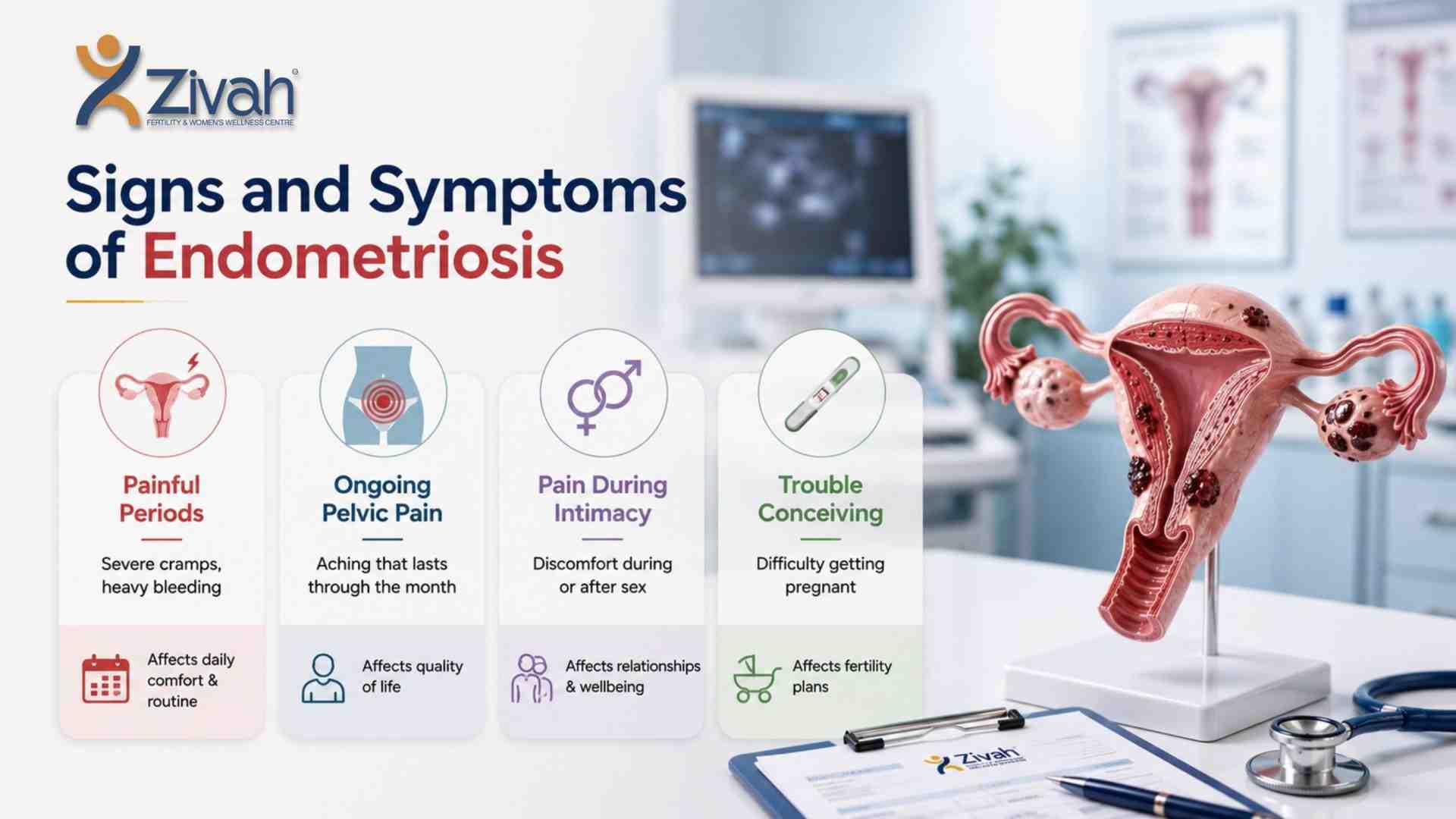
- Painful heavy periods: cramps that get in the way of your day, not just a little discomfort.
- Pelvic discomfort, not only period pain: aches that last through the month.
- Pain with intimacy or difficulties conceiving: pain or difficulty believing.
These fit with other conditions, which is why it's important to get them checked out. Here is what each one looks like.
| Symptom |
What You Might Notice |
What It Can Affect |
|---|---|---|
| Painful periods |
Severe cramps, heavy bleeding |
Daily comfort and routine |
| Ongoing pelvic pain |
Aching between periods |
Quality of life |
| Pain during intimacy |
Discomfort during or after sex |
Relationships and wellbeing |
| Trouble conceiving |
Difficulty getting pregnant |
Fertility plans |
These are signs to be aware of, not a diagnosis, only an expert can diagnose endometriosis. Which naturally brings us to how a diagnosis is actually made.
How Endometriosis Is Diagnosed
At Zivah, the diagnosis of endometriosis is made by skilled gynaecologists who understand how easily this condition can be overlooked. It has so many symptoms in common with other diseases that a careful, step-by-step approach is needed to arrive at a specific answer, not just one test.
From Consultation to Confirmation
Diagnosis usually involves a phased process. Knowing the process can help you understand how endometriosis is diagnosed and what you can expect. It will begin with a discussion of your symptoms and medical history, then a physical exam will be performed.
An ultrasound scan then looks for symptoms within the pelvis. In many situations, laparoscopy (a small keyhole surgery) is the definitive diagnostic step for endometriosis, as doctors can view the tissue directly. How each step works: Here’s
| Step |
What Happens |
What It Tells the Team |
|---|---|---|
| Consultation |
Your symptoms and history are discussed |
Points to whether endometriosis is likely |
| Examination |
A gentle physical check |
Identifies areas of tenderness or concern |
| Ultrasound scan |
Imaging of the pelvic area |
Reveals cysts or other visible signs |
| Laparoscopy |
Keyhole surgery to view the tissue |
Confirms the diagnosis directly |
With each stage, more detail is provided, so nothing is left to guesswork and your care is on a stable footing.
If discomfort is interfering with your life or you are having difficulty conceiving, the sooner, the better; these changes will help you understand when to visit an endometriosis specialist for a proper evaluation. Which gets us to the topic that most concerns many women: fertility.
Endometriosis and Fertility
What many women immediately think of when they hear “endometriosis” is the effect it has on having a baby. That is a fear that needs to be understood, and an honest answer is due. Endometriosis and fertility are connected, but it’s not the whole story, and a diagnosis isn’t the end of the road.
Can You Get Pregnant with Endometriosis?
Here is the comforting reality. Women often question whether they can become pregnant with endometriosis at the first visit, wanting both clarification and confidence. Yes, for many. Endometriosis can sometimes affect a woman's chances of getting pregnant, although many women do conceive naturally and others with a little help. Things that are worth keeping:
- Whatever your situation: you won’t be left guessing, your Zivah professional will tell you what it means for you and chart out the next step together.
- Once fertility is understood: the day-to-day management of endometriosis is considered.
- Does not rule out pregnancy: Many women get pregnant with endometriosis.
Fertility endometriosis care is about recognizing your circumstance and establishing the correct approach around it. Here's what happens in different situations.
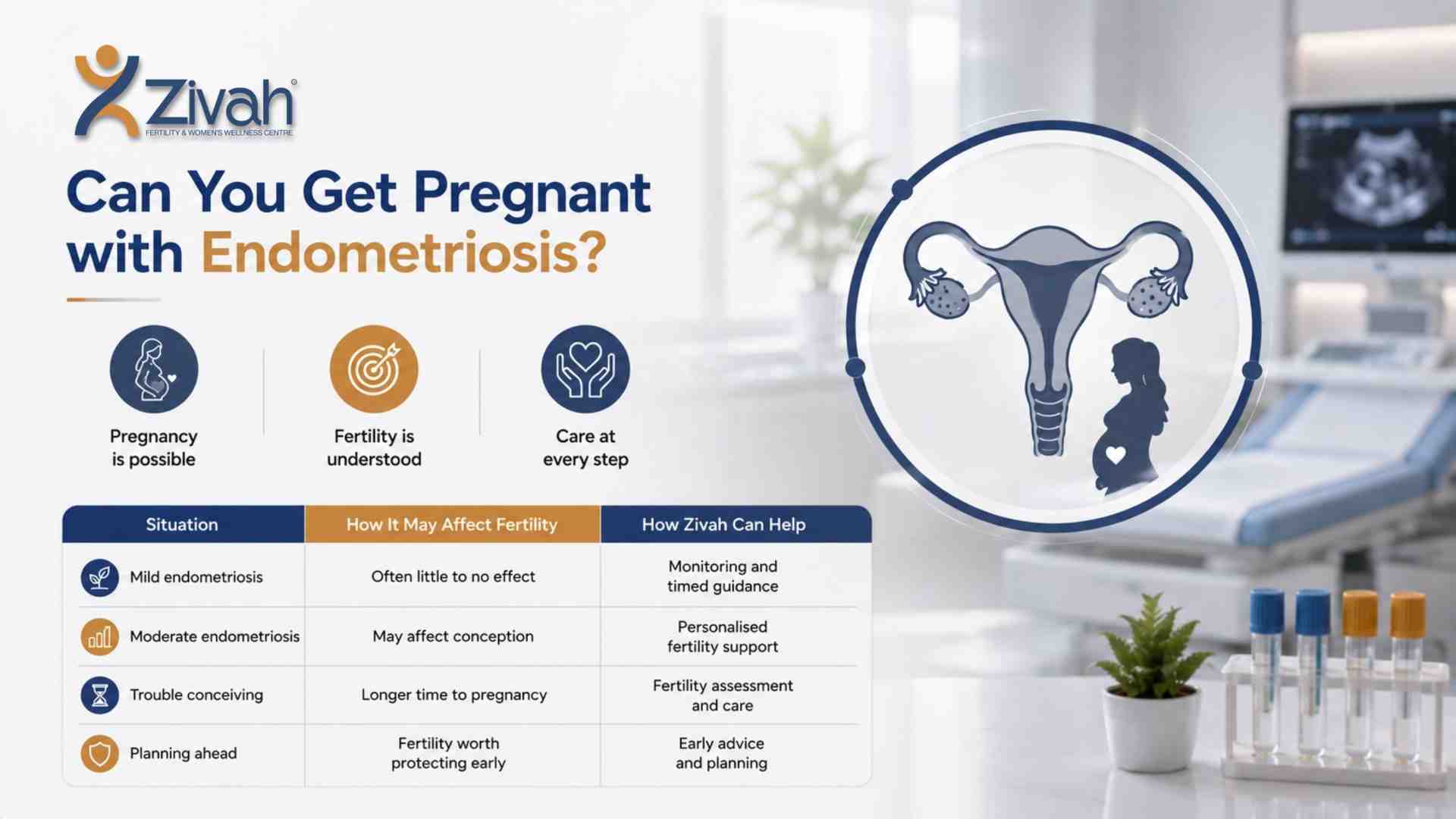
| Situation |
How It May Affect Fertility |
How Zivah Can Help |
|---|---|---|
| Mild endometriosis |
Often little to no effect |
Monitoring and timed guidance |
| Moderate endometriosis |
May affect conception |
Personalised fertility support |
| Trouble conceiving |
Longer time to pregnancy |
Fertility assessment and care |
| Planning ahead |
Fertility worth protecting early |
Early advice and planning |
Whatever your situation, you won’t be left guessing, your Zivah professional will tell you what it means for you and chart out the next step together. Fertility understanding is coupled with day-to-day management of endometriosis.
How Endometriosis Is Managed at Zivah
Endometriosis management is a journey, a partnership designed around your day-to-day comfort and long-term desires. There isn't a universally applicable technique, which is why, at Zivah, endometriosis management is developed around you. Your symptoms, your stage of life, and what's most important to you, whether that's reducing pain, preserving fertility, or both.
A Personalised Care Plan
Your plan is only yours. A lot of women want to know what living with endometriosis is like on a day-to-day basis, and the truth is, it is contingent upon what you require. Care usually uses a few ways, carefully combined:
- Symptom and pain management: relief tailored to how endometriosis affects you.
- Hormonal or surgical approaches: utilised when appropriate for you.
- Fertility-focused support: care that takes your family plans into account.
Your professional doesn't set these steps but flexible solutions specific to you. Here's a look at the big approaches.
| Approach |
What It Involves |
Who It Suits |
|---|---|---|
| Symptom management |
Pain relief and lifestyle support |
Those seeking day-to-day comfort |
| Hormonal approaches |
Managing the cycle to ease symptoms |
Women not currently trying to conceive |
| Surgical care |
Keyhole surgery to remove tissue |
More advanced or persistent cases |
| Fertility support |
Care focused on conception |
Those planning a family |
The right path is one selected with you, not for you, and it changes as your needs change over time. The care naturally raises a practical question. What it costs is known.
Endometriosis Care Cost at Zivah
The cost of endometriosis care isn't the same for everyone because no two care plans are the same. Many women inquire directly about how much endometriosis care costs, and the truth is, it all depends on what your care involves. And that's been kept clear from the outset at Zivah, with no hidden extras along the way.
What Affects the Cost?
A few things comprise the whole. What Affects the Cost of Your Endometriosis Care? There are basically three things: the consultation and diagnostic tests you need, the care method that works for you and whether fertility support is part of your plan.
Your cost is personal, too, because your plan is specific and your specialist walks you through it before anything starts, so there are never any surprises. This is what we will do for you.
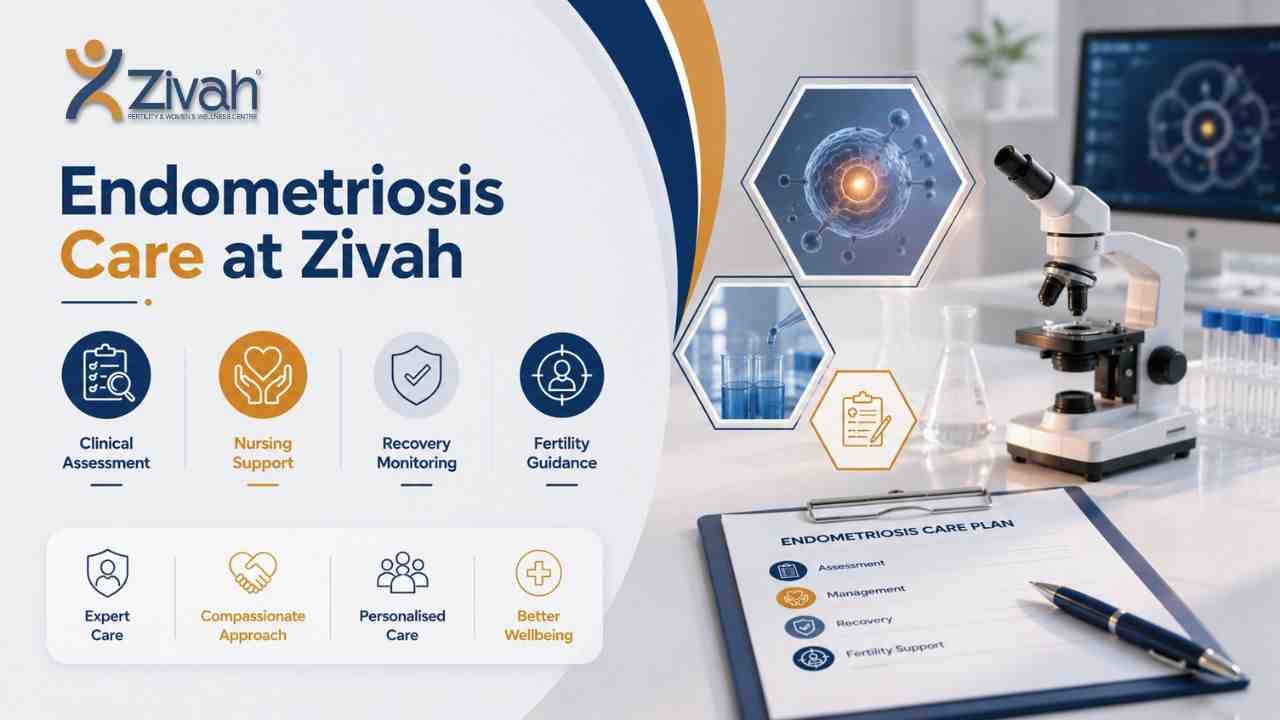
| Component |
What It Covers |
|---|---|
| Clinical assessment |
Comprehensive staging assessments of your condition |
| Nursing support |
Dedicated nursing care through your management |
| Recovery monitoring |
Post-laparoscopy recovery checks and follow-up reviews |
| Fertility guidance |
Personalised support for your family plans |
It's care that stays with you from your first checkup through every follow-up, more than a list of services. If you're looking for an endometriosis specialist near me, this constancy is what makes complete care different. It's not the price, but the personnel and the attention behind every step.
Why Choose Zivah for Endometriosis Care
Endometriosis rarely responds to small amounts of help. It needs joined-up endometriosis care working together under one roof - diagnosis, management and fertility support. A relationship between you and your team, not a series of disconnected consultations.
Experienced Specialists, Compassionate Care
The difference is the people. What constitutes a good endometriosis team? Experience, yes, but also the patience to listen. At Zivah, we have qualified gynaecologists with true fertility expertise so your symptoms and your family plans are taken into consideration at the same time.
You have dedicated nurse support with you every step of the way, and everything is stated in clear, honest language. But for many women who arrive here after years of being dismissed elsewhere, empathy is not a bonus here, but the heart of how care is delivered.When you are ready, the first step is easy.
Book Your Endometriosis Care Appointment at Zivah
If you’ve been living your days in suffering, or fertility concerns have been hidden in the back of your mind, please know this: you don’t have to live with it, and you don’t have to go through it alone. Consistent signs that interfere with your life are exactly when to consult an endometriosis specialist; the sooner you do, the sooner you have answers and a plan.
Booking your endometriosis care appointment with Zivah is easy and stress-free. There’s no pressure, no judgement, just an experienced staff that is ready to listen, explain and walk with you every step of the way from diagnosis to management to fertility support. This is a nice, hopeful place for you to start if you’re seeking answers for the first time or a new way to approach them after years of being ignored.