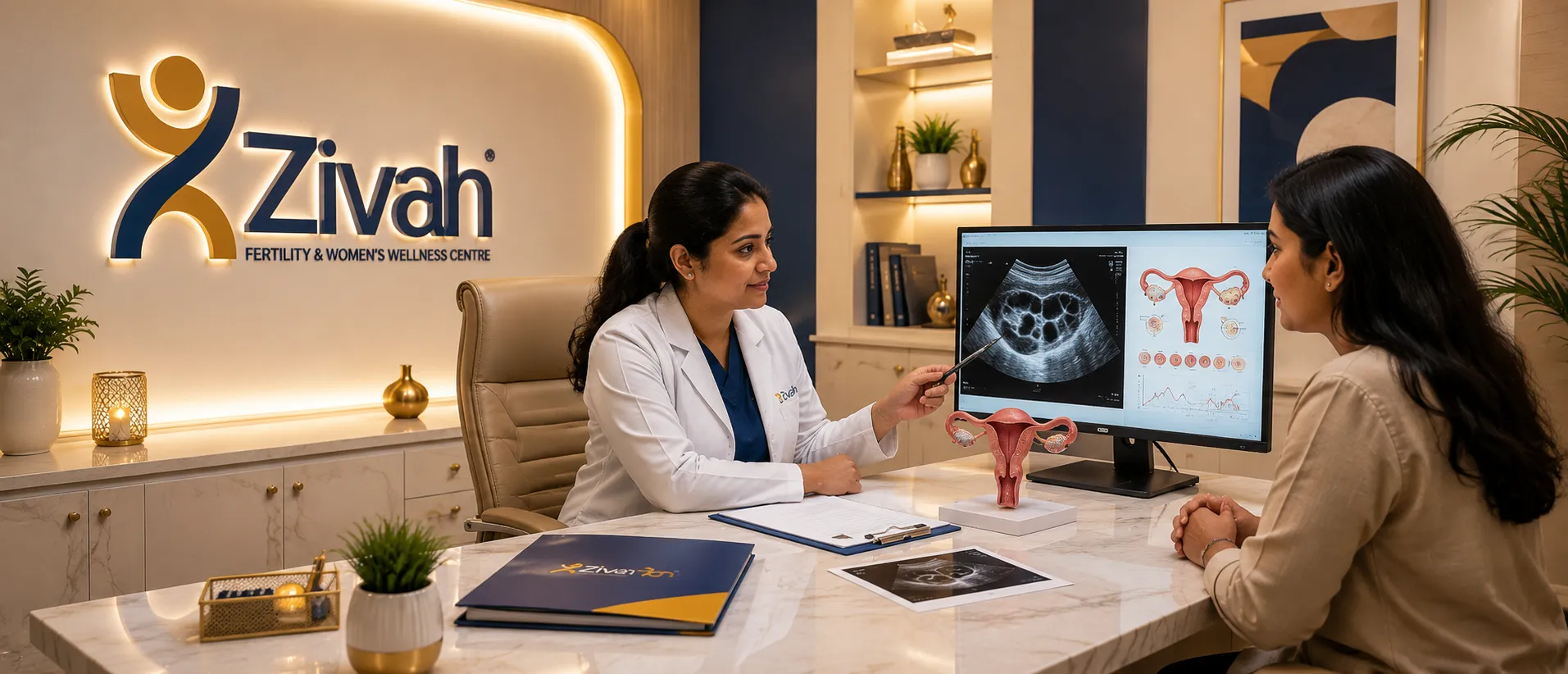
At Zivah Fertility & Women's Health, our PMOS management service brings your diagnosis, treatment and fertility care together under one expert team, across our centres. If irregular periods, weight changes, unwanted hair or trouble conceiving brought you here, you are not facing Polyendocrine metabolic ovarian syndrome (PMOS) alone.
No two women experience PMOS the same way, so we never offer a one-size plan. Our gynaecologists and fertility specialists shape your PMOS treatment around your body, your symptoms and your goals. Below, see exactly how we manage PMOS and what your care with us covers.
What Does Zivah's PMOS Management Service Cover?
When you have PMOS, you probably worry about a lot of things at once. Your periods come and go, your weight won't go down, your skin and hair change, and you might even have questions about whether you can have children. Our PMOS treatment service at Zivah takes care of everything in one place, so you never have to go from clinic to clinic looking for answers. Because most of the time, more than one tablet is not the best way to treat (PMOS) polycystic ovary syndrome, our gynaecologists and fertility experts work together to make sure that no part of your care is neglected.
So, what does PMOS treatment involve at Zivah? Take a look at what our service includes, from your first visit through to fertility and other situations.
| Service Area |
What's Included |
|---|---|
| Diagnosis & Testing |
Medical history, examination, hormone tests, blood sugar tests, and ultrasound scans |
| Hormone & Period Management |
Medicines and lifestyle support to regulate cycles and balance hormones |
| Insulin & Weight Support |
Metformin (when needed), along with personalised diet and activity planning |
| Skin & Hair Concerns |
Treatment for acne, excess hair growth, and hair thinning |
| Fertility & Pregnancy |
Ovulation induction, ovarian drilling, IVF, and pregnancy care |
| Long-Term Follow-Up |
Ongoing review, support, and monitoring across our centres |
Whether your goal is regular periods, clearer skin, steady weight or a healthy pregnancy, your treatment for polycystic ovaries is built for you, and knowing how to manage PMOS well means caring for the whole picture, not one symptom at a time.
Why Is PMOS Best Treated in One Place?
PMOS rarely shows up as a single problem. The hormone imbalance behind irregular periods is often the same one driving weight gain, acne and trouble conceiving, so treating one piece alone rarely holds. The best treatment for polycystic ovary syndrome addresses all aspects together, which is how we plan your care: one team, one connected plan, adjusted as your body responds. Next, here is what PMOS really is.
What Is PMOS (Polyendocrine Metabolic Ovarian Syndrome)?
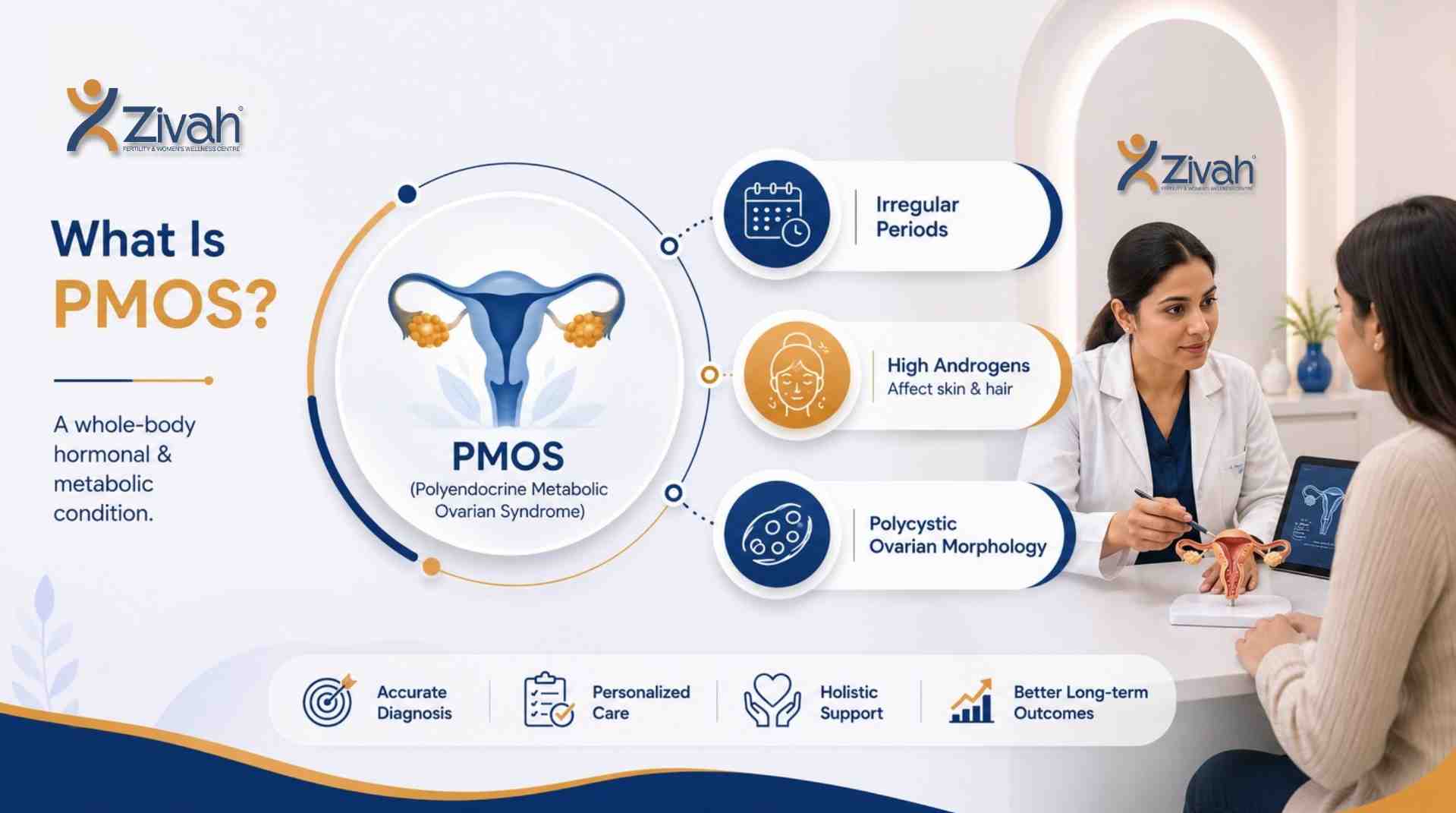
At Zivah, the first thing we explain is what PMOS means in medical terms, because clear answers make the road ahead feel far more manageable. PMOS stands for polyendocrine metabolic ovarian syndrome, the new name for the condition long known as polycystic ovary syndrome (PCOS), and sometimes also called polycystic ovarian disease (PCOD). In simple terms, it is a common hormonal condition that affects how your ovaries work.
You may still see it called PCOS, and that is fine; both names are in use as the change rolls out. The name was updated because the condition is far more than ovarian "cysts": it is a whole-body hormone and metabolic condition, and the new name reflects that more honestly.
What Happens in PMOS?
PMOS usually shows up in three ways in real life:
- Your periods may not come on time because your ovaries may not release an egg every month.
- Androgens, which are male hormones, are made in your body.
- This can change the way your skin and hair look.
- A scan shows that the ovaries have a lot of small cells, and it is called polycystic ovary morphology.
Now let us look at the symptoms we treat most often.
Which PMOS Symptoms and Conditions Do We Treat?
PMOS can look different from one woman to the next, which is why we treat the full range of signs and symptoms, not just the one that brought you in. Many women come to us having lived with these changes for years, unsure they were even connected. They usually are, and you do not have to keep managing them alone.
Here are the most common signs and symptoms of polycystic ovarian disease (PMOS) we help manage, and what each one can signal:
| Symptom You May Notice |
What It Can Signal |
|---|---|
| Irregular, Missed, or Very Heavy Periods |
Ovaries not releasing an egg each month (anovulation) |
| Excess Facial or Chin Hair |
Higher levels of male hormones (androgens) |
| Acne or Oily Skin |
Hormonal imbalance affecting the skin |
| Hair Thinning on the Scalp |
Androgen-related (male-pattern) hair thinning |
| Weight Gain or Difficulty Losing Weight |
Often linked to insulin resistance |
| Trouble Conceiving |
Irregular or absent ovulation |
From heavy periods to PMOS hair loss, acne or unwanted chin hair, each of these has a cause we can treat, so the goal is never to mask the symptom, but to settle what is driving it.
Can You Have PMOS With Regular Periods?
Yes, you can have PMOS even with regular periods. The most common signs are Irregular periods or missed periods, but some women bleed on time every month, still they have PMOS, picked up through raised male hormones or an ovarian scan.
So if your cycle looks regular yet you are dealing with acne, stubborn weight or excess hair, it is still worth getting checked. We look at the whole picture, not just the calendar, which is exactly where our diagnosis begins.
How Does Zivah Diagnose PMOS?
Getting the diagnosis right matters because PMOS is easy to mistake for other conditions, and the wrong label leads to the wrong treatment. So, at Zivah, we never rely on a single test. We look at why your symptoms are happening, not just that they are there. Much of PMOS traces back to insulin resistance and a wider hormone imbalance, where the body's androgens run high, and that is exactly what our PMOS tests are designed to uncover.
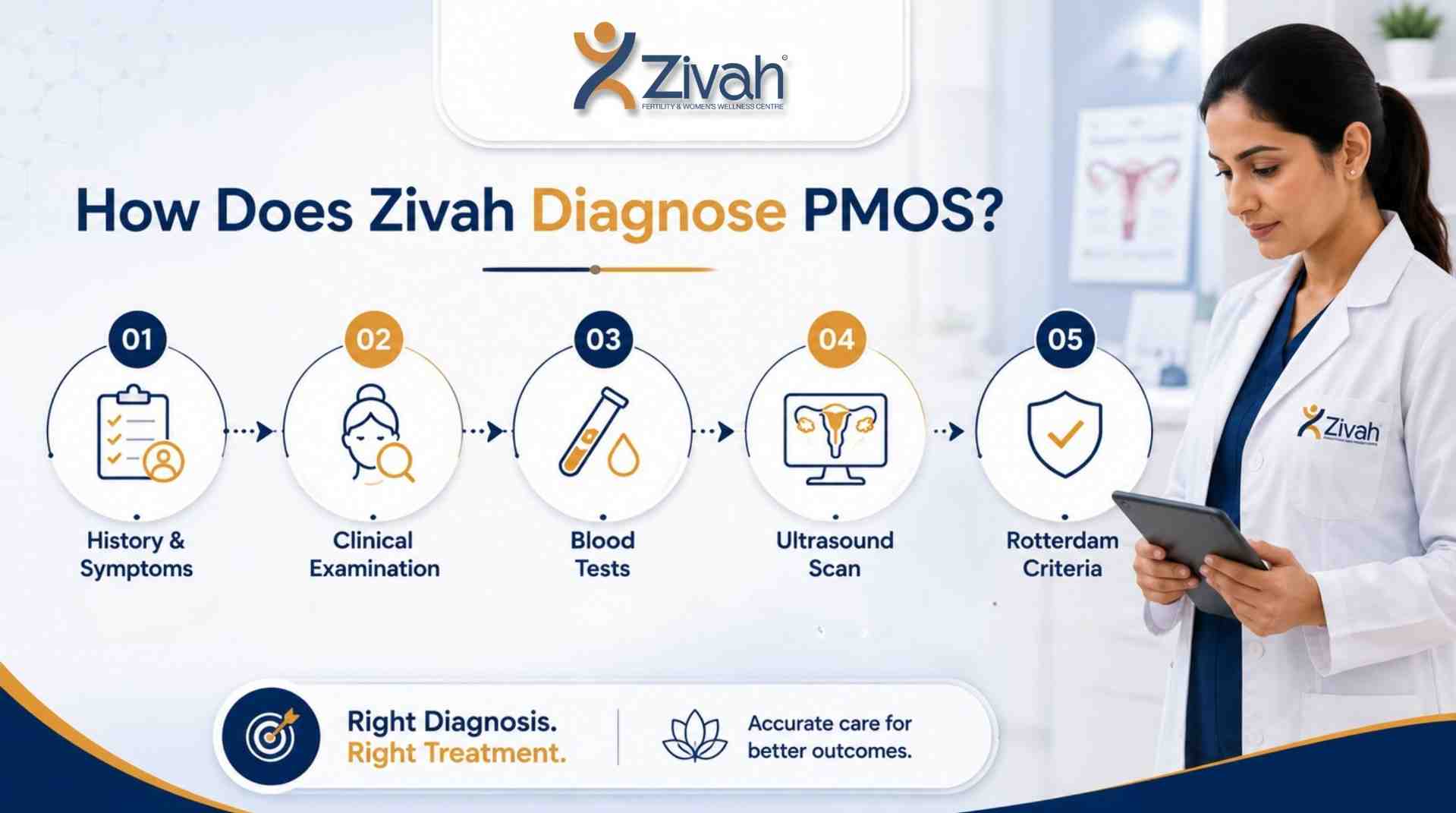
So, how is the PMOS test done at Zivah? Here is what we check, and why each step matters:
| Step |
What Zivah Checks / Does |
|---|---|
| Detailed History & Symptom Review |
We assess your periods, weight changes, skin concerns, and hair symptoms |
| Clinical Examination |
We look for physical signs of elevated androgen levels |
| Blood (Lab) Tests |
We measure hormone levels, blood sugar, and insulin markers |
| Pelvic Ultrasound Scan |
We examine the ovaries for polycystic ovary morphology |
| Rotterdam Criteria Check |
We confirm PMOS using internationally accepted diagnostic criteria |
Your lab tests and ovary scan together give us a full picture, so we can say for sure that you have cancer.
"PMOS can't be proven by just one blood test or scan." A lot of women don't have PMOS but still have ovaries that look like they do, and some women who do have PMOS have scans that show nothing wrong. That's why we use the full Rotterdam criteria to diagnose and rule out other reasons first. This way, your treatment is based on the correct answer and not a guess." - Consultant Gynaecologist, Zivah Fertility & Women's Health
What Are the Rotterdam Criteria and Polycystic Ovary Morphology?
The world standard for diagnosing PMOS is the Rotterdam criteria, which say that you need two of three things to be present: irregular ovulation, high androgen levels, or a polycystic ovarian pattern on scan. The scan result is called polycystic ovary morphology, which means the ovary has many small follicles. Meeting just once isn't enough; that's why we test extensively before confirmation. Once we know what we're fixing, we can make a plan for you.
What Is the Best Treatment for PMOS?
There is no single cure for PMOS, but there is a great deal we can do to settle it, and the best treatment for polycystic ovary syndrome is the one shaped around your goals. For one woman, that means regular periods; for another, clearer skin or a baby. Before any PMOS medication is prescribed, we ask what you most want to change and then build your plan around that.
Here is how we match common goals to treatment, and how our team supports you through each:
| Your Goal |
Treatment Approach |
How Zivah Helps You |
|---|---|---|
| Regular Periods & Hormone Balance |
Lifestyle changes and medicines (e.g., birth control pills) |
We create a plan tailored to your body and goals |
| Insulin Resistance & Weight Management |
Metformin, nutrition, and physical activity |
We prescribe, monitor, and support a realistic long-term plan |
| Excess Hair & Acne |
Anti-androgen medicines and skin-focused care |
We address both the symptoms and the underlying hormone imbalance |
| Trying to Conceive |
Ovulation induction, ovarian drilling, or IVF |
We guide you toward the most suitable fertility pathway |
| Long-Term Health |
Ongoing review and monitoring |
We track your progress and adjust treatment as needed |
Medicine is never the whole plan. We make sure that the changes you make every day work with the metformin for insulin resistance or the tablets for PMOS to settle your cycle. We then check in with you to see how your body is responding.
Diet, Weight and Lifestyle in Your PMOS Plan
To lose weight, the best diet for PMOS is where real change starts for many women, and we make it easy, not hard. Our experts make your meal plan based on how you live, and we keep track of it with you:
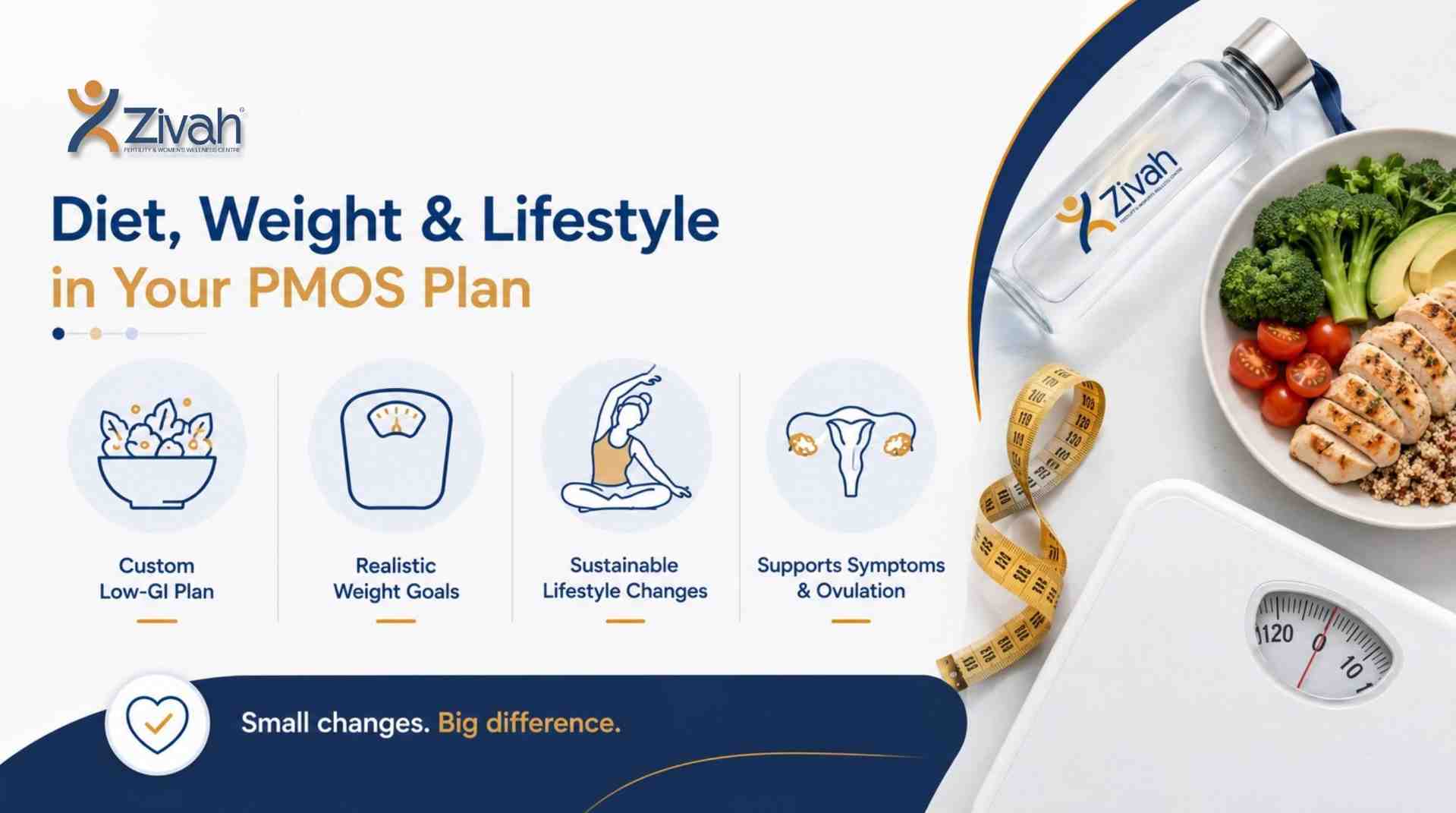
- A custom low-GI plan made to fight insulin resistance.
- We set reasonable weight goals with you and review them every time we see you.
- Small, long-lasting changes to your lifestyle that don't get in the way of your daily life.
Even a small amount of weight loss can help with symptoms and get ovulation going again, which is why we treat it as a treatment rather than just tips.
How Do We Treat PMOS Hair Loss, Acne and Excess Hair?
We treat the hormone, not just the surface, because excess hair, acne, and a thinning head are all caused by high androgen levels. Our doctors will give you anti-androgen drugs and keep an eye on them to lower your testosterone, get rid of acne, and unwanted hair. They will change the dose based on how your face and hair react. These changes don't happen overnight; they happen over months or even years. But settling the hormone that causes them is what makes the effects last.
After their symptoms have been stable for a while, a lot of women want to know if PMOS will affect their chances of having a baby.
Your Fertility Pathway: Can You Get Pregnant With PMOS?
Most women with PMOS can get pregnant, as long as they get the right help. As one of the most common reasons people have trouble getting pregnant, PMOS is also one of the easiest conditions to treat. This means that getting a diagnosis is rarely the end of the road you had hoped for. At Zivah, a big part of our PMOS care is helping people with polycystic ovaries get pregnant. We meet you where you are on that road.
This is how your fertility journey usually goes with us, step by step:
| Stage |
What It Means |
What Zivah Offers |
|---|---|---|
| First Step: Weight & Lifestyle |
Even modest weight loss can help restart ovulation |
Personalised nutrition, activity, and weight-management support |
| Ovulation Induction |
Medicines help stimulate the release of an egg |
Monitored treatment cycles with ultrasound scans |
| Ovarian Drilling |
A minor procedure that may reduce androgen levels |
Specialist surgical care when appropriate |
| IVF & Advanced Fertility Care |
Lab-assisted conception when other options are not successful |
Comprehensive IVF and fertility services |
| Pregnancy with PMOS |
May require closer monitoring during pregnancy |
Ongoing specialist care and support throughout pregnancy |
Usually, we start with ovulation-induction rounds that are watched and checked to see how you react and make changes until you ovulate. Our fertility specialists and embryologists will walk you through IVF step by step if you need more help. And our care doesn't end when the test comes back positive. We also stay close to you while you're pregnant because PMOS can need a little extra care.
What Is Ovarian Drilling for PMOS?
Ovarian drilling is a minor keyhole surgery that lowers the ovaries' androgen levels, helping them ovulate more regularly. We usually consider it when ovulation-induction tablets have not worked and before moving to IVF, so it is never a first step, but a carefully chosen one. Our specialists carry it out as a short-day procedure, then monitor your cycles closely afterwards to see how your ovaries respond.
Wondering if this care is meant for you? That is exactly what we look at next.
Who Should Book PMOS Care at Zivah?
The best way to find out if you have PMOS is to get checked out anytime you feel something is not right. It's a good idea to book if you see:
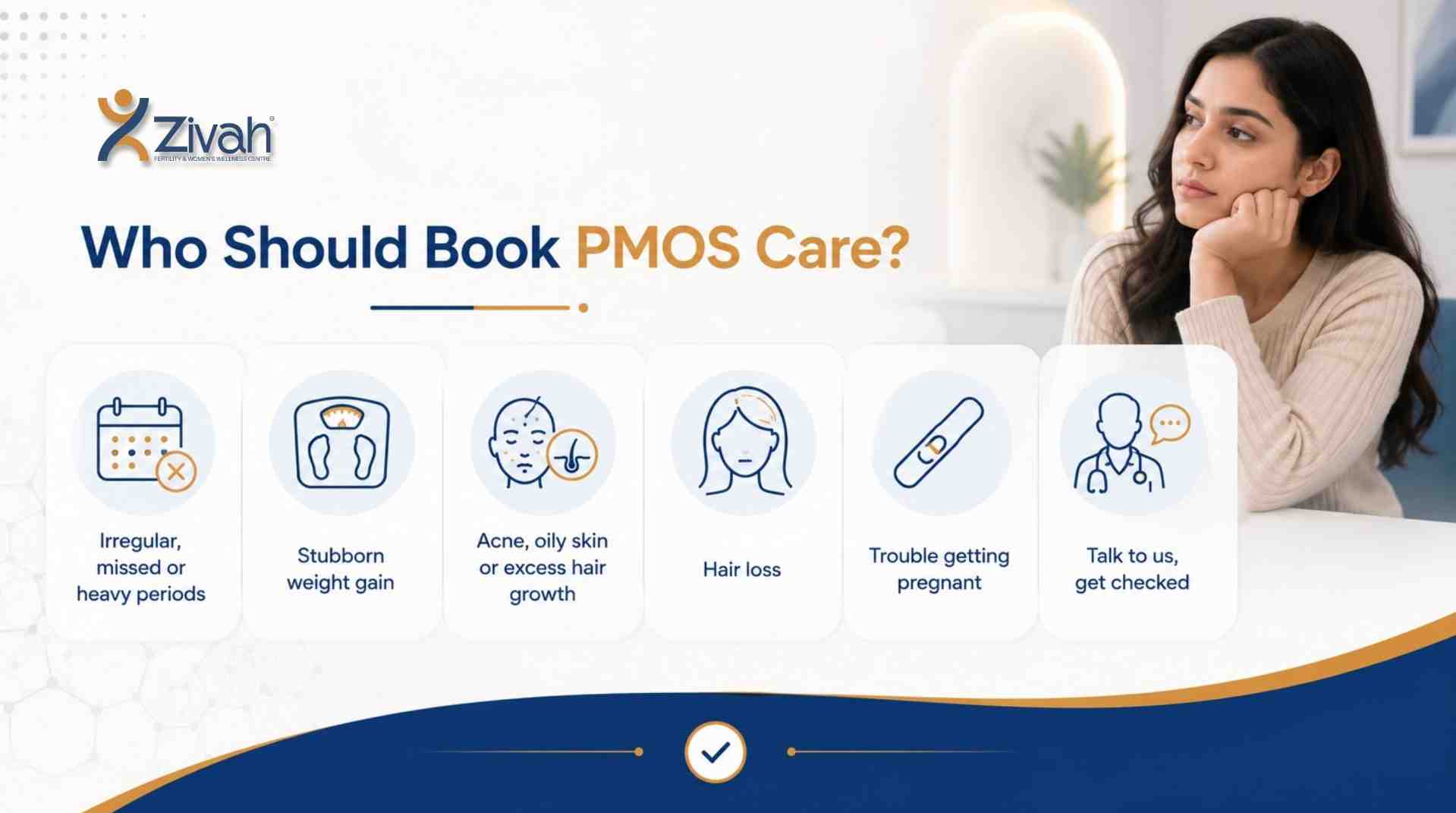
- Periods that aren't regular, are missed, or are heavy for no reason.
- Sticky weight gain, or weight that won't go away no matter how hard you try.
- Acne, damp skin or excess hair growth on the body or face.
- Loss of hair on the head.
- Having trouble getting pregnant after trying for a few months.
You should talk to us about any of these, and we can check properly instead of leaving you to guess.
Is PMOS Care Right at Any Age?
Yes, PMOS care is good for all stages of life. Multiple cysts in the ovaries can cause symptoms to change during weight changes, pregnancy, and the years before menopause. The first signs and symptoms may appear in teens as periods are just settling down.
When you come to us, we meet you where you are, whether you are sixteen and worried about your periods not being regular or forty and dealing with new problems. There is still time to decide if Zivah is the right choice. Here is what makes our PMOS care unique.
Why Choose Zivah for PMOS Management?
Your hormones, weight, face, mood, and ability to have children are all affected by PMOS, so the care you get for it should be just as comprehensive. That's what makes Zivah unique. We don't send you to different clinics for different services. Instead, we have a single team handle your evaluation, treatment, and fertility care across all our centres. People who care about you already know your story after you tell it once.
When you choose Zivah for your PMOS care, you get:
- One place for the whole journey: from your first tests, through treatment for PMOS and infertility, to the day you are trying for a baby.
- Experienced specialists: gynaecologists and fertility experts who know how to treat polycystic ovarian syndrome across its many forms.
- A plan which is built around you: the best treatment for polycystic ovary syndrome shaped to your body and goals, not a textbook.
- Care that does not restart: your story stays in one place, so nothing is repeated and nothing is lost.
For a condition that unfolds over years, that continuity is what keeps your treatment steady, personal and moving forward. PMOS may not have a single cure, but with the right team beside you, it becomes something you can manage and live well with, and, when you are ready, build a family around.
Wherever you are with PMOS, just noticing the first signs, managing it for years, or hoping for a baby, you do not have to work it out alone. Book your appointment with the Zivah PMOS team today, and let us help you take the next step with confidence.