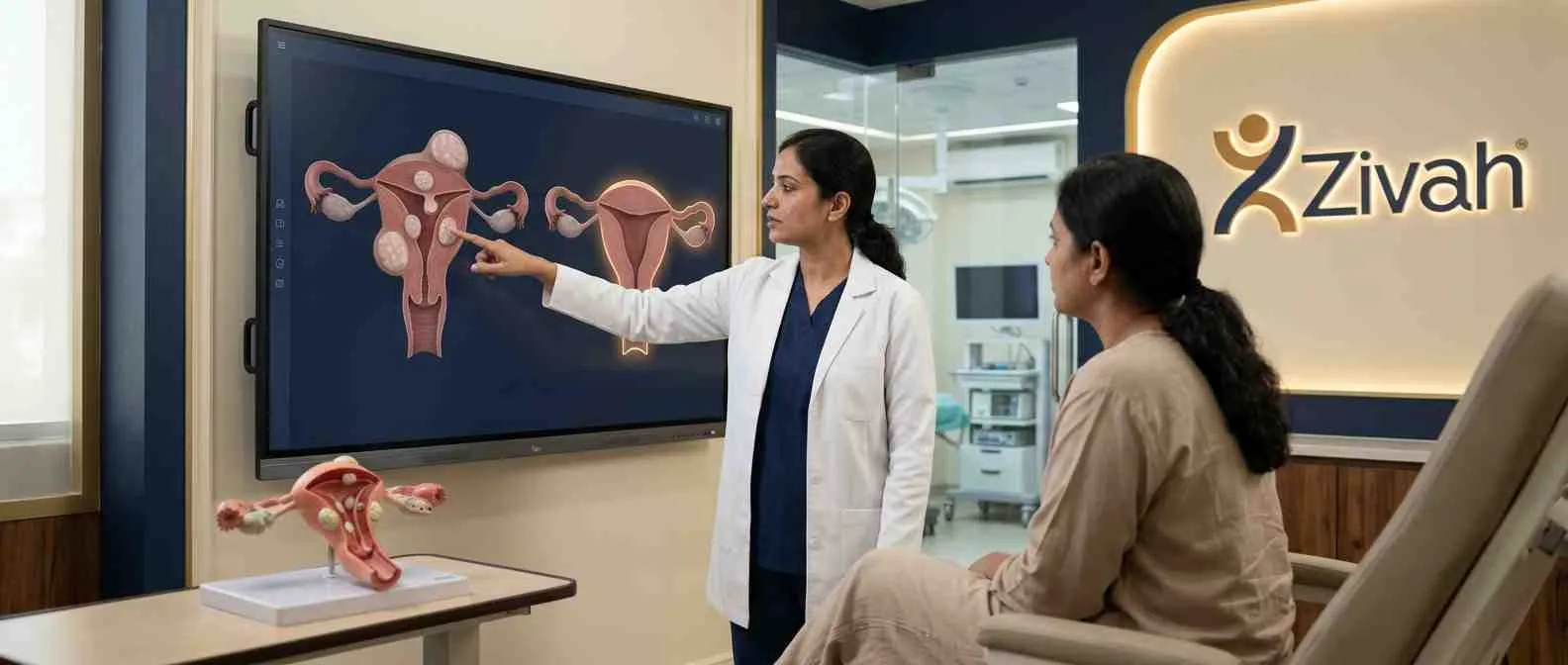
A myomectomy is a surgery to remove fibroids from the uterus while keeping the uterus fully intact. It is also known as fibroid removal surgery or fibroidectomy surgery and is the option of choice for women who desire relief from problematic fibroids without losing their womb. This uterine fibroid surgery differs from a hysterectomy in that it deals with the condition and protects your fertility.
So go through everything worth knowing on this page before you make up your mind: the types of fibroids and how each one is removed, when surgery for fibroids in the uterus is needed, how the treatment works, what recovery looks like, what shapes the cost and what it means for pregnancy.
Here's the good news that helps most women feel better: the fibroids come out, but the uterus remains. If you’re trying to conceive, that’s a game changer.
At Zivah, our laparoscopy specialists and fertility experts perform every myomectomy with your future in mind, from the exact removal to the full pregnancy support that follows.
What Is a Myomectomy?
The word comes from "myoma," another term for a fibroid, and "-ectomy," which means removal. So the meaning of myomectomy is just the surgical removal of fibroids from the uterus.
In English, if you see myoma, it's the same thing: a non-cancerous growth of muscle and fibrous tissue in the uterus. What sets this procedure apart is what it leaves behind. When fibroids are removed from the uterus, just the fibroids are removed by the surgeon.
The uterus is then carefully repaired such that it stays in place and continues to function normally. It is done under general anaesthetic. Many women leave home the same day; some stay a night or two, depending on the approach.
Myomectomy vs Hysterectomy: Which Preserves the Uterus?
This is the decision at the core of every fibroid diagnosis. Both procedures are for fibroids, but they are quite different methods. A myomectomy removes the fibroids alone and leaves your uterus healthy, so you can still have periods and be able to get pregnant.
A hysterectomy removes the entire uterus. Both are end. For women who seek fibroid surgery without removal of the uterus, the answer is obvious. This is the logical choice for those who want to conceive or those who just want to keep their uterus for this uterine-sparing fibroid surgery.
Myomectomy vs Hysterectomy
| Factor |
Myomectomy |
Hysterectomy |
|---|---|---|
| Uterus |
Kept and repaired |
Removed entirely |
| Fertility |
Preserved, pregnancy possible |
Not possible |
| Periods after |
Continue as normal |
Stop permanently |
Types of Fibroids: Intramural, Submucosal & Subserosal
Not all fibroids are created equal, and where they’re located in the uterus can impact more than you realise. They are classified by the layer of the womb in which they grow, and this location determines your symptoms and how they are treated.
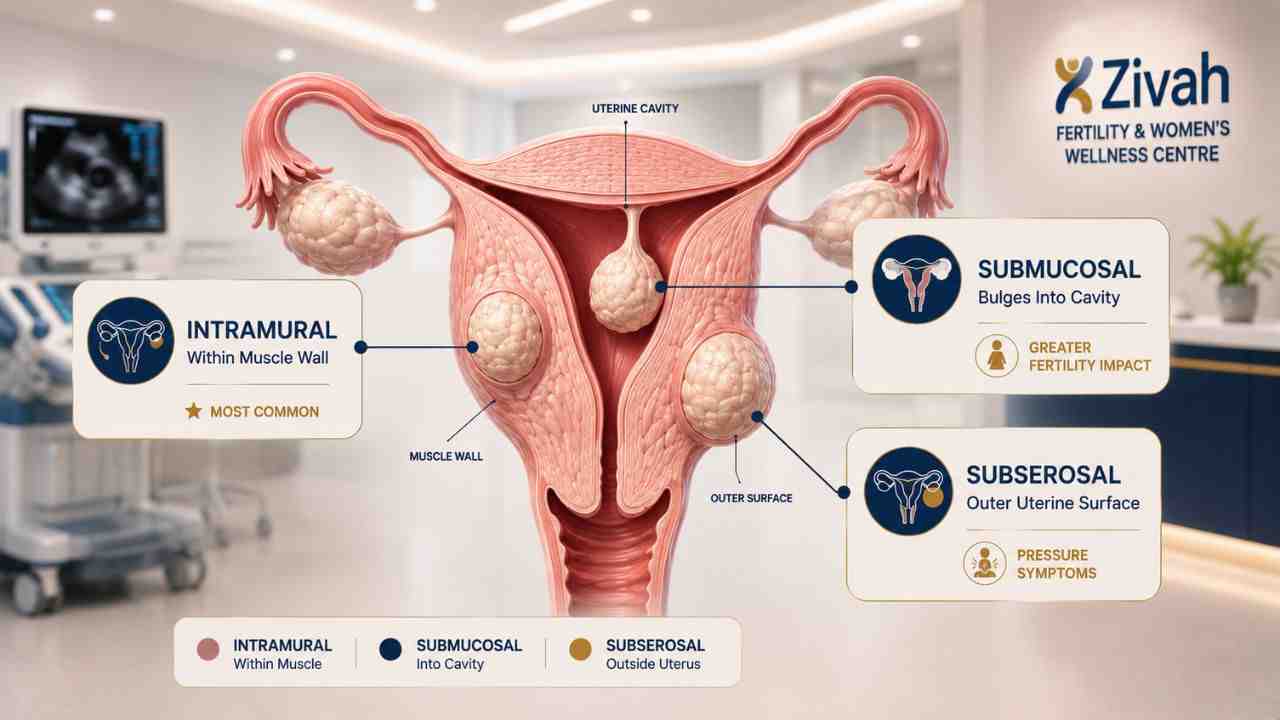
There are three main types:
- Intramural fibroids develop within the uterine muscle wall, the most common type.
- Submucosal fibroids sit just beneath the inner lining, bulging into the uterine cavity, and are most likely to affect fertility.
- Subserosal fibroids happen on the outer surface of the uterus, often causing pressure rather than bleeding.
Each intramural fibroid is located differently; hence, they are not always treated the same as the others.
How Fibroid Location Determines the Surgical Approach
Now this is when it gets practical. Three factors guide the removal of fibroids: location, size, and number. A submucosal fibroid that expands into the cavity can easily be approached through the vagina, with no cuts at all.
Fibroids on the outside surface or in the wall usually require keyhole or open surgery to remove them safely. And the treatment of submucosal fibroids differs from that of larger, deeper fibroids merely because of where they are.
So when you ask how to remove fibroids from the uterus, the response is: it depends on your fibroids. That’s why we do the testing and imaging, to show the picture before we decide what to do about it.
Fibroid Types and Where They Grow
| Fibroid Type |
Location in Uterus |
Typical Symptoms |
|---|---|---|
| Intramural |
Within the muscular uterine wall |
Heavy bleeding, pelvic pain, pressure |
| Submucosal |
Just beneath the inner lining, into the cavity |
Very heavy periods, fertility issues, miscarriage |
| Subserosal |
On the outer surface of the uterus |
Bulk symptoms: bloating, bladder or bowel pressure |
| Pedunculated |
On a stalk, inside or outside the uterus |
Sharp pain if the stalk twists |
When Is a Myomectomy Needed?
Here’s one that surprises many women: Not all fibroids need to be removed. Many sit quietly for years without causing a problem. So when is myomectomy needed, exactly? When fibroids start to interfere with a woman’s everyday life or fertility, surgery is typically an option.
If you are asking whether fibroids need to be removed, the answer is that they only need to be removed when they cause problems. In many cases, the initial option is observation or treatment.
The time you’ll decide to move forward is when symptoms are chronic and don’t get better, or when fibroids are interfering with your ability to get pregnant, and that’s when fibroid surgery on the uterus becomes the next logical step.
Symptoms and Fertility Reasons for Fibroid Removal
Removal is most typically prompted by two things: Troublesome symptoms and reproductive concerns:
- Fibroid surgery for heavy bleeding – heavy periods possibly causing anaemia
- Pelvic pain from fibroids – pressure, chronic pain
- Bulk symptoms - frequent urination, constipation, bloating
- Fibroid removal for infertility – when fibroids cause miscarriage, deform the cavity or prevent conception
Types of Myomectomy: Surgical Approaches Compared In Zivah
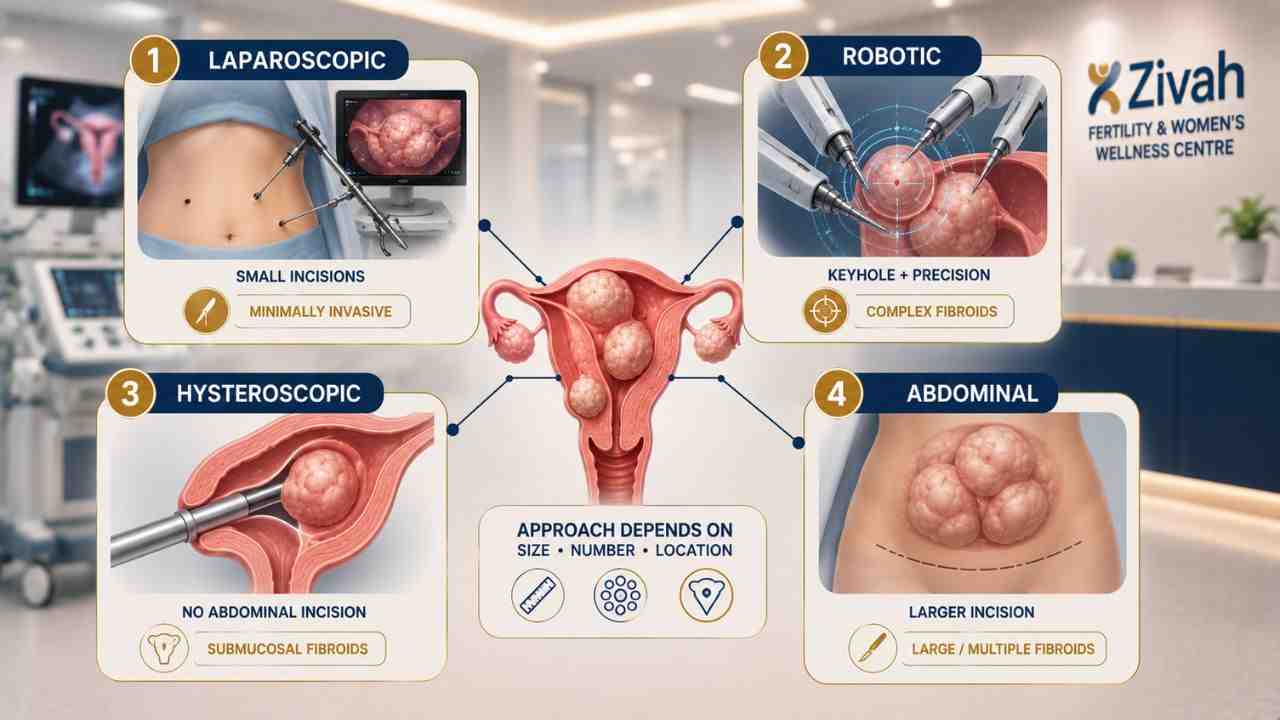
There are four ways for the removal of fibroids, and the best method depends on the size, quantity and location of your fibroids. Two are keyhole procedures: laparoscopic myomectomy and robotic myomectomy, both done through small incisions.
One is hysteroscopic myomectomy. It is all done through the vagina, no cuts at all. For larger or more complex cases, abdominal myomectomy will use a single larger incision. Your surgeon will make the approach based on your scan so that the technique will fit the fibroids.
Laparoscopic & Robotic Myomectomy
These keyhole methods are the minimally invasive favourites. In laparoscopic myomectomy, the surgeon works through a few small cuts using a camera. Some cases use just one, called a single-port approach. Robotic surgery for fibroid removal adds even finer precision, ideal for trickier fibroids.
Hysteroscopic Myomectomy
The most gentle option is hysteroscopic myomectomy (HSC). It involves no cuts at all. A small instrument goes through the vagina to reach fibroids in the cavity. It’s only for submucosal fibroids and often only needs sedation, not full anaesthesia.
When Open (Abdominal) Myomectomy Is Needed
Sometimes, an abdominal myomectomy, or laparotomy for fibroids, is just the best alternative. With very large or multiple fibroids, the open method provides the surgeon with greater access. It’s a conscious choice, sometimes a necessary choice, never a setback.
Myomectomy Types Compared
| Approach |
Incision |
Best For |
Hospital Stay |
Recovery |
|---|---|---|---|---|
| Abdominal (open) |
One larger cut |
Large or multiple fibroids |
1–2 days |
4–6 weeks |
| Laparoscopic |
A few keyhole cuts |
Fewer, smaller fibroids |
Same day or 1 night |
2–4 weeks |
| Robotic |
A few keyhole cuts |
Complex keyhole-suitable cases |
Same day or 1 night |
2–4 weeks |
| Hysteroscopic |
No incision |
Submucosal (in-cavity) fibroids |
Same day |
A few days |
Tests and Imaging Before Myomectomy
Before any fibroid is removed, the surgeon needs a clear map of what they're dealing with. The exact fibroid diagnosis determines the entire plan: what approach to take, how long, and what to prepare for.
An ultrasound is usually the beginning point for fibroids. This first-line scan detects each fibroid and its size. If there are several fibroids or the picture is complex, an MRI will provide a more detailed view.
Blood tests complete the workup; you will have a blood count to look for anaemia (common with heavy periods), and your blood type is documented in case you ever require a transfusion. This is within our Zivah Pelvic Ultrasound Imaging and Doppler Studies.
Ultrasound and MRI Fibroid Mapping
Ultrasound fibroid mapping and MRI for fibroids, where required, give the exact quantity, size and position, so the surgeon may confidently determine the proper strategy.
All diagnostic pelvic imaging at Zivah is performed in strict compliance with the PC&PNDT Act.
How to Prepare for Myomectomy At Zivah
Proper preparation makes surgery and recovery simpler. Most of the worry can be removed when you know how to prepare for myomectomy in advance, and the steps are simple to follow.
That starts with a consultation when you’ll discuss the plan, ask questions and sign consent. If you have been anaemic from heavy periods, your team might first try to build up your blood count.
They’ll also check your medications and, if necessary, will stop blood thinners. As the day approaches, you’ll be given instructions on fasting and, if needed, a bowel prep, and it's a good idea to arrange for home aid in advance.
Treating Anaemia & Shrinking Fibroids Before Surgery
Iron before a myomectomy can help rebuild your blood count, and GnRH agonist drugs can decrease the fibroids, sometimes enough to change a scheduled open surgery into a nicer keyhole one.
Fasting and Practical Arrangements
Fasting makes anaesthetic safe; no food or drink for 6-8 hours before. Some women also undergo a minor bowel prep and may need support at home for one to six weeks.
Pre-Operative Preparation Checklist
| Step |
What to Do |
Why It Matters |
|---|---|---|
| Consultation & consent |
Discuss the procedure and sign consent |
Ensures you understand the surgery and agree to it |
| Blood tests |
Complete blood count and clotting profile |
Confirms your body can handle surgery and clot normally |
| Imaging review |
Surgeon reviews your ultrasound and scans |
Plans the operation around your specific cyst |
| Medication review |
Flag all medicines; pause blood thinners if advised |
Reduces bleeding risk during surgery |
| Fasting |
No food or drink for 6–8 hours before |
Keeps anaesthesia safe and lowers complication risk |
| Transport arrangement |
Arrange a lift home |
You can't drive yourself after anaesthesia |
How Is a Myomectomy Performed At Zivah?
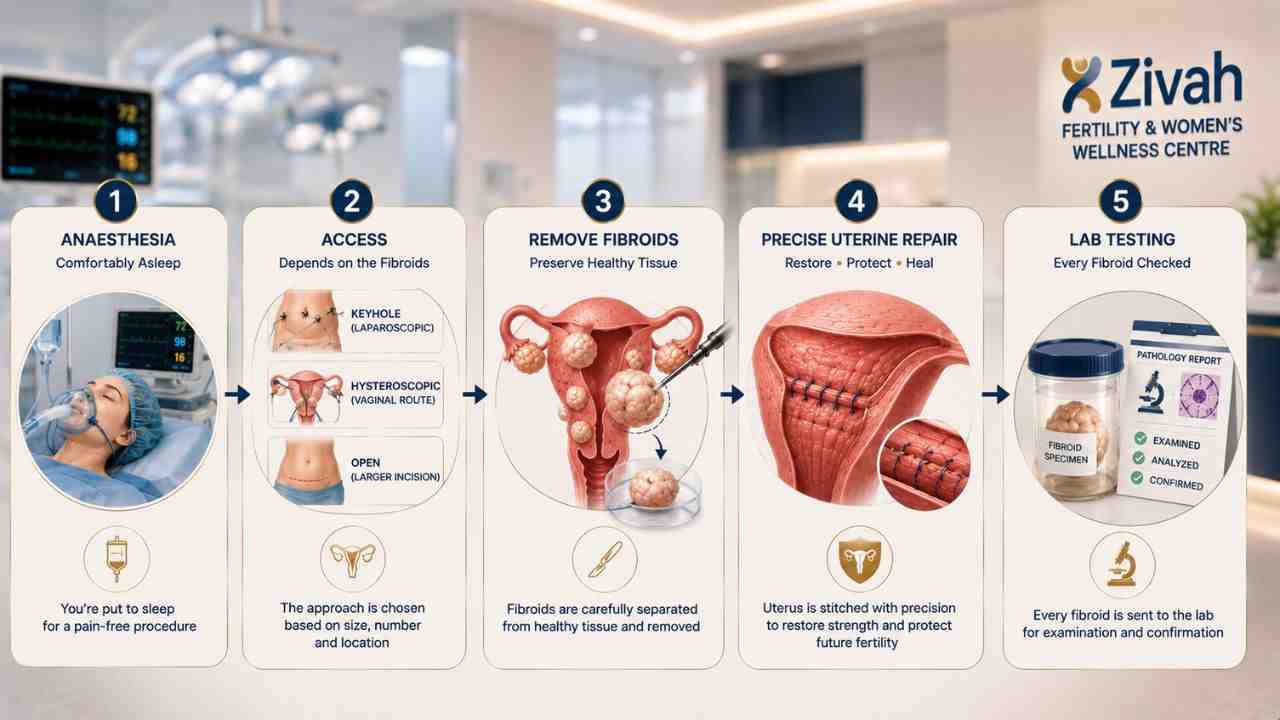
Wondering what goes on in theatre? It feels far less daunting once you know the steps. A myomectomy follows a set order, and here's how a fibroid actually comes out. First, the anaesthesia: a drip goes into your arm and eases you into a comfortable sleep, so you're not aware of anything. Then a small catheter is placed to keep your bladder empty and give the surgeon room to work.
Next comes reaching the fibroids, which depends on your case: keyhole cuts, a slim instrument through the vagina, or a single open cut for larger ones. Each fibroid is gently freed from the healthy tissue around it and lifted out.
After that, the uterus is stitched carefully back together a step the surgeon takes in real time. Finally, the fibroids are removed, and the cuts closed. Every one is sent to the lab for testing, just to be sure.
The Role of Morcellation in Keyhole Removal
In keyhole surgery, larger fibroids are occasionally chopped into smaller pieces to fit through the tiny cuts; this is called morcellation. There is a very small chance of spreading any undiscovered malignancy, slightly more so in older or post-menopausal women; thus, it is always discussed with you first.
Repairing the Uterus & Protecting Fertility
Careful uterine healing is important for your future fertility. Zivah's doctors use precise micro-suturing and adhesion barriers to reduce scar tissue. Also, this wall is restored; thus, depending on the approach, a C-section might be recommended later.
Recovery After Myomectomy at Zivah
How fast you recover depends a lot on the sort of surgery you have. How long is the recovery? Your recovery from myomectomy at Zivah can be just a few days following a hysteroscopic operation, or closer to four to six weeks after open surgery.
Some spotting or discharge for a few weeks is usual no matter the route. Take it easy! Don’t perform any heavy lifting or intense activity, including sexual activity, until your Zivah doctor says it’s okay. Keep your wounds clean and dry while they recover.
Just a brief note: if you see any of these, notify your Zivah care team.
- Fever > 100.4° F
- Severe bleeding (more than one pad wet in an hour)
- Severe pain that persists
- Bad-smelling discharge
- Leg swelling or chest pain, or difficulty passing urine
- Recovery times are highly variable
Recovery by Surgery Type
Laparoscopic myomectomy has a recovery time of two to four weeks, while open myomectomy has a lengthier recovery time of four to six weeks. It is the fastest of all hysteroscopic surgeries; many women feel normal within days.
Periods, Body Changes & Scars After Myomectomy
Little changes reassuringly beyond alleviation from your previous problems. After myomectomy, your menstruation is often lighter and more regular. Your uterus and ovaries are still intact; therefore, there is no menopause. Myomectomy scars are minimal with keyhole surgery and eventually disappear.
Risks, Recurrence & Side Effects of Myomectomy
There are two sides to every operation, and it is good to see both completely before you decide. So, is fibroid surgery risky? No, for most women myomectomy has a minimal complication rate, particularly with the keyhole techniques. But it’s equally important to be honest about the risks as it is to give reassurance.
The primary dangers of myomectomy are rare but good to be aware of: some bleeding (often needing a transfusion), infection, scar tissue or, rarely, damage to a nearby organ. Heavy bleeding ( extremely rarely ) suggests the surgeon must remove the uterus. A future pregnancy may require a C-section.
Benefits of Uterus-Preserving Fibroid Removal
The primary draw of this uterine-conserving fibroid surgery is obvious, your symptoms are better, your fertility unaffected, and with keyhole alternatives, recovery is short and scars minimal.
Possible Risks and Complications
The uterine fibroid surgery risks are divided into frequent and unusual. The most common complications are mild bleeding or infection, but more serious complications such as organ injury, blood clots or a change to open surgery can occur.
Serious problems are uncommon. Fibroids may return, especially in younger women or women who have had several removed. If they occur, you still have options, a repeat myomectomy or non-surgical options like uterine artery embolisation or radiofrequency ablation.
Myomectomy and Fertility: Pregnancy After Fibroid Removal at Zivah
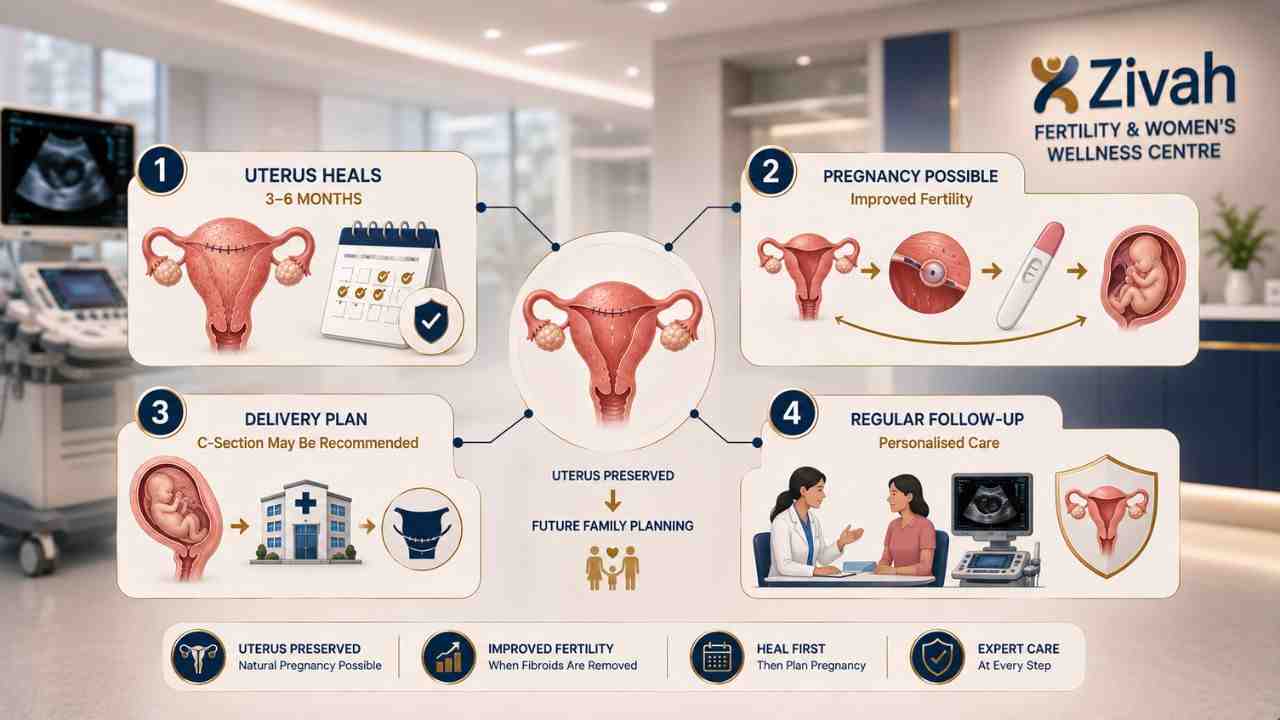
Many women choose myomectomy for this same reason, and the news is excellent. Pregnancy after myomectomy is very much possible since myomectomy preserves your uterus. If it’s fibroids, getting rid of them may increase your chances.
Studies show that when fibroids are the problem, fertility might actually improve. You need some patience, because your uterus needs to recover first. New fibroids might sometimes recur, although this does not usually negate the benefit for most women. Here Zivah’s specialised skills come together in fertility treatment and in high-risk pregnancy assistance.
When Can You Try to Conceive After Myomectomy?
Most doctors recommend waiting three to six months before trying for a baby. That window allows the uterus to recover appropriately. Your Zivah specialist will let you know when it is time.
Delivery and C-Section After Myomectomy
Whether you will require a C-section depends on what operation you have. If the uterine wall was cut (as in open, laparoscopic or robotic myomectomy), one is usually recommended to avoid a rare danger of uterine rupture, except for hysteroscopic surgery. Zivah’s staff will walk you through High-Risk Pregnancy Care.
Why Choose Zivah for Myomectomy
The hands you’re in when you’re facing fibroid surgery make a lot of difference. Expert fibroid removal specialists trained in minimally invasive laparoscopic and robotic techniques, a genuine focus on preserving your uterus and fertility, and careful techniques such as adhesion barriers that protect your chances of a future pregnancy Zivah brings together all that matters in one place. From your first scan to the care that follows, all under one roof.
Expert Fibroid Surgeons at Zivah
If you’ve been searching for the finest specialist for fibroid removal near you, Zivah’s skilled gynaecologists for fibroid surgery combine surgical expertise with fertility-focused care, and check in with you well after the procedure.
Ready for the next step? Book a consultation to discuss your options and explore our linked High-Risk Pregnancy Care, Fertility Services, and Genetic Counselling for complete, connected care.