At Zivah, we help you walk into pregnancy already protected, so your early weeks are filled with excitement rather than worry. Pre-pregnancy vaccines are just those that you get before you get pregnant. This way, your body is already protected against infections that could hurt you or your baby. Some shots, like rubella and chickenpox, can't be given to a pregnant woman. That's why the months before you start trying are the best. Others, like the flu shot, help keep you safe year-round.
The good news is that you will not need every vaccine. A simple blood test shows which ones you are already protected against and which are worth topping up. If you are planning to have a baby this year, our team can check this for you during a single, short preconception visit. Book your free consultation, and we'll plan it with you.
What are pre-pregnancy vaccines, and why do they matter before conception?
Many couples ask what pre-pregnancy vaccines are and why they matter before conception. At Zivah, we treat them as one of the first steps in planning a healthy pregnancy. They are the vaccines you complete before you conceive, so your body can protect both you and your baby from day one. We build immunisation before pregnancy into our preconception planning, rather than leaving it until after a positive test.
Do you really need vaccines before getting pregnant? For most couples, yes. Some are only safe to give before pregnancy, like measles. Once you conceive, that window closes, and rubella caught early can seriously harm a developing baby. Preconception vaccines remove that risk in advance, so your protection is already in place when you start trying. Still, this matters more for some couples than others.
Who should plan their vaccines before getting pregnant?
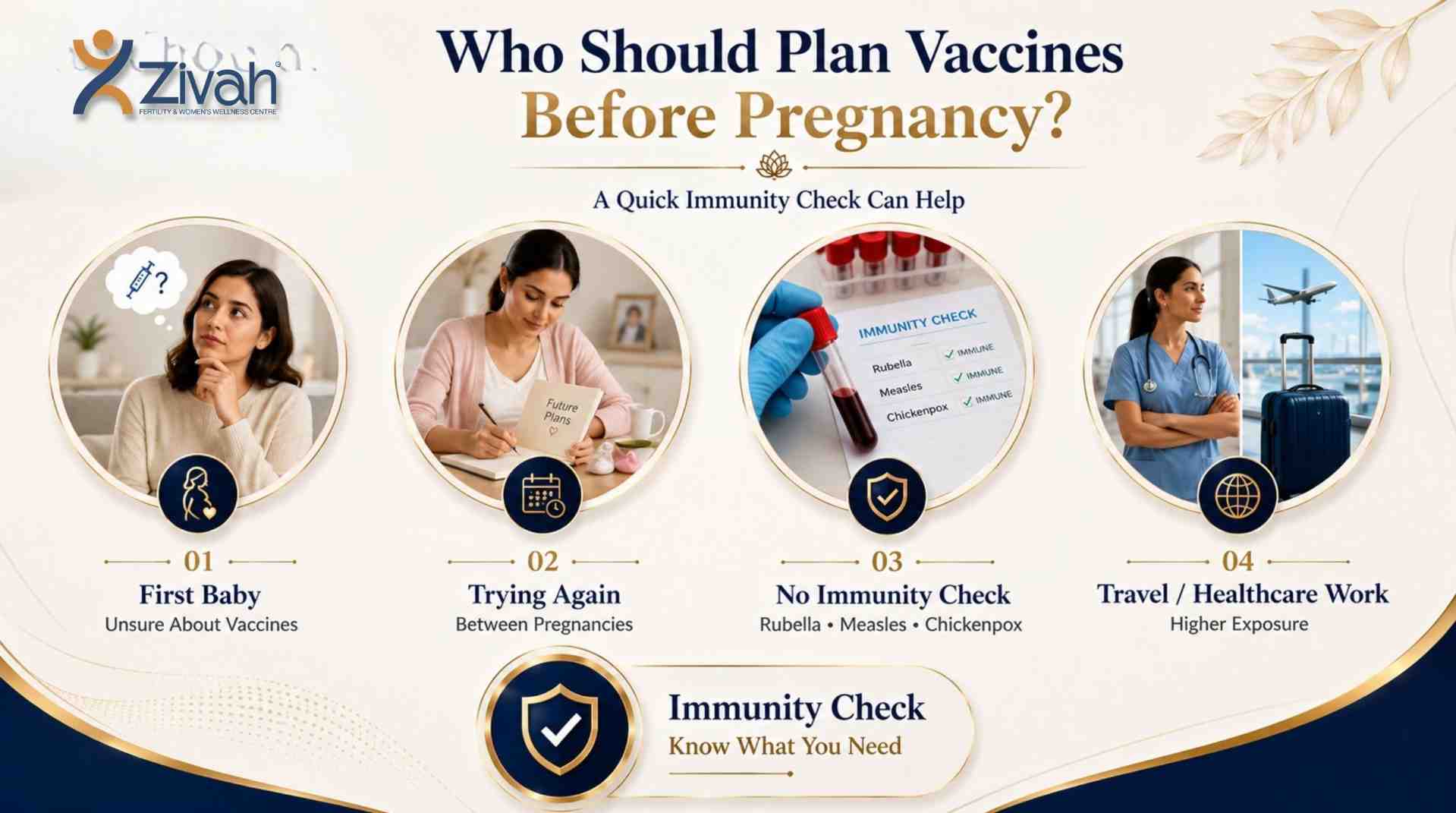
A lot of people also ask this question: who should get a shot before getting pregnant? The most important thing is if you can relate to any of the scenarios below:
- You want to have your first child but don't remember which vaccines you got as a kid.
- You want to have another baby after having a miscarriage or in between pregnancies.
- A blood test has never shown that you are immune to rubella, measles, or chickenpox.
- You travel often or work in healthcare, childcare, or schools.
If any of these sound like you, a quick immunity check before trying tells us exactly what you need.
Which vaccines do you need before pregnancy?
Wondering which vaccines you need before pregnancy? The short answer is six: MMR (rubella), varicella (chickenpox), Tdap, hepatitis B, influenza and COVID-19. Which ones you actually need depends on your immunity testing, and we work that out with you at Zivah.
The vaccines to take before getting pregnant fall into two groups. Live vaccines, like MMR (Measles, Mumps, and Rubella vaccine) and varicella, must be given before you conceive. Inactivated vaccines, such as flu and Tdap, remain safe during pregnancy. Your age and history also shape your recommended pre-pregnancy vaccines, so we build the plan around you. These are the vaccines we most often plan with couples, and how we handle each one for you.
| Vaccine |
What It Protects Against |
Ideal Timing |
How Zivah Helps You |
|---|---|---|---|
| MMR (Rubella) |
Rubella-related birth defects |
1 month before conception |
Checks immunity and plans vaccination |
| Varicella |
Chickenpox complications |
1 month before conception (2 doses) |
Confirms immunity and schedules doses |
| Tdap |
Whooping cough and tetanus |
Before or during pregnancy |
Reviews records and updates protection |
| Hepatitis B |
Hepatitis B transmission to baby |
Before pregnancy |
Tests status and starts vaccination early |
| Influenza |
Seasonal flu complications |
Before or during pregnancy |
Times vaccination to flu season |
| COVID-19 |
Severe COVID-19 illness |
Before or during pregnancy |
Advises on current recommendations |
What about vaccines between pregnancies or after a miscarriage?
Many women ask about vaccines between pregnancies or after a miscarriage. This gap is the easiest time to catch up. With no pregnancy in progress, live vaccines like MMR and varicella can be given safely, with a clear window before trying again. At Zivah, we use this time to close any gaps identified by your earlier testing. Of all those gaps, rubella is the one you should understand most closely, especially if your test shows you are not yet protected.
What if you're not immune to rubella before pregnancy?
If your blood test shows low immunity, there is no need to worry, because not being immune to rubella before pregnancy is something we can easily address and often do. The rubella vaccine before pregnancy comes as the MMR shot. Since MMR is a live vaccine, it must be given before you conceive and is never given once you are pregnant.
This timing matters because of what rubella can do early on. Caught in the first trimester, it can seriously harm a developing baby, and there is no treatment once it happens. That is why we sort your protection out in advance, while there is still time to act.
You may wonder how long before pregnancy to get vaccines like this? The answer is at least one month after your MMR vaccine before pregnancy, since your body needs that time to build full protection. The same timing applies to the chickenpox (varicella) vaccine, which is also a live vaccine. Here is how we handle it for you.
How does Zivah protect you against rubella before pregnancy?
At Zivah, we make the whole process easy and stress-free:
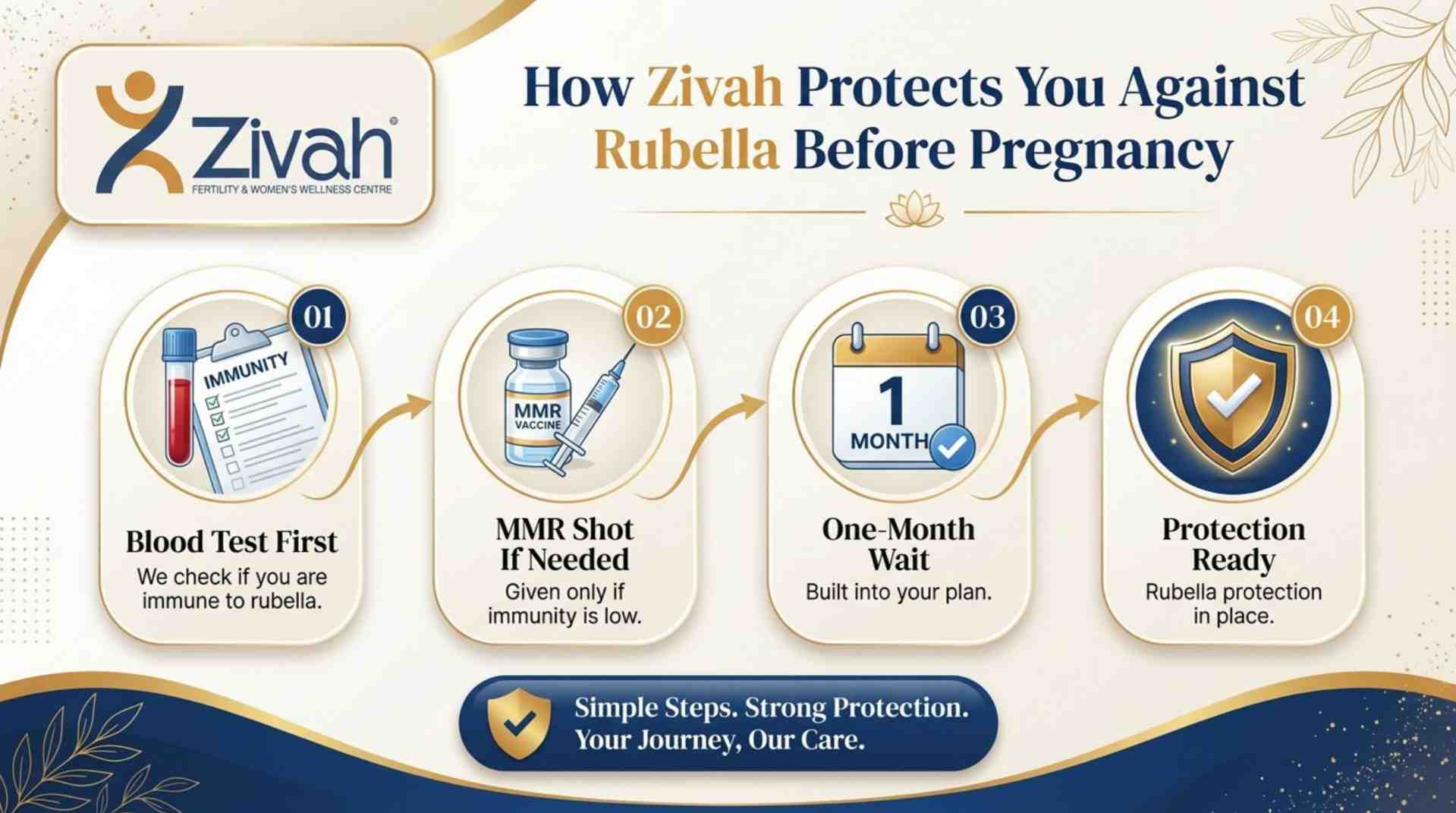
- The first thing we do is a simple blood test to see if you are immune to rubella.
- The MMR shot is only given if your scores drop again.
- The one-month wait time is built into your plan, so it will never delay you.
By the time you are ready to try, your rubella protection is already in place, and we can move on to the rest of your immunity check.
How does Zivah check your immunity before conception?
Everything we do starts with a simple pre-pregnancy immunity test. At your first pre-pregnancy check-up, we take a small blood sample to see which infections you are already protected against. From there, we build a preconception vaccination plan around what you actually need, rather than handing you the same list as everyone else.
The whole journey is short and easy to follow. Most of it happens in one or two visits, and we keep you informed at every step, so you always know where you stand and what comes next.
Here's the simple path we walk every couple through before they start trying.
| Stage |
What Happens |
How Zivah Helps You |
|---|---|---|
| Immunity Blood Test |
Checks your current immunity status |
Simple blood test during your first preconception visit |
| Titre Review |
Reviews immunity levels |
Explains which vaccines you need and which you don't |
| Vaccinate Where Needed |
Receive missing vaccines |
Administers and records required doses |
| Waiting Window |
Short wait after live vaccines |
Guides you on when it's safe to start trying |
| Cleared to Conceive |
Ready to begin trying for pregnancy |
Confirms readiness and provides ongoing support |
What blood tests confirm you're protected before pregnancy?
The main checks are simple antibody tests. A rubella IgG test shows whether you are immune to rubella, and a similar test confirms protection against varicella (chickenpox). We may also check your hepatitis B status. Together, these tell us in plain numbers which vaccines you can skip and which are worth topping up before you try.
Once your results are in, the next thing most couples want to know is which vaccines are safe during pregnancy.
Which vaccines are safe before pregnancy, and which to avoid once you're expecting?
This is the part that puts most couples at ease. Most vaccines are safe during pregnancy, so if you miss the timing on one, you usually still have options. The only ones you need to plan for are the live vaccines.
Live vaccines are not recommended during pregnancy, so MMR (rubella) and varicella shots are the main vaccines to avoid. Both must be given before you conceive. Everything else, including the flu shot, Tdap and hepatitis B, is inactivated and safe at any point, whether before or during pregnancy.
The difference comes down to live versus inactivated vaccines, and it's exactly why timing matters.
| Vaccine |
Live or Inactivated |
Safe During Pregnancy? |
Best Timing |
|---|---|---|---|
| MMR (Rubella) |
Live |
NO | At least 1 month before conception |
| Varicella |
Live |
No |
At least 1 month before conception |
| Influenza (Flu Shot) |
Inactivated |
Yes |
Before or during pregnancy |
| Tdap |
Inactivated |
Yes |
Before pregnancy or during weeks 27–36 |
| Hepatitis B |
Inactivated |
Yes |
Before or during pregnancy |
| COVID-19 |
Non-live |
Yes |
Before or during pregnancy |
This is exactly why we map your vaccines before you start trying, not after. With your plan mapped, the last practical question most couples have is what it all costs.
How much do pre-pregnancy vaccines cost?
There is no single price for pre-pregnancy vaccines, because you only pay for the ones you actually need. Your pre-pregnancy vaccine cost depends entirely on the results of your immunity test. Someone already protected against rubella and chickenpox may need very little, while others may need a few doses to catch up.
The simplest way to get a clear figure is a quick consultation. We test first, then talk you through exactly what your pre-pregnancy vaccination will cost, with no surprises along the way.
Final costs are confirmed only after your immunity test and consultation, as every couple's plan is different.
What matters most, though, is having a team that makes this whole step simple from start to finish.
Why choose Zivah for your pre-pregnancy vaccinations?
Choosing the right pre-pregnancy vaccination clinic makes this whole step far easier. At Zivah, we treat medical and lifestyle support care as a single, connected journey, not a series of separate appointments, so nothing about your protection slips through the cracks.
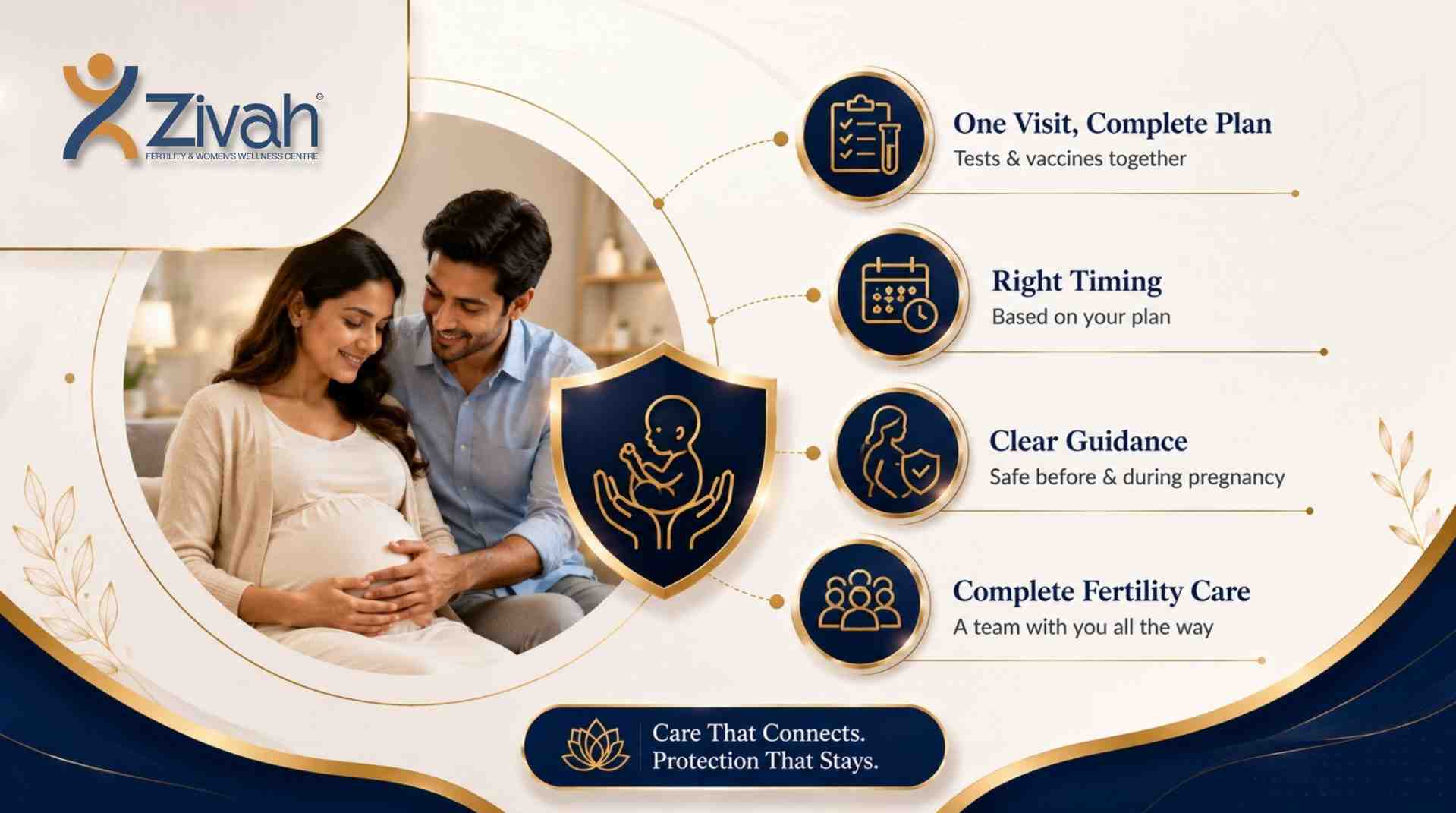
Couples choose us because we bring it all together:
- At the same planning visit, immunisations and immunity tests are scheduled.
- The right time depends on when you want to start trying.
- Make it clear what is safe to do before and during pregnancy.
- A team that takes care of your whole fertility journey, not just one shot.
Many couples also want to know how quickly they can begin.
When can you start your pre-pregnancy vaccinations?
You can begin as soon as you decide to. We book your first preconception visit quickly, run your immunity test, and start any vaccines you need without delay. The only real wait is the short window after a live vaccine, which we always plan around your timeline. The sooner you start, the more room you have before trying. Book your free consultation, and we will get you started.
Ready to plan your pre-pregnancy vaccines?
Getting your pre-pregnancy vaccines in place is one of the simplest, most reassuring things you can do as you prepare for pregnancy. There is no rush and no pressure. It comes down to knowing where you stand and sorting the few vaccines before pregnancy that need a little lead time, so nothing catches you off guard later.
When you feel ready, Zivah brings testing, planning, and timing together in one place as part of your wider preconception care. Book your free consultation whenever you would like to begin.
The information on this page is for general guidance only and is not a substitute for personalised medical advice. Vaccine recommendations and timing vary from person to person, depending on your medical history and immunity test results. Always consult a qualified doctor before starting or delaying any vaccine while planning a pregnancy. Book a consultation with Zivah for tailored advice.