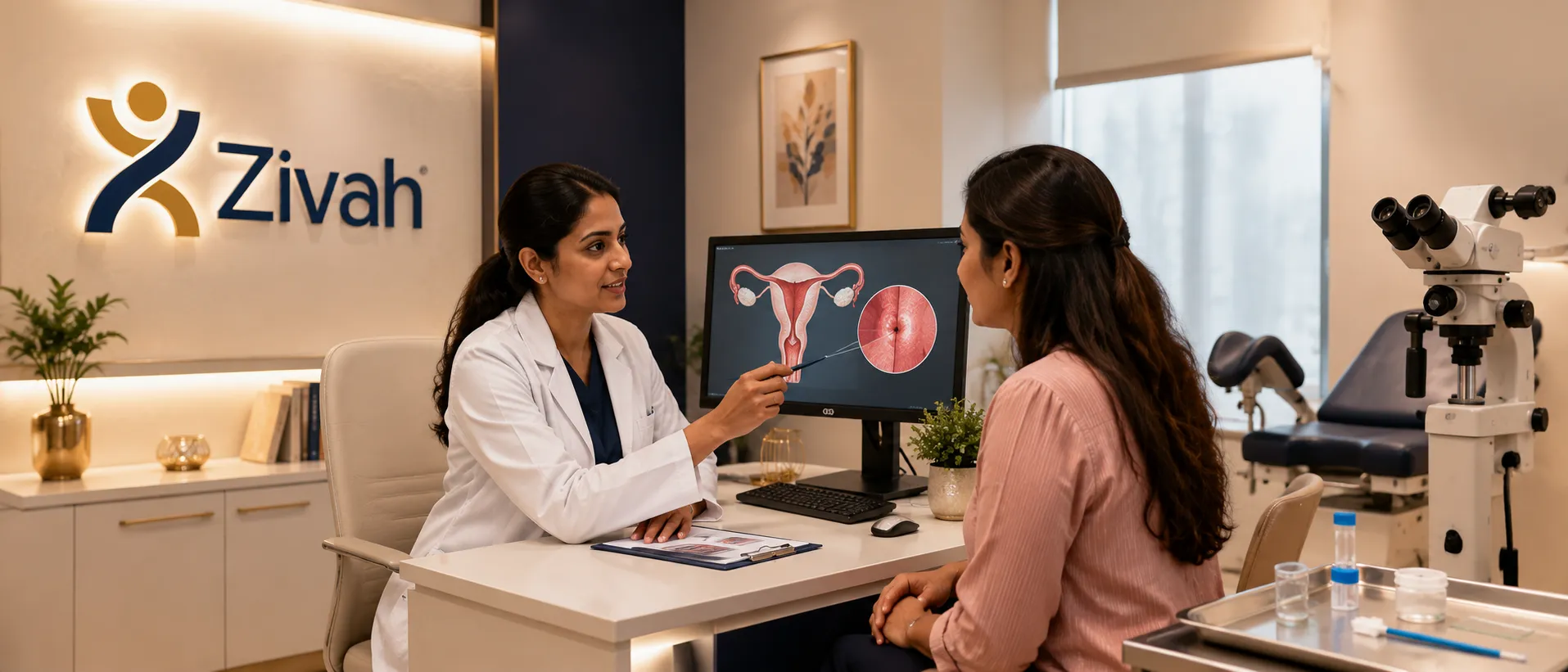
Looking after your cervical health is one of the simplest ways you can protect yourself from cervical cancer – and this is made possible through regular cervical cancer screening. With the right care, we can find problems early and address them well before they become serious.
We are Zivah Fertility, the trusted cervical cancer screening service, offering screening in a calm, private environment where specialists explain everything in plain language and stay with you at every step. Whether it’s your first cervical screening or a routine check, making cervical health screening a regular habit is a good place to start. When you’re ready, you are welcome to book a consultation.
What Is Cervical Cancer Screening?
Cervical screening. A quick test to check for early signs of trouble in the cells of your cervix (the lower part of your womb). A test for cervical cancer mostly looks for two things:
- Strange changes in cells that could slowly turn into cancer.
- Cervical cancers are mostly caused by HPV, a common virus.
A test for cancer in the cervix does not mean you have it. As a test for cervical cancer, it only finds small signs early on, when they are still easy to treat.
How Does Cervical Cancer Screening Help Prevent Cancer?
Cervical cancer rarely appears overnight. It usually starts with small cell changes that develop over several years, which is why cervical cancer early detection works so well. Found early, these changes can be removed before they ever become cancer, and this is what makes cervical cancer prevention screening so valuable. So, can cervical cancer be detected early? In most cases, yes, giving you the best chance to stay well.
What Does Cervical Cancer Screening at Zivah Include?
Cervical Cancer Screening at Zivah Fertility is a complete women’s health screening performed with care from start to finish. As a trusted cervical cancer screening clinic and hospital, we keep everything under one roof, so you are never sent from place to place. Our comprehensive cervical screening services include:
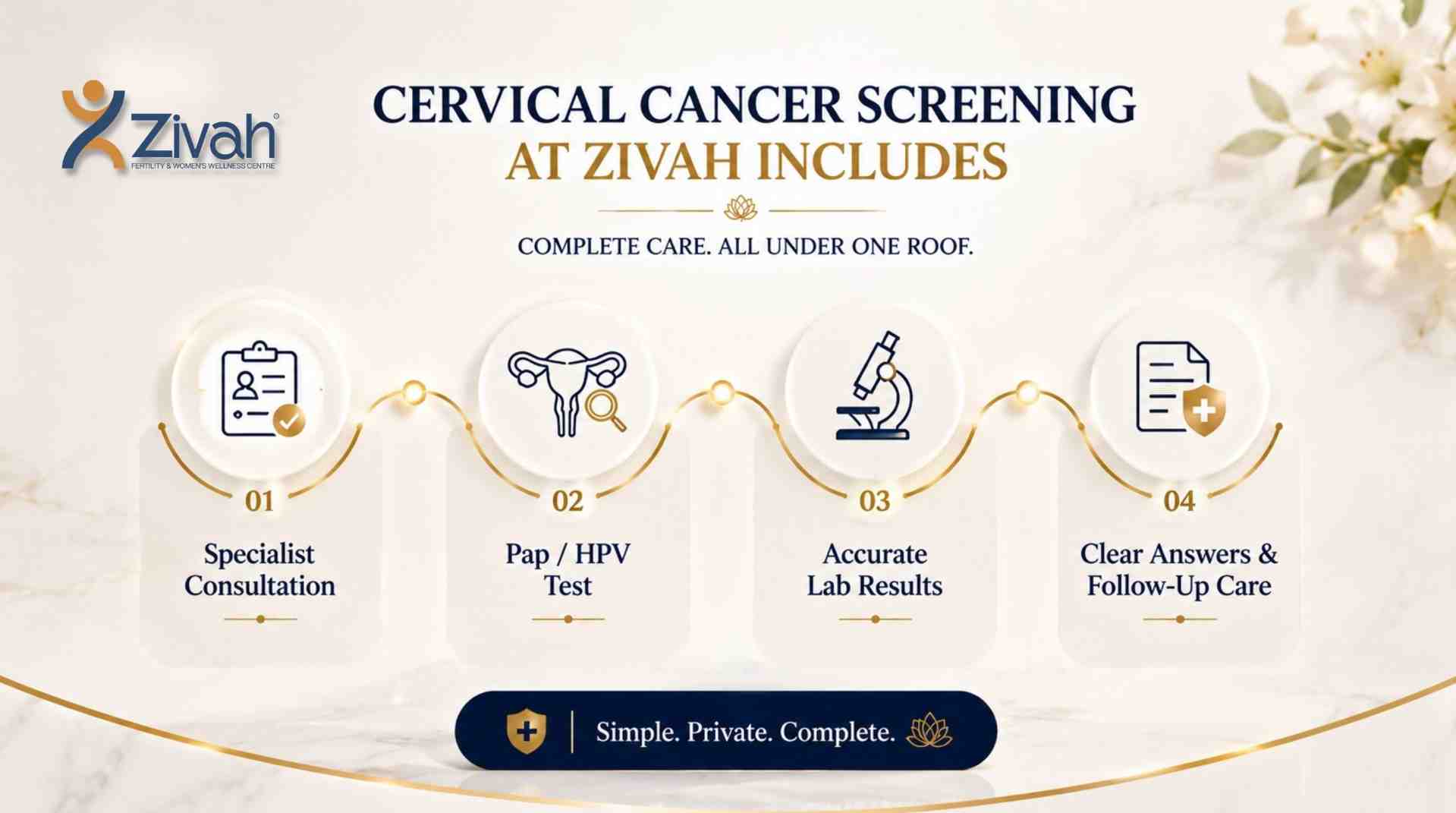
- A consultation with a cervical cancer screening specialist who knows your history.
- The right test for you, whether a Pap test, an HPV test, or both.
- Accurate results through an accredited lab.
- Clear answers and any follow-up care you may need.
Because it is part of our wider gynaecological screening, you can raise any other concerns during the same visit. We aim to make cervical cancer screening for women simple, private, and unhurried.
Why Get Cervical Cancer Screening from a Specialist Clinic?
It may seem easier to get screened anywhere, but a specialist setting makes a real difference. A cervical cancer screening doctor takes the sample gently and correctly the first time, which means fewer repeat tests and more reliable results. Having a gynaecologist for cervical cancer screening also means that if anything looks unusual, the next right step can begin without delay. At a dedicated cervical screening centre like ours, your comfort, privacy, and accuracy are all taken care of, and once you are in caring hands, the only thing left to decide is which test is right for you.
Which Cervical Cancer Screening Test Do You Need?
Not every woman needs the same test. The right cervical cancer screening test depends mainly on your age and health, and at Zivah, we help you choose with confidence. A Pap smear test checks your cervical cells for early changes, while an HPV test, short for human papillomavirus test, looks for the virus behind most cervical cancers. Some women have both together. Here is a simple way to see which option suits you:
| Test |
What It Checks For |
Best Suited For |
|---|---|---|
| Pap Test (Pap Smear) |
Abnormal or precancerous cervical cells |
Women aged 21 and older |
| HPV Test |
High-risk HPV strains that can cause cervical cancer |
Women aged 30 and older (primary screening) |
| HPV/Pap Co test |
Both HPV infection and cervical cell changes |
Women aged 30–65 years |
In short, a Pap smear screening is the usual starting point in your twenties, while HPV screening takes the lead from age 30.
Can You Have a Pap Smear and HPV Test Together?
Yes. When you have a Pap smear and an HPV test for women done at the same time, it is called a cotest. This brings cervical cancer screening with Pap smear results and an HPV test for cervical cancer into a single visit, giving a fuller picture of your cervical health.
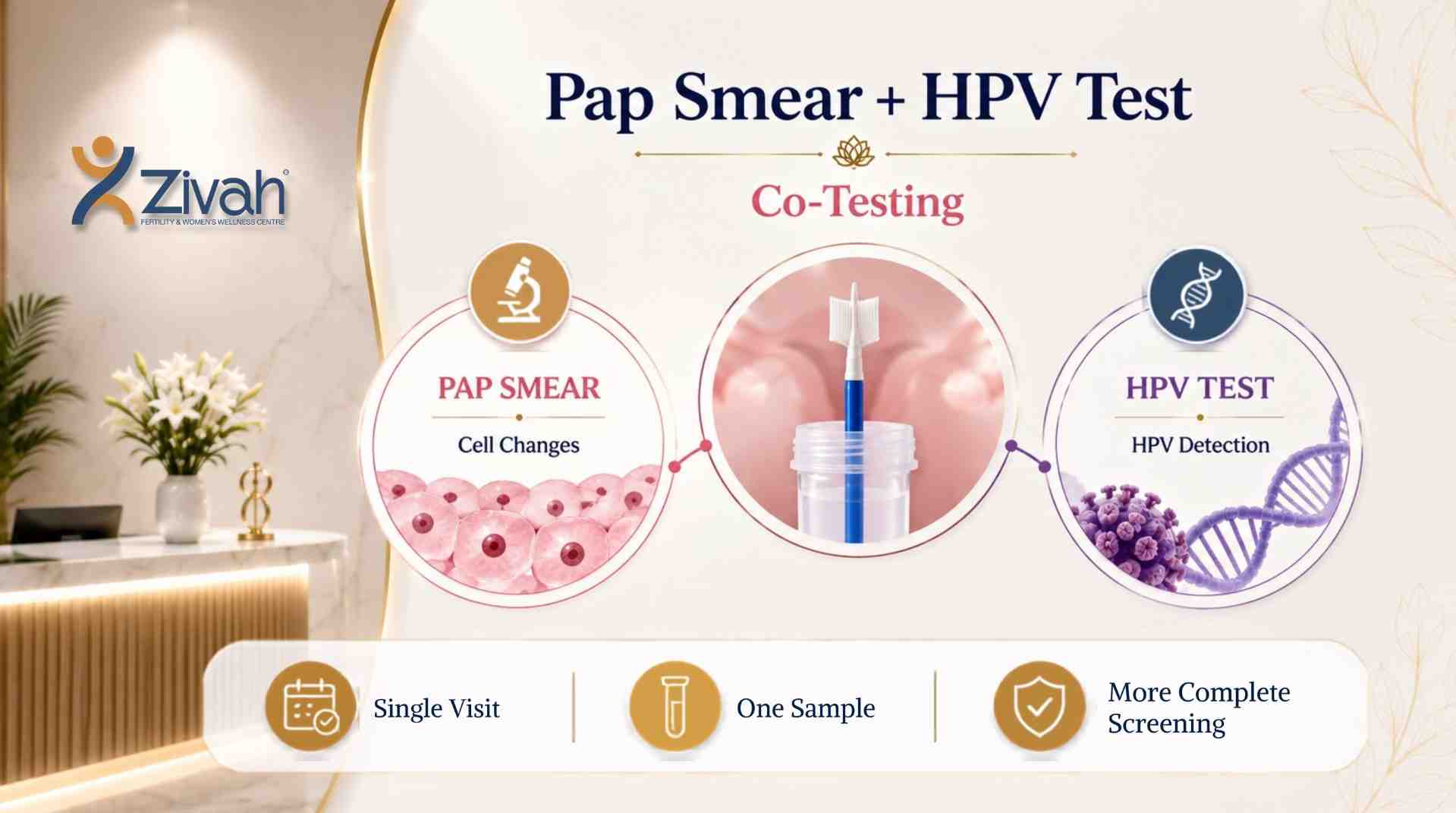
It is usually offered to women between 30 and 65, and because both checks come from a single sample, it remains just as quick and comfortable as a single test. Knowing the tests, though, is only half the picture; the next is knowing when, and how often, you should have one.
Who Should Get Cervical Cancer Screening and How Often?
Most women between 21 and 65 should have regular cervical cancer screening, even when they feel perfectly healthy. So who needs cervical cancer screening, and when should cervical cancer screening be done? It mostly comes down to age. The recommended cervical cancer screening age to begin is 21, and the widely followed cervical cancer screening guidelines suggest continuing every few years after that, which at Zivah we tailor to your own history. Here is how routine cervical cancer screening usually works:
| Age Group |
Recommended Test |
How Often |
|---|---|---|
| 21–29 Years |
Pap Test (Pap Smear) |
Every 3 years |
| 30–65 Years |
HPV Test, HPV/Pap Cotest, or Pap Test |
Every 5 years (HPV test or cotest) or every 3 years (Pap test) |
| Over 65 Years |
Doctor's advice based on previous screening results and risk factors |
As advised by your doctor |
As a simple rule, the right cervical cancer screening test for women changes with age, so it is worth knowing which stage you are in and booking your next visit on time.
Should Women Over 30 Get an HPV Test Too?
From age 30, the advice changes a little. Cervical cancer screening for women over 30 often moves toward HPV testing, either on its own or alongside a Pap test. Combining cervical cancer screening and HPV test results gives a clearer view of the age when high-risk HPV matters most.
It also changes how often you need cervical cancer screening, since a negative HPV result usually means you can safely wait five years instead of three. If you are unsure which suits you, our specialists at Zivah will gladly guide you, and that guidance starts with a simple visit you will find easier than you expect.
How Is Cervical Cancer Screening Done at Zivah?
So how is cervical cancer screening done at Zivah? The cervical cancer screening procedure is quick and gentle, usually over in a few minutes. During your visit, you lie back comfortably while the specialist uses a small device called a speculum to gently view the cervix, then collects a tiny sample of cells with a soft brush, which goes to our lab.
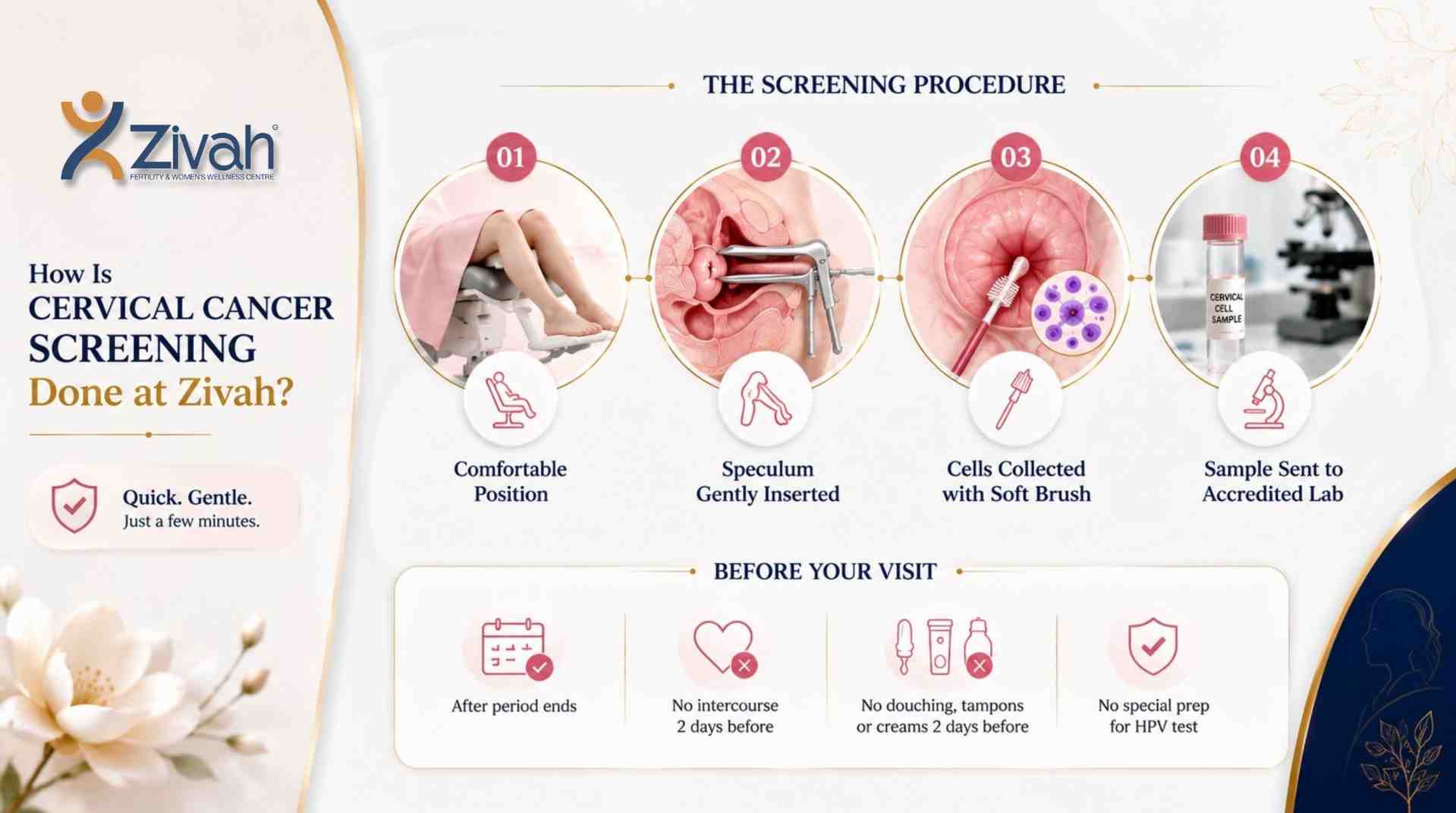
That is the whole cervical cancer screening test procedure. A little preparation makes your results more accurate, so here is what helps before your cervical cancer screening visit:
- Schedule it for after your period ends, for a clearer cell sample.
- Avoid intercourse (sex) for two days before for more accurate results.
- Avoid douching, tampons, or vaginal creams for two days before, as these can interfere with the sample.
- No special preparation is needed for an HPV-only test.
Our team will remind you of anything you need to know before you arrive.
Is Cervical Cancer Screening Painful?
So is cervical cancer screening painful? Most women, no. You may experience some pressure for a few seconds as the sample is taken, but it doesn’t last long, and it’s seldom painful. If you’re feeling anxious, just let our team know, because it’s easier to relax. And once the sample is taken, the next thing on your mind is usually the results.
What Happens After Your Cervical Cancer Screening at Zivah?
After your test, the sample is checked in our lab, and your cervical cancer screening results usually come back within 1 to 3 weeks. We always explain them in plain language, so you are never left guessing. One of the real benefits of cervical cancer screening is this clarity: you know where you stand and what, if anything, comes next. Here is what each result means:
| Result |
What It Means |
Next Step |
|---|---|---|
| Normal / Negative |
No abnormal cervical cells or high-risk HPV found |
Continue routine screening at the recommended interval |
| Abnormal / Positive |
Cervical cell changes or high-risk HPV detected |
Further evaluation, such as colposcopy and specialist review |
| Unclear / Unsatisfactory |
The sample was inconclusive or insufficient for assessment |
Repeat the test as advised by your doctor |
Whatever the outcome, our specialists at Zivah guide you through the next step, so you are never left to manage it alone.
Does an Abnormal Result Mean You Have Cancer?
This is the worry most women feel, so let us be clear: an abnormal result rarely means cancer. It usually indicates minor cellular changes, many of which resolve on their own. To be sure, we may suggest a colposcopy (a closer look at the cervix) and sometimes a small biopsy (a tiny tissue sample) to check the cells. If anything does need treating, it can almost always be done early and simply. Knowing your result is the first step toward peace of mind, and the place you choose for that care makes all the difference.
Why Choose Zivah Fertility for Cervical Cancer Screening?
Choosing where to get screened matters as much as the test itself. Women across the region trust Zivah as one of the best cervical cancer screening clinics, and here is why:
- Every test is handled by an experienced cervical cancer screening specialist, so your results are accurate and reliable.
- A skilled cervical cancer screening doctor and expert gynaecologist for cervical cancer screening are on hand if anything needs a closer look.
- As a dedicated cervical screening centre, we offer real privacy, comfort, and unhurried care.
- Clear guidance from your very first visit, so you are never left guessing or worried.
When it comes to your cervical health, that reassurance is worth choosing well, and booking your screening with us is a simple first step.
How Much Does Cervical Cancer Screening Cost at Zivah?
The cost of cervical cancer screening depends on the test you choose, since a single Pap test, an HPV test, and a full cotest are priced differently. At Zivah, we keep our cervical cancer screening costs fair and our package clear, so you only ever pay for what you need. Rather than list a fixed price here, we prefer to explain your cervical cancer screening options in person, matched to your age and history.
To learn the current price for a cervical cancer screening or the full package cost, simply book a cervical cancer screening appointment or call our team. Whether you want a routine check, an affordable cervical cancer screening near you, or to join our regular screening program, a quick consultation is the easiest place to start. Booking an appointment is easy and we will tell you exactly what is included before you commit.
Please note that screening prices are subject to change from time to time - please contact us for the latest pricing and package information.
Conclusion
Cervical cancer screening is one of the simplest, most powerful steps you can take for your long-term health. It is quick, gentle, and in most cases completely reassuring, yet it can catch trouble early enough to change everything.
At Zivah Fertility, we make that step easy, private, and clear from start to finish. Whether it is your first screening or a routine check, our team is here to guide you every step of the way. Book your cervical cancer screening with us today, and give your health the head start it deserves.