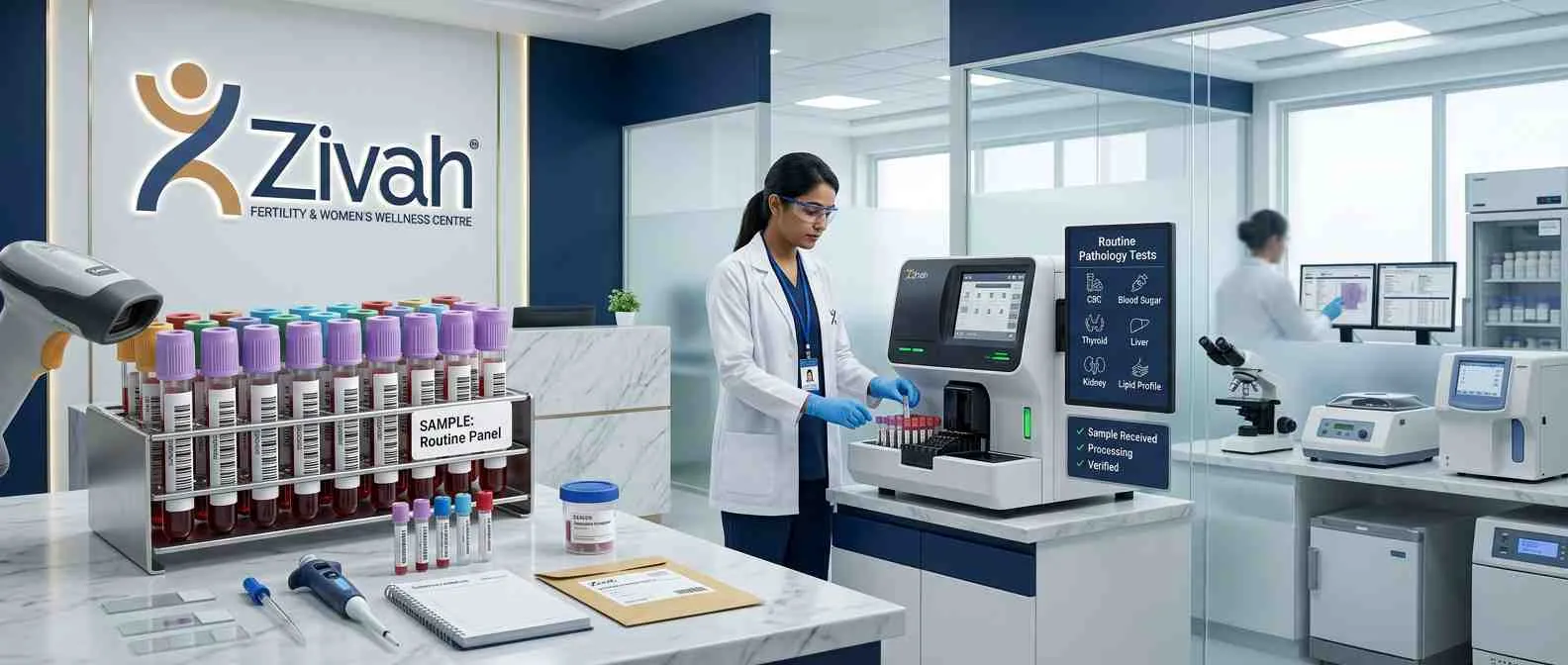

Routine pathology tests are the easiest method to have a look at what's going on within your body before anything feels wrong. These diagnostic tests look at the signals your organs leave behind through a little sample of blood or urine, checking for problems including anaemia, diabetes, thyroid imbalance and kidney or liver strain long before symptoms occur.
This page walks you through what routine pathology tests mean, the whole routine blood tests list and what each one detects, the different sample kinds, how to prepare, how often to test and how to interpret your result. And here's what most people don't realise: many critical illnesses silently show up on your health screening blood tests while you still feel absolutely great.
What Are Routine Pathology Tests and Why They Matter
A routine pathology test is a simple lab test that will look for health issues using a small blood or urine sample. You don't wait for something to feel wrong; these tests can pick up hidden issues early, which is why they matter so much for staying healthy.
Pathology Test Meaning: Test, Lab and Examination Explained
So, what is a pathology test? It's the lab examination of a bodily sample, by definition. Usually blood or urine, sometimes stool or tissue. A couple of phrases get muddled up here: pathology test is the analysis itself, pathology lab is where it is done, and pathological examination is the larger study of that material under expert evaluation.
The term "routine" also matters. Routine pathology screening is not a single test but a panel of tests looking at a range of factors at once. These routine blood tests can catch early warning symptoms of diabetes, anaemia, thyroid imbalance, or stress on your kidneys and liver, often before you feel any different.
Important point: these tests are risk screening; they are not a diagnosis on their own. An abnormal result just tells your doctor what to look for next.
Routine Blood Tests List: What a Full Body Checkup Detects
Most routine blood work is grouped as a whole-body health checkup, a combination of blood panel tests that assess numerous systems at once. Here is the list of routine blood tests you will typically see and what each one is actually looking for.
CBC, Metabolic, Kidney and Liver Function Tests
- A complete blood count (CBC) is the starting point. It scans your white cells for infection, your haemoglobin for anaemia, and your platelets for clotting, a rapid read on your general health.
- A metabolic panel checks your blood sugar and electrolytes. It can tell you how your body is managing energy and fluid balance.
- The kidney function test analyses creatinine, blood urea nitrogen (BUN) and eGFR; all three combined indicate how well your kidneys are filtering waste from your blood.
- The liver function test does the same for your liver, reading enzymes and proteins like ALT, AST, bilirubin and albumin, often catching problems like fatty liver before you'd ever notice them.
Lipid Profile, Thyroid, Blood Sugar and HbA1c
A lipid profile tests your total cholesterol, LDL, HDL, and triglycerides to check your risk of heart disease. High cholesterol is usually asymptomatic, and the cholesterol test is one of the most important tests in preventative screening. A thyroid function test measures TSH, T3 and T4 to determine if your thyroid is over- or under-active, which impacts your metabolism, weight and energy.
Blood sugar is examined in two ways: a fasting glucose test indicates your level right now, while an HbA1c test represents your average over the last two to three months. Together they help you catch prediabetes and diabetes early, often before you know a thing.
Vitamin, Iron, Inflammation and Coagulation Markers
Vitamin B12 and Vitamin D tests reveal deficiencies that secretly damage your immune system, bones, nerves and vitality. Iron studies (including ferritin) assist in finding the source of anaemia and assessing your iron storage, beneficial notably for women.
CRP and ESR are inflammatory indicators that suggest the presence of infection or inflammation in the body. A coagulation profile (PT and APTT), which examines your blood’s ability to clot, is necessary before any operation.
Routine Blood Test Panel: The Marker Measured and What It Flags
| Test |
Marker measured |
What it flags |
|---|---|---|
| Complete blood count (CBC) |
Haemoglobin, WBC, platelets |
Anaemia, infection, clotting issues |
| Lipid profile |
LDL, HDL, triglycerides |
Heart disease risk |
| Liver function test |
ALT, AST, bilirubin, albumin |
Fatty liver, hepatitis, liver strain |
| Kidney function test |
Creatinine, BUN, eGFR |
Kidney function decline |
| Fasting glucose & HbA1c |
Blood sugar (now + 3-month) |
Prediabetes, diabetes |
| Thyroid (TSH) |
TSH, T3, T4 |
Thyroid imbalance |
| Vitamin D & B12 |
Vitamin levels |
Deficiency |
| Iron studies |
Serum iron, ferritin |
Cause of anaemia |
| CRP / ESR |
Inflammatory markers |
Inflammation, infection |
When people think of testing, blood is the sample they most typically image, yet a thorough routine screen often goes beyond it. Urine and urine may tell you things blood alone cannot, and it is for this reason that a good check-up sometimes depends on more than one source.
Types of Pathology Tests by Sample: Blood, Urine and Stool
Not every pathology test requires a separate sample. Lab tests are split into broad categories by what they test: blood, urine, and stool, and each gives a distinct view into your health.
How Blood, Urine and Stool Tests Differ
The advantages of each sort of sample are:
- Blood analysis tests give the broadest picture. One sample can tell you about your blood cells, how well your organs are working and the amounts of hormones in your body, all at the same time. That is why blood testing is the foundation for most regular panels.
- Urine tests (urinalysis) are generally used to check your kidneys and urinary tract. They can pick up viruses, proteins, and glucose that shouldn’t be there. Some are simple dipstick tests read on the spot; others are examined under a microscope for a deeper look.
- Stool tests evaluate your digestive system. They can find concealed (occult) blood in the stomach, or symptoms of poor digestion or other signals that suggest to a gastrointestinal problem.
Blood is used in almost every standard screening test that is done, but urine and stool tests are included when your symptoms or history warrant it. Whatever samples your panel requires, collection is fast, and a little prep keeps your results reliable.
How Samples Are Collected and How to Prepare at Zivah
Testing for these is simple and fast. At Zivah, sample collection usually means a small blood draw from your arm, with a little preparation beforehand to keep your results accurate.
The Sample Draw and How Much Blood Is Taken
A little needle will prick your arm to obtain a small sample of blood; it just takes a minute or two, and most people only feel a momentary pinch. How much blood is taken, you may ask.
It’s less than the row of vials suggests: generally 2 to 10 ml per test, and roughly 20 to 30 ml for a complete panel, well within what your body restores. If you require urine or stool testing, you can collect them yourself using a simple kit. Results are often available in a day or two.
Fasting, Timing and Preparation for Accurate Results
Do you fast for a pathology test? Yes, for some. A lipid profile and fasting glucose require 8 to 12 hours of fasting, although you can drink water. No fasting required for Thyroid test or CBC.
The accuracy of findings depends on a few things: Tell your doctor about all drugs or supplements you take Bring prior papers to compare trends Relax your arm, and don’t pump your fist in the pull. Repeat hormone testing at the same time of day, as TSH and iron vary over the day.
Preparation Guide: Fasting and Instructions by Routine Test
| Test |
Fasting required |
Notes |
|---|---|---|
| Lipid profile |
8–12 hours |
Water allowed; avoid alcohol beforehand |
| Fasting glucose |
8–12 hours |
Usually done in the morning |
| HbA1c |
Not required |
Can be done any time of day |
| Complete blood count (CBC) |
Not required |
No special prep |
| Thyroid (TSH) |
Not required |
Best at a consistent time of day |
| Liver & kidney function |
Usually not required |
Disclose medications |
| Vitamin D & B12 |
Not required |
No special prep |
How Often Should You Get Routine Pathology Tests?
There is no single rule about how often to get screened; it depends on your age, your health, and your family history. But some simple criteria make it easy to identify when a routine review of blood work is necessary and whether to repeat blood tests you’ve had before.
Recommended Testing Frequency by Age and Health Status
For most healthy people, an annual health exam is a good starting point. Routine health screening tests once a year can spot minor changes before they become significant. If you have a chronic illness, such as diabetes, thyroid problems, or high blood pressure, testing every three to six months is more common so your doctor can keep treatment on track.
The same is true whether you are taking medication that affects your liver or kidneys, for which routine tests frequently help maintain safe long-term use. Consistency is important, too. One reading is only a snapshot.
But if your doctor runs basic diagnostic tests repeatedly, he can observe how your numbers fluctuate over time, which tells a far more relevant story than a single result. Frequency is also related to your stage of life; routine pathology plays an additional role for women planning a family.
Routine Pathology Tests for Women and Fertility Planning
Routine pathology tests matter that bit more for women, since your health needs change through different stages of life. Whether you're just staying on top of your wellbeing or thinking about starting a family, the right blood tests give you a clear picture to work from, and often catch the things that quietly slip by.
Routine Health Tests for Women
Some health tests for women are especially important because the body changes over time. A CBC and iron tests are especially relevant as anaemia is frequent through menstruation and pregnancy.
A thyroid test (TSH) is also worth keeping an eye on, as an imbalance can affect energy, weight, and periods. Good general health screening for women includes tests for vitamin D and B12, to detect silent deficits that sap energy and damage bones.
Pre-Conception Health Screening at Zivah
A few preconceptionpreconception blood tests can provide a healthy baseline before you conceive if you are planning a pregnancy;: generally, a CBC for anaemiaanaemia, a thyroid test, fasting glucose or HbA1c, vitamin D and B12, and a rubella immunity check,, which is best checked beforehand.
At Zivah, this standard pathology screening for fertility is frequently the initial step in a larger fertility route, including a hormone panel test if required. You’ll have further tests such as blood group, Rh factor and infection screening later, while you’re pregnant, as part of your prenatal booking.
Understanding Your Pathology Test Report
At first glance, a pathology test result might be confusing rows of data, ranges and the rare flag. But if you know how to read a pathology report, it is a lot less scary and much more helpful.
Reference Ranges and What Abnormal Results Mean
Most reports will display your result with a reference range for a pathology test, the band of normal blood test levels for that test. Your number is in there; you're in the normal range. Outside of that, it's highlighted.
The good news is that if the figure is outside the range, it does not necessarily mean there's a problem. The results are influenced by common variables such as nutrition, hydration, and time, and reference ranges may vary somewhat between labs. That’s why we never read abnormal blood results in isolation, but always in context. A single reading is less important than the trend over time.
Most findings will be available in 24 to 48 hours. If further investigation or attention is needed, your doctor may repeat the test. These numbers direct your care; they don’t diagnose themselves. A report is most valuable when examined with a professional, so where and how do you have your routine screening done?
Getting Your Routine Pathology Tests Done at Zivah
Ready to follow up on your health? You may take some of the simplest and most comforting actions by undergoing routine pathology tests, and at Zivah in Siliguri, we have made the whole procedure simple.
Where to Get Routine Pathology Tests and What They Cost
If you are seeking quality routine pathology tests in Siliguri, we at Zivah have it all under one roof. Your sample collection, lab testing and a clinician’s assessment of your data all occur in one visit, so you’re never left interpreting statistics alone. What’s tested can be adjusted to your age, history or reproductive objectives, with findings validated by a certified MD Pathologist.
The cost will depend on the panel you want, and this is best discussed at your appointment. Take that first step boldly by contacting the Zivah team in Siliguri to arrange your normal pathology test appointment.