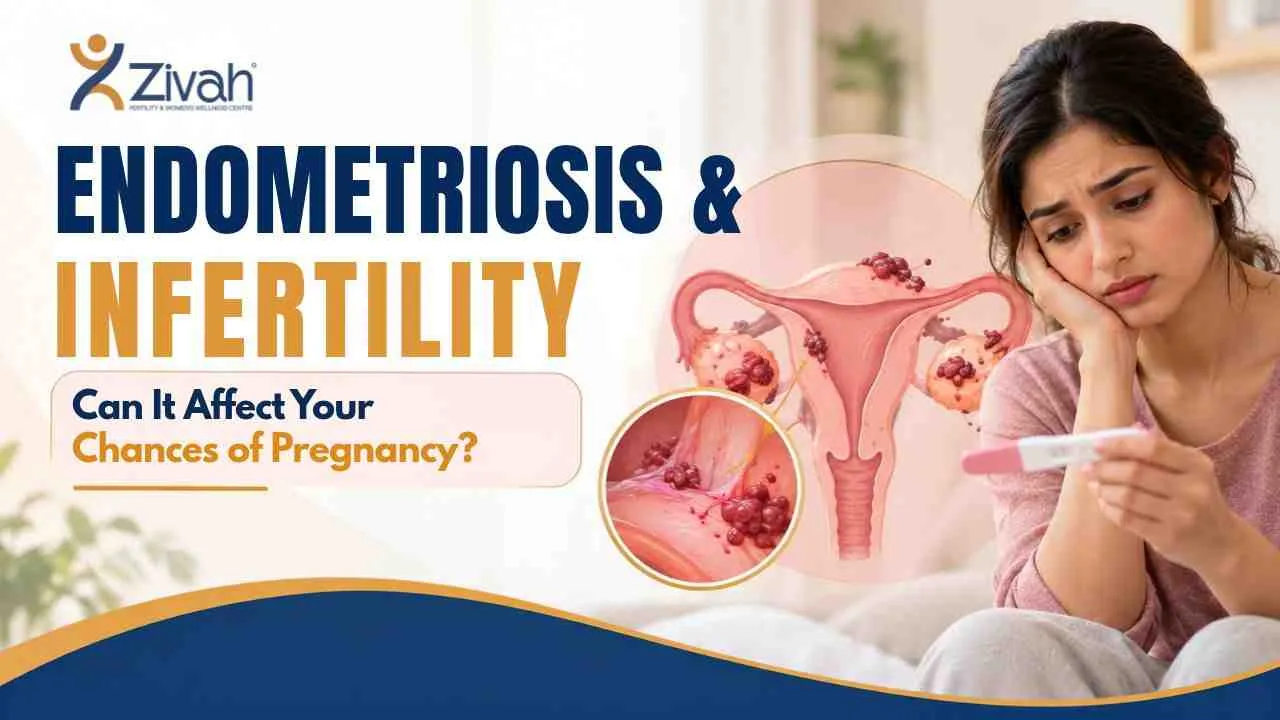
Can Endometriosis Cause Infertility? Symptoms, Diagnosis & Treatment
Can endometriosis cause infertility? Learn the symptoms, how it’s diagnosed, chocolate cysts, treatment options, IVF and your real chances of pregnancy.

You’ve had painful periods for years, and now every month of trying results in another negative test. Or maybe a doctor has just said the words endometriosis and infertility together, and one thought keeps nagging: will I ever get pregnant?
So, can endometriosis cause infertility? Yes, sometimes. This guide covers endometriosis symptoms you need to know about, the link between endometriosis and fertility, how doctors diagnose the condition, which treatments work and what your real odds of an endometriosis pregnancy are.
Up to 50 per cent of women with endometriosis have difficulty conceiving. But almost 7 in 10 women with mild to moderate endometriosis conceive without treatment, and the difference between the two groups is rarely the level of pain they experience.
What Is Endometriosis and Why Does It Happen?
Endometriosis is a condition in which tissue similar to the uterine lining grows outside the uterus, usually on the ovaries, fallopian tubes, and pelvic lining. It affects roughly 10 per cent of women; most are diagnosed in their 20s or 30s.
What Causes Endometriosis, and Is It Hereditary?
Doctors are still not sure what endometriosis causes exactly. Immune and hormonal variables, and backward movement of period blood into the pelvis, are thought to play a role.
Is endometriosis hereditary? It does run in families, so you are at a higher risk if your mother or sister has it. It is also more common in Asian women.
Chocolate Cysts and Endometriosis: What’s the Connection?
Endometriosis can grow on an ovary and form a cyst termed an endometrioma. The cyst is filled with old black blood that looks like melted chocolate, so doctors call it a chocolate cyst. These cysts are common in women with endometriosis and may be on one ovary or on both.
So why is the link between chocolate cysts and endometriosis important for fertility? For three reasons (which we’ll come back to): they can reduce your egg reserve, they are easy to spot on an ultrasound, and removing them requires careful preparation. Some women have these cysts and feel nothing; some feel endometriosis every month. So what are the symptoms?
Endometriosis Symptoms: How Do You Know You Have It?
Endometriosis symptoms may change widely from woman to woman. In many Indian homes, severe period pain is something to be tolerated; therefore, women may continue for years without anybody looking for a cause.
Whether you are asking yourself “how do I know if I have endometriosis?”, start with the pattern of your suffering. The most common endo signs are strongest around your period, but many last all month long.
Wondering about endometriosis pain, where it usually hits? It’s commonly felt in the lower belly, pelvis or the lower back. Heavy periods or spotting, pain when passing urine or stool, bloating and permanent tiredness are also common.
Common Signs of Endometriosis
| Symptom | How Often It Occurs |
|---|---|
| Painful periods | 60 to 80% of women |
| Long-lasting pelvic pain | 40 to 50% |
| Pain during sex | 40 to 50% |
| Difficulty getting pregnant | 30 to 50% |
| Spotting before periods | 10 to 20% |
Can You Have Endometriosis and Not Know It?
Yeah. Some 20 to 25% of women with endometriosis have no symptoms at all, and for some the first clue is problems getting pregnant. And pain doesn't tell you how bad the disease is.
Some little patches can be very painful, while extensive endometriosis may be little or not at all painful. We will return to this. So what about this tissue stops pregnancies?
How Are Endometriosis and Infertility Linked?
Can Endometriosis Cause Infertility? It cannot always. Studies reveal that 30 to 50% of women with endometriosis have difficulties conceiving, and as many as half of women treated for infertility are diagnosed with endometriosis. The link between endometriosis and infertility is strong, but permanent infertility is uncommon. You'll see in the treatment sections that there are still good options for most women.
How Does Endometriosis Affect Fertility?
There is no single cause of why endometriosis causes infertility. Often a combination of modest issues makes each stage of conception a bit more difficult:
- Blocked or twisted tubes: adhesions and scar tissue can prevent eggs and sperm from meeting.
- Lower egg reserve: The chocolate cysts we discussed before can destroy healthy ovarian tissue, lowering AMH levels.
- Inflammation: This makes the environment unfriendly to eggs, sperm and the early embryo.
- Ovulation and Implantation: Does Endometriosis Affect Ovulation? It can, and it can also make the uterine lining less receptive to an embryo.
- Adenomyosis: commonly accompanies endometriosis and decreases fertility even more.
- Painful sex: Couples have less sex when sex hurts.
What Stage of Endometriosis Causes Infertility?
During a laparoscopy, doctors typically assign endometriosis a grade from one to four:
- Stage 1 (minimum): a few small patches; fertility is usually only moderately impaired.
- Stage 2 (mild): More patches, and each month you are less likely to get pregnant.
- Stage 3 (moderate): Deeper spots, typically chocolate cysts; fertility is definitely compromised.
- Stage 4 (severe): big cysts and significant scarring. Tubes and ovaries commonly destroyed.
Stages 3 and 4 have the greatest impact, though even early stages reduce your odds of conceiving within a month. Remember, pain has no bearing on the severity of the disease. Nor does the stage tell the full narrative. Your age, the health of your tubes and your egg reserve are equally important.
Diagnosis of Endometriosis: Which Tests Confirm It?
Getting an endometriosis diagnosis can take far longer than it should. On average, women wait 4 to 11 years. Keeping a diary of your pain, periods, and other symptoms will allow your doctor to recognise the pattern sooner.
How Do Doctors Diagnose Endometriosis?
Diagnosis of Endometriosis is usually found in a step-by-step process that starts with simple checks. Then, your doctor will do a pelvic exam and ask you about your symptoms and family history.
Then, a transvaginal ultrasound or MRI can show chocolate cysts and adenomyosis. If you are wondering how to confirm endometriosis, the only way to know for sure is with a laparoscopy. This keyhole surgery lets the doctor see the tissue directly and remove it in the same procedure.
If you’re attempting to conceive, endometriosis testing for diagnosis also includes a fertility check. This usually includes an AMH blood test, an antral follicle count to assess egg reserve, an HSG to see whether your tubes are open, and a semen analysis for your partner.
Endometriosis or Ovarian Cyst: How Can You Tell?
Not every ovarian cyst is due to endometriosis. The chocolate cyst we discussed previously looks distinct from a simple cyst on ultrasound, and that difference changes your treatment plan.
| Feature | Chocolate Cyst (Endometrioma) | Simple Ovarian Cyst |
|---|---|---|
| What’s inside | Thick, old, dark blood | Clear fluid |
| Symptoms | Pelvic pain, painful periods | Usually none, or mild discomfort |
| Goes away on its own? | Rarely | Often, within 1 to 3 cycles |
| Effect on fertility | Can lower egg reserve | Usually none |
| Usual treatment | Medicines for pain, surgery or fertility planning | Watch and repeat the scan |
Now that you have a diagnosis, the next question is which treatment will actually help you get pregnant.
Endometriosis Treatment and Fertility: Which Options Help You Conceive?
The correct endometriosis treatment depends on your pain, your age and stage, and whether you want to have a baby now or later. This is why the endometriosis treatment and fertility plans change for each woman.
Do Endometriosis Medicines Help You Get Pregnant?
What is the Treatment for endometriosis pain? Usually medications. But they help with pain a lot more than they do with pregnancy. Painkillers can make periods easier, but remove anti-inflammatory ones when you try to conceive.
Hormonal treatments also help with discomfort, but they interrupt ovulation, so you can't take them while you're trying, and they don't improve your odds if you stop them.
Can Endometriosis Surgery Improve Fertility?
In mild to severe conditions, endometriosis surgery is typically helpful. With laparoscopic surgery and endometriosis care, the doctor uses keyhole cuts to remove the patches and free up scar tissue around the tubes and ovaries.
So can treating endometriosis increase fertility? Yes, in many cases. Your surgeon can also calculate your Endometriosis Fertility Index (EFI) after surgery, a score that predicts your odds of getting pregnant naturally.
Chocolate cysts need a bit more consideration. Removing the larger ones, generally those over 4 cm, can help, but as we showed above, it can also remove healthy ovarian tissue and reduce your AMH.
If you’re not looking to get pregnant very soon, ask about freezing your eggs beforehand. Try to get pregnant within roughly a year of surgery, as up to 50% of women with endometriosis will have a recurrence within 5 years. If surgery alone isn’t enough or time isn’t on your side, then fertility treatment is the next step.
How to Get Pregnant with Endometriosis: IVF, Natural Tips and Best Age
Can endometriosis get you pregnant? Yes, and many women do. As we indicated at the beginning, more than 7 out of 10 women with mild to moderate endometriosis conceive without treatment, and your endometriosis and pregnancy chances can improve further with the correct care.
Endometriosis and IVF: When Is It the Best Option?
If the tubes are open and the condition is minor, doctors usually start with IUI, which involves putting prepared sperm directly into the uterus. Endometriosis IVF is usually recommended when the tubes are damaged, the egg reserve is poor, you are over 35, the partner’s sperm count is low, or surgery has failed.
Endometriosis infertility IVF can also follow surgery. One study showed that women who underwent surgery followed by IVF had greater pregnancy rates than women who had surgery alone (56.1% compared to 37.4%).
However, the IVF endometriosis success rate is lower in patients with severe disease, so ask your physician what to expect in your situation.
| Your Situation | Option Usually Suggested | Why |
|---|---|---|
| Mild disease, under 35, open tubes | Trying naturally or IUI | Good chance of natural conception |
| Recently had surgery | Try naturally for 6 to 12 months | Best window before endometriosis returns |
| Blocked or damaged tubes | IVF | Eggs are collected and fertilised outside the body |
| Low egg reserve or over 35 | IVF | Saves time while eggs are still available |
| Partner has low sperm count | IVF | Fertilisation happens in the lab |
Best Age and Natural Tips to Get Pregnant with Endometriosis
In the perfect world, the best time to get pregnant with endometriosis is before the age of 35. The sooner, the better. As we showed before, endometriosis can use up your egg reserve faster than it should.
So if you want to know how to get pregnant WITH endometriosis naturally, start with the basics. Eat a well-rounded diet; however, no food has been proven to help. Reduce smoking and alcohol. Keep a healthy weight. Time sex for ovulation. Treating discomfort is important too, so you don’t start to avoid sex.
If you know or suspect you have endometriosis, then see a fertility doctor after 6 months of trying. If you’re over 35 or you have stage 3 or 4 disease, go now. A positive result therefore raises the next question: will endometriosis damage the pregnancy itself?
Will Endometriosis Affect Pregnancy?
Most women with endometriosis have normal, healthy pregnancies. But it’s good to know what to look out for, as an endometriosis pregnancy can require a little additional attention.
- Symptoms often ease: Many women have less pain during pregnancy, although symptoms may return after delivery or after they cease breastfeeding.
- A few risks are slightly higher: These include low-lying placenta (placenta praevia) and ectopic pregnancy. It is not yet known if endometriosis raises the chance of miscarriage.
- Early scans: An early ultrasound shows the pregnancy is in the uterus, and regular check-ups catch issues in time.
- Your feelings count too: Trying for months or years can be tiring, and talking to a counsellor or support group might help.
So does endometriosis influence pregnancy? For most women, the effect of endometriosis on pregnancy is modest, particularly with proper prenatal care. And having the correct team makes every step of this journey easier.
How Zivah Helps with Endometriosis and Infertility
At Zivah, we handle every aspect of your endometriosis and infertility care. It starts with a good diagnosis using scans and laparoscopy. Then we follow up with careful chocolate cyst surgery that safeguards your egg reserve.
You can have fertility tests, egg freezing and IVF all under one roof, so your treatment pathway is all in one spot. Trying to conceive and living with endometriosis? Book a consultation with Zivah.
Conclusion: Your Path to Pregnancy with Endometriosis
Endometriosis can influence fertility in several ways, by damaging the tubes, reducing the egg reserve and causing inflammation. But your stage is not the only factor in your odds.
Age is as important as anything else. Diagnosis is confirmed by laparoscopy; surgery and IVF both boost the prospects. If you’ve been suffering with painful periods for years and 6 months of trying hasn’t helped, don’t wait any longer.
Book your fertility test today. Getting diagnosed with endometriosis can be a hefty diagnosis, especially if you’re hoping for a baby. But most women with endometriosis have a real pathway to conception, and the sooner you start, the more alternatives you keep.
Frequently asked
01 Should I freeze my eggs if I have endometriosis?
02 Can endometriosis be cured?
03 Can endometriosis start in your 30s?
04 Can endometriosis go away on its own?
05 Does endometriosis cause irregular periods?
06 Does endometriosis affect egg quality?
07 Can endometriosis be seen on an ultrasound?
08 Can endometriosis come back after pregnancy?
09 Can stress cause endometriosis?
10 Which doctor should I see for endometriosis and infertility?