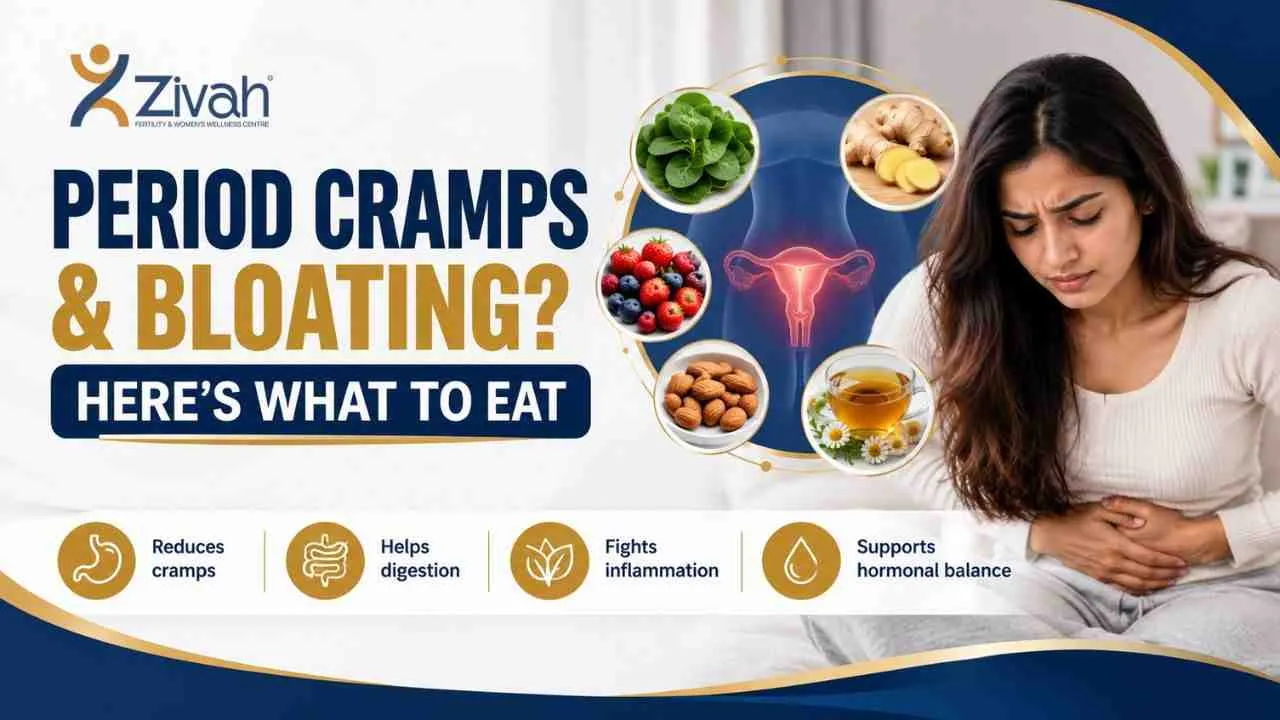
What to Eat During Your Period: Best Foods for Cramps, Bloating & Low Energy
Not sure what to eat on your period? Discover the best foods for cramps, bloating and low energy, plus foods to avoid and a simple one-day meal plan.
The cramps start before you've even left bed. Your belly feels tight and heavy, and your energy seems to vanish by noon. Sound familiar? You can't skip your period, but you can choose what goes on your plate. Knowing what to eat on your period can ease cramps, calm bloating and bring back some of that lost energy.
Here's something to think about. Why would a women's health clinic care so much about what to eat during your period?
In this guide, you'll find foods for cramps, bloating, tiredness, and heavy flow, plus foods to avoid, helpful drinks, and a simple one-day meal plan.
So, why do we care? Because your cycle mirrors your hormonal health, and what you eat supports it every single month. And here's the twist. Some of the "comfort foods" you reach for on these days may be making your cramps worse.
Does What You Eat During Your Period Really Matter?
Every month, your body goes through more than you might notice. Your hormones rise and fall, and you lose blood along with some of the iron your body needs. Can food really change how your period feels? It won't make the pain disappear, but it can ease it. The right period foods replace the nutrients you lose and help calm the changes that cause discomfort.
Why Do Prostaglandins Cause Period Cramps?
A big part of period pain comes from one small group of chemicals. Your body releases prostaglandins (hormone-like chemicals that make the uterus tighten) to help shed the uterine lining.
The more prostaglandins your body makes, the stronger those contractions can feel. Certain foods may help keep these levels in check, which is why your diet plays a real role in how much it hurts.
How Does Your Body Change During Your Period?
Prostaglandins are only one part of the picture. That is why knowing what to eat during menstruation matters so much. Here's a simple look at what happens inside your body and how food can help.
| Body Change | What You May Feel | How Food Can Help |
|---|---|---|
| Prostaglandin levels rise | Cramps, lower back ache | Omega-3 fats, magnesium |
| Oestrogen and progesterone drop | Low mood, sugar cravings | Complex carbs, vitamin B6 |
| Blood and iron loss | Tiredness, dizziness | Iron with vitamin C |
| Fluid and salt shifts | Bloating, puffiness | Potassium, less salt |
| Gut becomes sensitive | Loose motions, upset stomach | Light meals, soluble fibre |
It's much easier to choose the right foods once you understand these changes. So let's create a plate that works with your body, not against it.
What Are the Best Foods to Eat on Your Period?
Your period is not the time for strict diets or skipped meals. Your body is working hard, and it needs to refill what it loses each month. So when you think about what to eat on your period, think nourishment, not restriction. Simple, home-cooked food often does the most good.
Good Foods to Eat on Your Period
The best foods to eat on your period come from a few everyday food groups. Try to include a little from each one across the day:
- Leafy greens: spinach, methi and broccoli for iron and magnesium.
- Whole grains: oats, brown rice and millets for steady energy.
- Protein: dal, eggs, fish and paneer to keep you full and strong.
- Fresh fruits: bananas, oranges and berries for vitamins and natural sweetness.
- Nuts and seeds: almonds, walnuts and pumpkin seeds for key minerals.
- Healthy fats: a little ghee, olive oil or avocado to support your hormones.
You don't need all of these in one meal. A colourful mix across the day is enough.
Why Do Experts Recommend a Mediterranean-Style Diet?
Nutrition experts often point to a Mediterranean-style way of eating for better hormonal health. It is built on vegetables, whole grains, fish, nuts and olive oil. The good news? Many Indian kitchen staples already fit this pattern. Dal, sabzi, curd, and whole grains make these foods easy to eat every day during your period. Now, let's start with the symptom most of us fear: cramps.
What to Eat on Your Period for Cramps
Remember those prostaglandins? When they rise, your uterus tightens, and that's when cramping starts. Some foods help calm this process and let your muscles relax.
Knowing what to eat on your period for cramps won't replace pain relief when you truly need it. But these foods for period cramps can make the hard days feel a little lighter.
| Food | Key Nutrient | How It Helps |
|---|---|---|
| Salmon, sardines, walnuts, flaxseeds | Omega-3 fats | May lower prostaglandin levels |
| Spinach, pumpkin seeds, almonds | Magnesium | Helps uterine muscles relax |
| Fresh ginger in meals | Gingerols | May ease period pain naturally |
| Turmeric | Curcumin | Calms inflammation |
| Bananas | Potassium, vitamin B6 | Supports muscle function |
| Dark chocolate (70% or more) | Magnesium | Eases cramps and cravings in small portions |
Of all these foods, omega-3s have some of the strongest research behind them.
Can Omega-3 Foods Reduce Period Pain?
Omega-3s are healthy fats your body can't make on its own. You need to get them from food. Studies suggest that women who get enough omega-3s may have milder period pain. These fats may lower prostaglandin levels over time. Fish oils rich in omega-3s include salmon and sardines.
If you eat fish, choose smaller varieties, as they usually carry less mercury. Vegetarian? Flaxseeds, chia seeds and walnuts are easy swaps.
Foods to Eat on the First Day of Your Period
For many women, day one brings the strongest cramps. This is when your body needs comfort the most. If you're wondering what to eat on your period to help cramps on day one, choose warm, light meals like khichdi, vegetable soup or a simple bowl of dal. Eat small portions every few hours instead of heavy meals.
These foods for menstrual cramps are easy to digest and kind to a sensitive stomach. Once the cramps settle, another problem often shows up: that tight, puffy belly.
Foods That Help With Period Bloating
Does your belly feel tight and swollen during your period? You're not alone. This puffiness usually comes from water retention, as hormone changes make your body hold on to extra fluid.
Good news: food can help. Not sure what to eat during your period to stop bloating? These easy foods are a great place to start:
- Cucumber: It's full of water to keep you cool.
- Watermelon: This fruit is cool, refreshing, and easy on the stomach.
- Papaya: It helps your stomach work well because it has natural enzymes.
- Curd: Good gut bacteria, called probiotics, help ease gas.
- Fennel seeds: A small pinch after a meal can help settle an upset stomach.
How you eat matters too. Eat slowly, chew well, and enjoy smaller meals throughout the day. This simple period diet for cramps and bloating helps your stomach stay calm and comfortable.
Does Salt Make Period Bloating Worse?
Yes, salt can make you feel even more swollen. It tells your body to hold onto water, which adds to the puffiness you already feel. So, go easy on chips, pickles and namkeen for a few days.
Add potassium-rich foods like bananas and tender coconut to help your body restore balance. Once your belly feels lighter, you may notice something else: that tired, drained feeling that won't leave.
Best Foods for Energy on Your Period
Feeling tired during your period is so common, and there's a real reason for it. You lose blood and iron, your hormones dip, and cramps can steal your sleep too.
The right foods for low energy during periods can help you feel like yourself again. And if the tiredness stays with you all month, please don't ignore it. A simple thyroid function test can help rule out other causes.
Here are some easy foods for period fatigue to keep you going:
| Food | What It Gives You | Easy Way to Eat It |
|---|---|---|
| Oats | Slow-release energy | Overnight oats with banana |
| Eggs | Protein, vitamin B12 | Boiled or as bhurji |
| Dal, chickpeas, rajma | Iron and protein | Dal-rice or chana chaat |
| Nuts and seeds | Healthy fats, magnesium | A handful mid-morning |
| Dates and raisins | Natural sugar plus iron | Two or three dates with almonds |
| Curd or Greek yoghurt | Protein, calcium | With fresh fruit |
| Sweet potato | Complex carbs, vitamin B6 | Roasted or boiled |
Your main meals matter, but those little bites in between can make a big difference to you, too.
What Healthy Snacks Can You Eat on Your Period for Energy?
When your energy drops, it's so tempting to reach for biscuits or something sweet. They lift you for a moment, but you often feel even more tired soon after. Try combining protein with complex carbs instead.
This gives you longer-lasting energy. It tastes great with a banana and some almonds, curd and fresh fruit, or a small bowl of roasted chana. If you've been wondering what to eat on your period to feel better, these small snacks are a kind place to start.
For some women, though, the tiredness runs deeper, especially when the flow is heavy.
What to Eat During a Heavy Period
When your flow is heavy, your body loses more iron than usual. Over time, this can lead to anaemia (when your blood has too few healthy red cells).
You might notice constant tiredness, pale skin, dizziness, or feeling out of breath on the stairs. If this sounds familiar, a simple CBC test can show whether your iron levels need extra care.
The good news? Knowing what to eat during a heavy period can make a real difference. These foods for heavy periods help you rebuild what you lose:
- Plant sources: beetroot, jaggery, lentils, pomegranate and methi
- Animal sources: eggs, chicken and fish
How Can You Absorb More Iron From Vegetarian Food?
Here's something many women don't know. Your body absorbs iron from plants less easily than iron from meat. But a few small kitchen habits can change that.
Squeeze some lemon over your dal, or enjoy an amla with your meal. Vitamin C helps your body take in much more iron. Cooking in an iron kadhai can add a little extra iron to your food too. And try to keep your tea or coffee at least an hour away from meals, as they can block iron absorption.
Now that you know what to add to your plate, let's look at what's better to cut back on.
Which Foods Should You Avoid During Your Period?
Remember those "comfort foods" we talked about at the start? This is where they come in. Some of the snacks we reach for on tough days can make cramps, bloating and mood swings feel worse.
That doesn't mean you have to give them up completely. Knowing what to avoid during your period helps you make kinder choices for a few days.
| Food or Drink to Limit | Why It Can Worsen Symptoms | Better Swap |
|---|---|---|
| Salty snacks, pickles, instant noodles | Causes water retention and bloating | Roasted makhana, unsalted nuts |
| Sugary sweets and soft drinks | Energy crash and mood swings | Fresh fruit, dates |
| Too much coffee | Can raise anxiety and upset the stomach | One small cup a day |
| Alcohol | Dehydrates and worsens mood | Plain or lemon water |
| Fried and processed food | Adds inflammation, feels heavy | Light home-cooked meals |
| Fizzy drinks | Adds gas and bloating | Buttermilk (chaas) |
Small swaps like these can help your body feel calmer and lighter. But what about that one craving that just won't go away?
Is It Okay to Eat Chocolate on Your Period?
Chocolate cravings are real, and you don't need to feel guilty about them. As your hormones dip, your body often looks for a quick mood lift.
So yes, you can enjoy it. Just choose dark chocolate (70% cocoa or more) over milk chocolate. It has less sugar and more magnesium, which may even help ease cramps. A small square or two is enough.
Now, let's turn to what you sip.
Which Drinks Help During Your Period?
It may sound surprising, but drinking more fluids can actually ease bloating. When your body is well hydrated, it holds on to less water. When you think about what to eat and drink on your period, your cup matters just as much as your plate.
These comforting drinks are worth keeping close:
- Warm water: may help relax tight muscles and support digestion.
- Ginger tea: may help ease cramps and nausea.
- Chamomile tea: helps you feel calm and sleep better.
- Coconut water: restores fluids and natural minerals.
- Turmeric milk: a soothing, anti-inflammatory drink before bed.
Try sipping warm fluids slowly through the day instead of drinking a lot at once. Your tummy will thank you. You now know what's good to eat on your period and what to sip alongside it. So, how does it all come together in a single day?
Is There a Simple Diet Plan to Follow on Your Period?
Planning meals can feel like one more task when you're already tired. So here's an easy one-day guide to take that pressure off. If you often find yourself wondering, "What should I eat when I'm on my period?" start here. Just think of it as a helpful guide, not a strict rulebook. These foods are easy to find and simple to cook at home.
| Meal | What to Eat | Why It Helps |
|---|---|---|
| Early morning | Warm water, soaked almonds | Hydration and magnesium |
| Breakfast | Vegetable poha or oats with curd, or eggs with toast | Steady energy and protein |
| Mid-morning | Banana or orange with pumpkin seeds | Potassium, vitamin C, magnesium |
| Lunch | Palak dal, roti or brown rice, salad with lemon | Iron with vitamin C for better absorption |
| Evening | Roasted makhana with a square of dark chocolate | Craving control without a sugar crash |
| Dinner | Grilled fish, paneer or tofu with sautéed vegetables | Protein, omega-3 and fibre |
| Bedtime | A few walnuts or dates | Light, calming and iron-rich |
Feel free to swap meals around based on your taste and appetite. These everyday period foods can carry you through the toughest days. Still, food can only do so much, and some symptoms need more than a plate.
When Should You See a Doctor for Period Symptoms?
Food can make your period easier, but it can't fix everything. If something feels off month after month, your body may need a little more care.
Please don't brush these signs aside:
- Soaking through a pad every 1 to 2 hours.
- Bleeding that lasts more than seven days.
- Blood clots bigger than a coin.
- Pain that makes it hard to do normal things.
- Being sick or short of breath.
Are Painful Periods Ever a Sign of a Health Problem?
Some period pain is normal. But if it keeps you in bed or stops your day, it's worth paying attention. Heavy or painful periods can sometimes signal that something else is going on.
It could be fibroids (small, non-cancerous growths in the uterus), endometriosis (when tissue like the uterine lining grows outside of it) or a hormone imbalance. Hearing these words can feel scary. But these conditions are common, and they're very manageable when caught early.
So listen to your body. A simple chat with a gynaecologist can give you clarity and peace of mind. Because you shouldn't have to just "put up with" period pain every month.
Can the Right Food Make Your Period Easier?
Your period may never feel like a holiday, but it doesn't have to drain you either. A few simple changes to what you eat can ease cramps, calm bloating, and restore your energy.
Start small. Add a bowl of dal, a handful of nuts or a warm cup of ginger tea. On those tough days, swap salty, sugary comfort foods for kinder choices.
Most of all, be patient with yourself. Your body works hard every single month. And if your periods ever feel too heavy or painful to handle, the team at Zivah are always here to listen and help guide you.
Frequently asked
01 Can you eat curd during your period?
02 Is it okay to drink cold water on your period?
03 Should you eat less during your period?
04 What should I eat on my period if I feel sick?
05 Can spicy food make period cramps worse?
06 Can you drink milk during your period?
07 Is it safe to eat sour foods during your period?
08 Can certain foods make your period come early?
09 Do you need iron supplements during your period?
10 Can you eat non-veg food during your period?