
High-risk pregnancy care is specialised, maternal-fetal medicine-led care for pregnancies that have a greater than usual chance of difficulties for the mother, the baby or both. It involves more frequent monitoring and attention than regular pregnancy care, so any issues are identified and addressed at an early stage.
This page guides you through the factors that make a pregnancy high risk, the role of age, typical problems observed in India, danger warning signs to look out for, monitoring, management, delivery and postpartum care, including at Zivah.
One of the most important lessons from the beginning is that “high risk” relates to the level of care needed, not a specific outcome. With proper care, most high-risk pregnancies have good outcomes for the baby.
What Is a High-Risk Pregnancy?
A high-risk pregnancy is one where there's a larger than normal probability of difficulties for the mother, the baby, or both. It's not a diagnosis per se, but a symptom that the pregnancy needs particular attention and extra monitoring before, during and after delivery.
Some pregnancies are high risk from the beginning, frequently because of a health problem that was already there. Some become high risk when something happens in the pregnancy itself. It is also helpful to know that you are not alone; a large percentage of pregnancies are classified as high risk, and they are a normal part of everyday maternity care.
Does "High Risk" Mean Something Will Go Wrong?
No, and that's worth being explicit about. "High risk" means that your pregnancy will need to be monitored closely, not that it will have a particular outcome.
The word makes many think the worst, but with the right care, most high-risk pregnancies result in healthy kids. The label truly assures that the pregnancy you're in receives the increased focus that keeps you and your baby safe.
High-Risk Pregnancy Care at a Glance
| Aspect |
What It Means |
At Zivah |
|---|---|---|
| Definition |
Higher-than-average chance of complications |
Assessed early and individually |
| Who leads care |
A maternal-fetal medicine specialist |
MFM-led pathway |
| Core approach |
Closer monitoring and specialist input |
Coordinated, multidisciplinary |
| Typical extras |
More scans and more visits than routine care |
Scheduled around your needs |
| Goal |
A safe pregnancy and delivery |
Supported through to postpartum |
What Makes a Pregnancy High Risk: Factors & Conditions
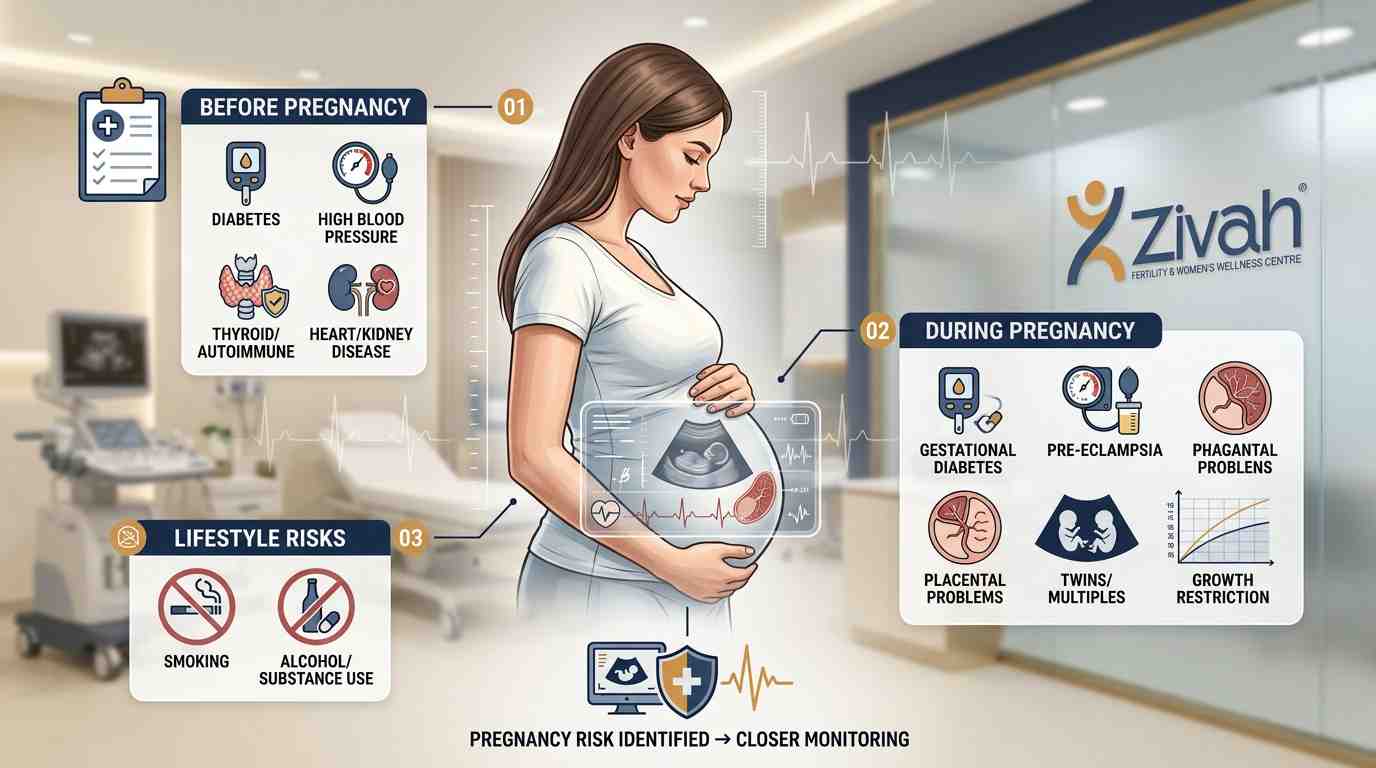
There are many reasons a pregnancy may be considered high risk. Still, they generally fall into one of three categories: medical issues you had before you were pregnant, conditions that develop during pregnancy and lifestyle factors. It’s identification, not cause for fear; knowing which apply to you is just how your care team plans the correct level of surveillance.
Pre-Existing Health Conditions
These are conditions that you have before becoming pregnant that may impact the pregnancy and may be affected by the pregnancy in return. They are:
- Diabetes mellitus
- High blood pressure
- Thyroid disorders
- Autoimmune disorders such as lupus
- Renal disease
- Blood or clotting problems of the heart
- Overweight AIDS
A lot of the point of high-risk care is to manage these well during pregnancy.
Pregnancy-Related & Lifestyle Factors
Additional risks only arise once pregnancy is established. The most common pregnancy-related illnesses include:
- Diabetes during pregnancy
- Gestational hypertension or pre-eclampsia
- Placenta previa, or placental abruption
- Multiple pregnancy (2 or more foetuses)
- Intra-uterine growth restriction
- Excess or insufficient amniotic fluid
- Previous preterm birth
Lifestyle factors also play a part: smoking, alcohol and substance use all increase the risk and are worth addressing early.
High-Risk Pregnancy Factors: Pre-Existing vs Pregnancy-Related
| Category |
Examples |
Why It Raises Risk |
|---|---|---|
| Pre-existing conditions |
Diabetes, hypertension, thyroid, autoimmune, cardiac |
Interact with pregnancy in both directions |
| Pregnancy-related conditions |
GDM, preeclampsia, placenta previa, multiples (incl. monochorionic twins) |
Develop during pregnancy and need active management |
| Obstetric history |
Prior preterm birth, pregnancy loss, previous C-section |
Past events raise the chance of recurrence |
| Lifestyle factors |
Smoking, alcohol, substance use |
Modifiable risks best addressed early |
Age & Pregnancy After 35: Advanced Maternal Age
Your care team will take your age into account, but they will never look at that number in a single way. Pregnancy risks generally increase after 35, and before 20, including higher chances of chromosomal disorders, gestational diabetes and high blood pressure.
It is often called advanced maternal age. But it's good to keep it all in perspective. Many women over 35 and 40 have healthy, uncomplicated pregnancies. Age is a guide as to where it makes sense to watch a little more closely.
What Extra Care Looks Like Over 35 or 40
The extra care for pregnancy beyond 35 or 40 is generally practical, not dramatic. It generally means more genetic screening options, more monitoring during the pregnancy and earlier input from a professional when it's useful, all to find anything early.
High-Risk Pregnancy Conditions Commonly Seen in India
Certain disorders are common enough in Indian pregnancies that screening for them is part of normal prenatal treatment. Common, along with gestational diabetes and thyroid problems such as hypothyroidism, is anaemia. They also stay on the lookout for pregnancy-induced hypertension and preeclampsia, because the sooner they’re caught, the better.
The number of multiple pregnancies is also on the rise, partly due to fertility treatments such as IVF. The increased risk of preeclampsia can be managed with preventive measures such as low-dose aspirin, which is a common treatment. Each of these disorders has a defined screening and management pathway.
Why Early Antenatal Screening Matters
Most of these diseases are far easier to treat if they are detected early, which is exactly what regular prenatal care is all about. India’s recommended schedule of many antenatal checkups guarantees that checks are made at the correct points during the pregnancy.
At Zivah, screening is done this way, in a systematic, early detection model, consistent with accepted national and international guidelines.
Common High-Risk Conditions in Indian Pregnancies
| Condition |
Main Maternal/Fetal Risks |
When Screened |
Managed With |
|---|---|---|---|
| Anaemia |
Preterm labour, low birth weight |
Early ANC |
Iron-folic acid, diet |
| Gestational diabetes |
Macrosomia, preeclampsia |
First visit + 24–28 weeks |
Diet, monitoring, medication |
| Hypothyroidism |
Miscarriage, growth issues |
Early ANC |
Thyroid medication |
| Preeclampsia / PIH |
Organ, growth, preterm risk |
From 20 weeks onward |
BP control, low-dose aspirin where indicated, monitoring |
| Multiple pregnancy (incl. monochorionic) |
Prematurity, growth issues, TTTS in shared-placenta twins |
Early scan for chorionicity |
Closer MFM surveillance |
Danger Signs in Pregnancy: When to Seek Care
Whether your pregnancy has been classified as high risk or not, some pregnancy danger signs need immediate treatment. Knowing these warning signs is important, as acting fast is one of the most critical things you can do to protect yourself and your baby.
The signs of danger in pregnancy below are considered pregnancy emergency signs; if any develop, contact your care team straight away rather than wait and see.
Symptoms That Need Immediate Attention
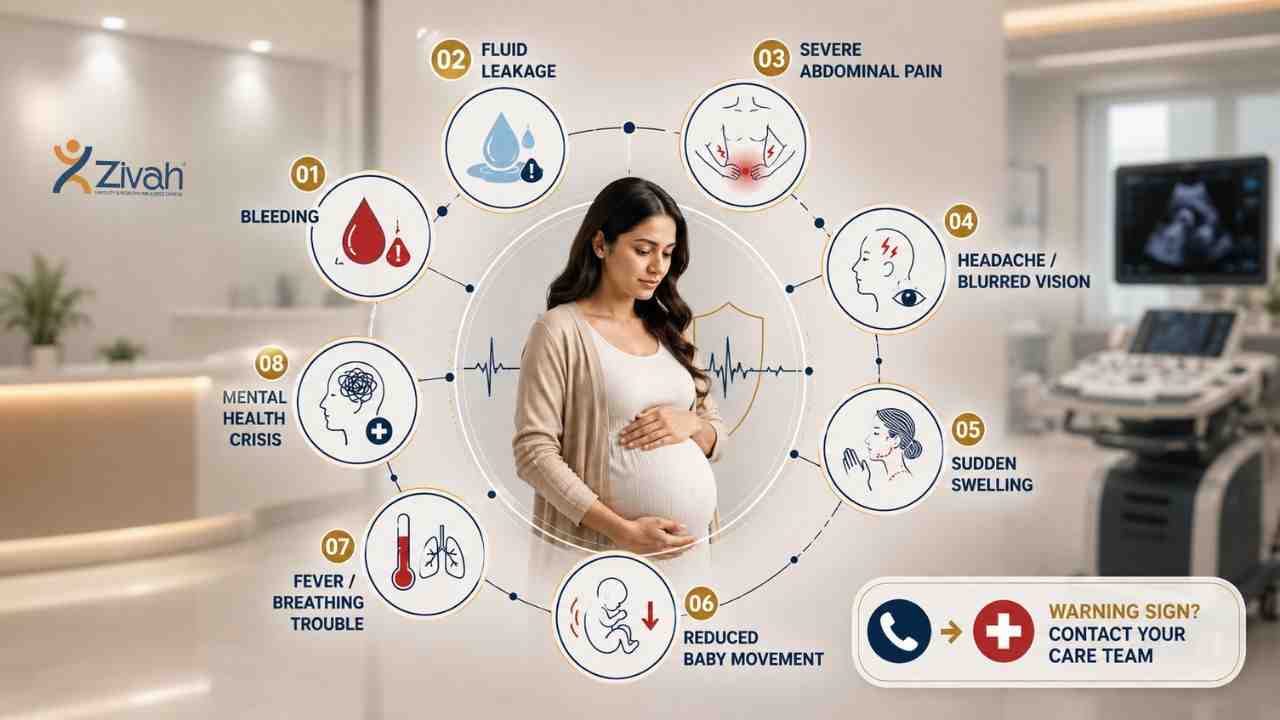
Below are several risk signs during pregnancy that mean you should call your care team right away:
- Bleeding from the vagina
- Vaginal fluid discharge
- Severe or prolonged stomach pain
- A strong headache or blurred vision
- Sudden swelling of face or hands
- Decreased or absent fetal movement
- Fever or chills
- Chest discomfort or trouble breathing
- Thoughts of self-harm
Here’s the bottom line when it comes to knowing when to call your doctor in pregnancy: None of these should be left to see if they pass; a timely call is always the safer decision.
High-Risk Pregnancy Risk Assessment & Diagnosis
Typically, a high-risk pregnancy starts with early and complete antenatal care. A detailed pregnancy risk assessment, your medical and obstetric history, a physical examination and baseline blood and urine tests, helps your care team develop a picture of your prenatal risk factors. It's all about history taking.
Past pregnancies and present diseases may reveal the most information. Some pregnancies are high risk from the first visit; some become high risk as they advance. That's why continual assessment is as important as the initial one is.
What a Risk Assessment Involves
The standard pregnancy risk evaluation at Zivah often includes:
- Complete medical and obstetric history, the primary method of identifying maternal risk factors
- A systematic and physical examination
- Baseline urine and blood tests
- An Early Viability and Dating Scan
These, together, form the core of your individualised care plan. At Zivah, these screening methods are designed around accepted clinical guidelines, so nothing vital is missed during your high-risk pregnancy appointment.
Monitoring & Tests in High-Risk Pregnancy
High-risk pregnancy monitoring is just more frequent than usual care. In a simple pregnancy, you may have 2 to 3 scans, but a high-risk pregnancy frequently involves more high-risk pregnancy ultrasound examinations and specific high-risk pregnancy tests, which are designed for your situation.
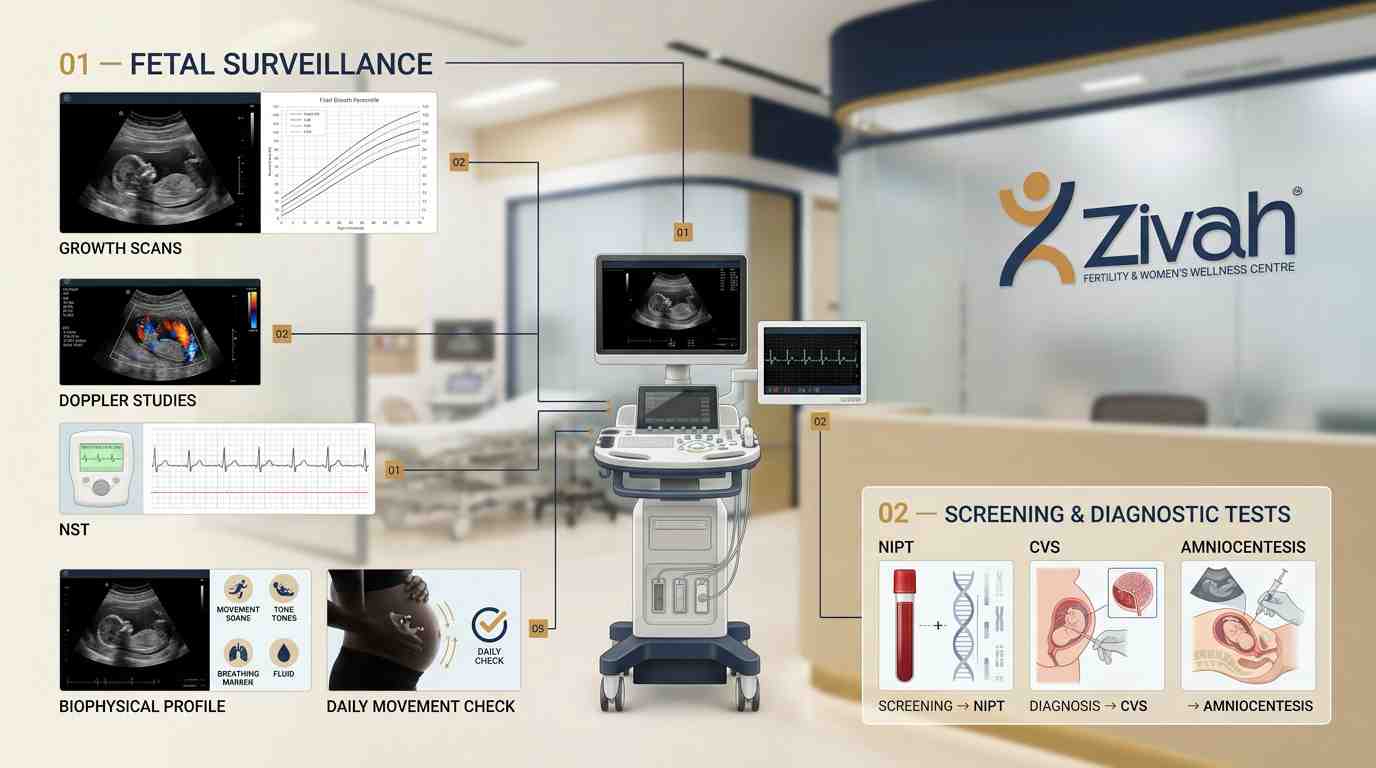
This closer fetal monitoring keeps your team ahead of the curve, as part of good foetal health care and prenatal screening. It covers two major categories: ultrasound-based surveillance, and particular screening tests detailed below and alongside your anomaly scan.
1. Ultrasound & Fetal Surveillance
There are a few tools in play here. Growth scans follow the size and growth rate of the foetus over time, but Doppler tests look at blood flow, the baby's haemodynamics and the health of the placenta.
Overall foetal wellness is assessed by a biophysical profile and a non-stress test (NST). All this ultrasound tracking is exclusively for medical wellbeing and is regulated.
There is also a simple check you may do yourself: counting fetal movements every day. Knowing your baby's normal pattern is useful, and any notable change in movement means you should ring your team.
2. Genetic & Screening Tests
Screening and diagnostic tests, where indicated, add a layer. Cell-free DNA, or NIPT, screening estimates the likelihood of chromosomal disorders. Diagnostic testing, such as CVS or amniocentesis, will confirm the results if needed. Each includes a page of complete details.
Monitoring & Tests in High-Risk Pregnancy
| Test / Monitoring |
What It Checks |
Typical Timing | Notes |
|---|---|---|---|
| Growth scan |
Fetal size and growth trend |
Repeated through pregnancy | More often than routine |
| Doppler study |
Blood flow / haemodynamics to baby |
When growth is a concern | Helps guide delivery timing |
| Biophysical profile + NST |
Fetal wellbeing |
Third trimester or as needed | Non-invasive |
| Fetal movement counting |
Daily fetal activity |
From third trimester | Patient-performed at home |
| Cell-free DNA / NIPT |
Chromosomal risk |
First trimester | Screening, not diagnostic |
| CVS / amniocentesis |
Confirms genetic conditions |
First–second trimester | Diagnostic |
Management, Treatment, Delivery & Postpartum Care
High-risk pregnancy management is always personalised to your risk factors. That includes closer obstetric surveillance, maternal-fetal medicine input and coordination with other specialists, such as a cardiologist or endocrinologist, where a condition calls for it.
And medication is handled properly, so whatever you're taking is safe during pregnancy. And in the case of a real threat to a pregnancy, an earlier planned birth is often the safest option.
Condition-Specific & Multidisciplinary Care
Different conditions require different expertise, which is why high-risk pregnancy management works best as a team. The obstetrician is in charge and brings in specialists when needed, such as a gestational diabetes team for diabetes in pregnancy or cardiology for heart disease.
Multiple pregnancy care is a very obvious example. The reason it is so important to diagnose chorionicity early is that monochorionic twins, who share a placenta, have an increased risk of vascular issues such as twin-to-twin transfusion syndrome (TTTS). This integrated, MFM-led approach is key to Zivah's way of working.
High-Risk Delivery Planning
High-risk delivery planning takes your individual risks into account while planning the date, manner, and place of delivery. If prematurity or problems are expected, birth is scheduled in a setting with neonatal and NICU assistance. Sometimes the safest option is to deliver early, and that decision is always a balance: baby’s maturity versus the risk of waiting.
Postpartum & After-Delivery Care
Risk doesn’t necessarily stop with delivery. Some problems, such as preeclampsia, can develop or remain after delivery; thus, postpartum blood pressure checks and follow-up may be required for some time.
There’s also a longer view: some pregnancy disorders might increase future health risks, something to keep in mind long after delivery.
Delivery Planning Considerations by Situation
| Situation |
Planning Consideration |
Support Needed |
|---|---|---|
| Growth restriction |
Timing balanced against maturity |
Fetal monitoring, NICU |
| Preeclampsia |
Delivery timing by severity; postpartum BP monitoring |
BP management, monitoring |
| Multiple pregnancy (monochorionic) |
Mode and timing planned early; TTTS surveillance |
Experienced MFM team |
| Preterm risk |
Antenatal steroids where indicated |
NICU readiness |
| Every case |
Individualised planning |
MFM-led care team at Zivah |
Staying Healthy in a High-Risk Pregnancy: What You Can Do
Specialist care handles most of the heavy lifting in a high-risk pregnancy, but there is a meaningful role for you alongside it. There are a few practical habits to help you care for yourself safely during pregnancy, which complement your medical treatment. None of them replaces it, but they can help you obtain the best foundation for your pregnancy.
Practical Steps for a Healthier Pregnancy
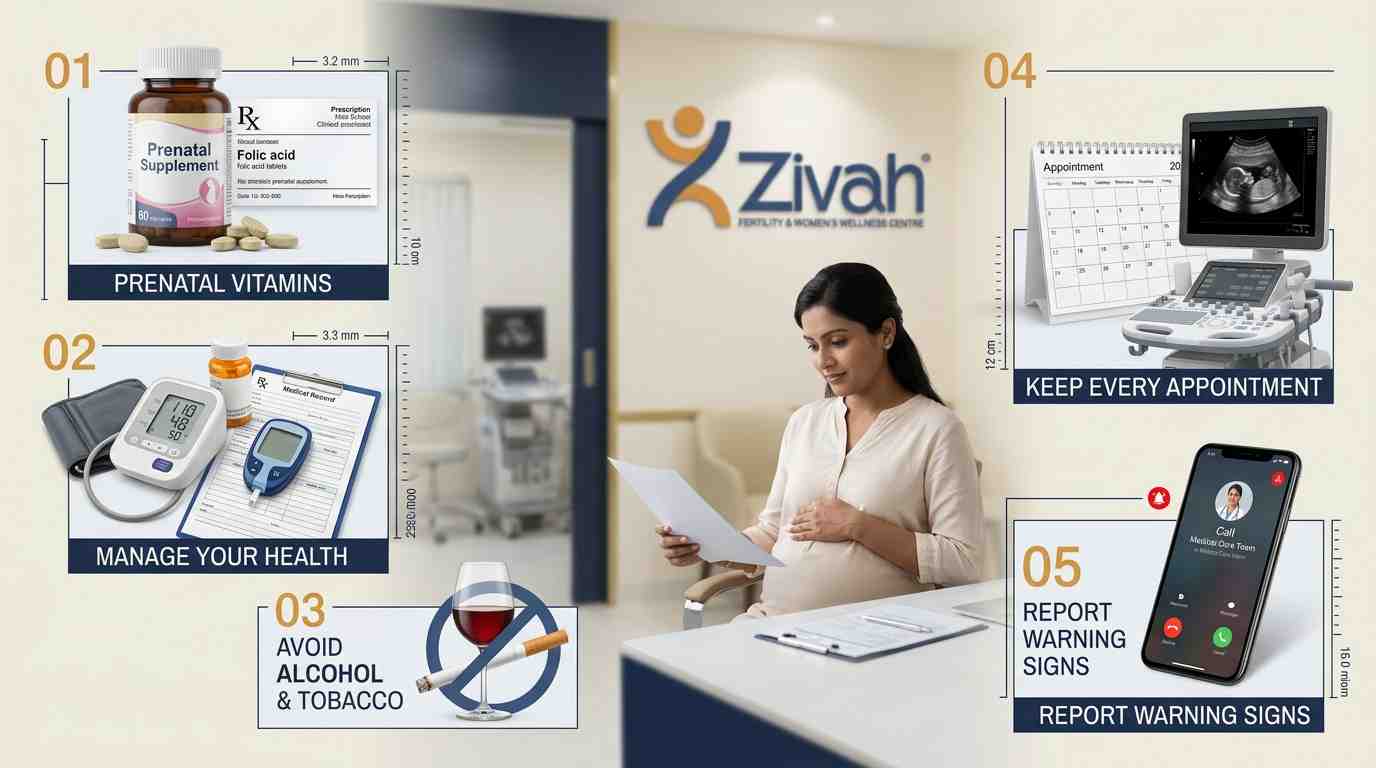
Small, steady steps can help ensure a safe pregnancy:
- Take your prenatal vitamins, especially folic acid.
- Manage current diseases and drugs with your health team.
- Avoid alcohol and tobacco.
- Come to all your appointments and scans.
If you notice any warning symptoms, don’t wait; call for help.
High-Risk Pregnancy Care at Zivah
At Zivah, high-risk pregnancy care is given by maternal-fetal medicine specialists in one seamless pathway: a full risk assessment, more frequent monitoring and multidisciplinary help wherever your condition requires, through to birth preparation with neonatal support available. Imaging is the foundation here. Every scan is done for your and your baby's wellness. Fully PC-PNDT-compliant.
The standard of high-risk care depends entirely on what supports it. What counts at a high-risk pregnancy clinic is real access to neonatal intensive care (NICU), prompt emergency capacity and a professional network that is actually there, not just on paper. That is what matters to Zivah's care.
Cost of High-Risk Pregnancy Care
There's not one set price. High-risk pregnancy treatment is continual and individualised, so price depends on your circumstances, the level of surveillance needed and the specialist intervention needed. Get a figure to suit your case from Zivah; get a quote.
Why Choose Zivah for High-Risk Pregnancy Care
You get expert maternal-fetal medicine specialists, systematic monitoring and coordinated treatment from pre-pregnancy planning through postpartum. If pregnancy is considered high risk, or you wish to have a second opinion, contact Zivah's team.