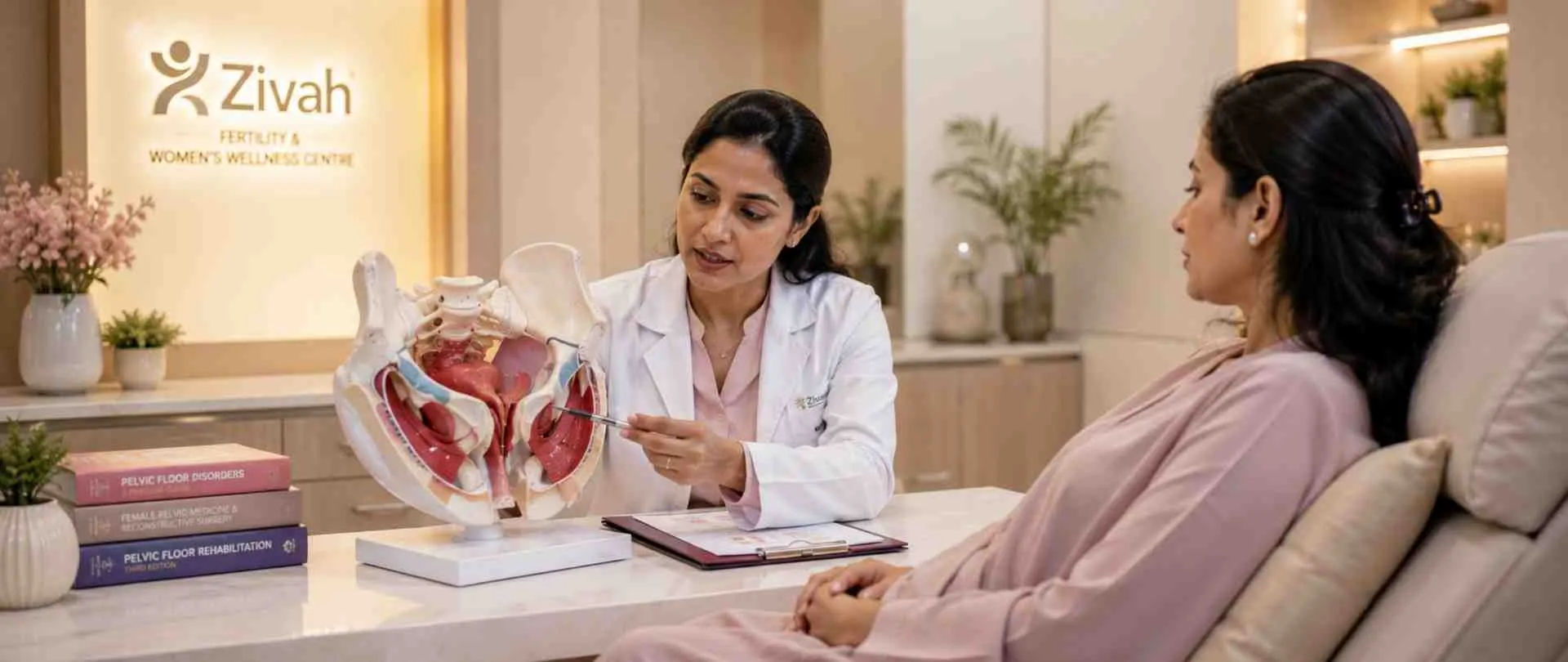

Pelvic health is the foundation of excellent bladder, bowel and reproductive function in women. At its heart is the pelvic floor, a hammock of muscles spanning the base of the pelvis that supports the bladder, bowel and uterus.
When these muscles function correctly, they hold everything in place and provide solid control and comfort. Caring for your pelvic floor health is at the heart of women’s pelvic health at every stage of life.
This Zivah guide describes how we analyse your pelvic floor, the therapy and physiotherapy options we offer, and how we maintain your pelvic health throughout pregnancy, post-partum, and menopause. The sooner you address your pelvic floor, the easier it is to prevent issues later on.
What Is Pelvic Health and Why Does It Matter for Women?
Simply put, it’s the strength of your pelvic floor in supporting the organs above it: the bladder, bowel and uterus. When that support is there, everything falls into place. Good bladder and bowel control, easy movement, good core stability. That’s the reason the pelvic floor is the hub of women’s pelvic health.
Why is pelvic health so important? Because when your pelvic floor gets weak or tight, it can subtly influence your continence, comfort, and overall quality of life. The good news is that it does react to care.
What Does the Pelvic Floor Do?
The pelvic floor has three major jobs: it supports your pelvic organs, helps you manage your bladder and bowel, and offers stability to your core and lower back.
Here are the main benefits of a strong pelvic floor and why pelvic floor function matters so much in your daily life. This blog explains how these muscles work.
Pelvic Floor States: Signs and What They Mean
| Pelvic Floor State |
Typical Signs |
Care Focus |
|---|---|---|
| Healthy / Strong |
Good control, no leakage or pressure |
Maintain with activity & habits |
| Underactive (weak) |
Leakage, urgency, heaviness or bulge |
Strengthening therapy |
| Overactive (tight) |
Trouble relaxing, pelvic pain |
Relaxation-focused therapy |
Common Pelvic Floor Problems We Assess at Zivah
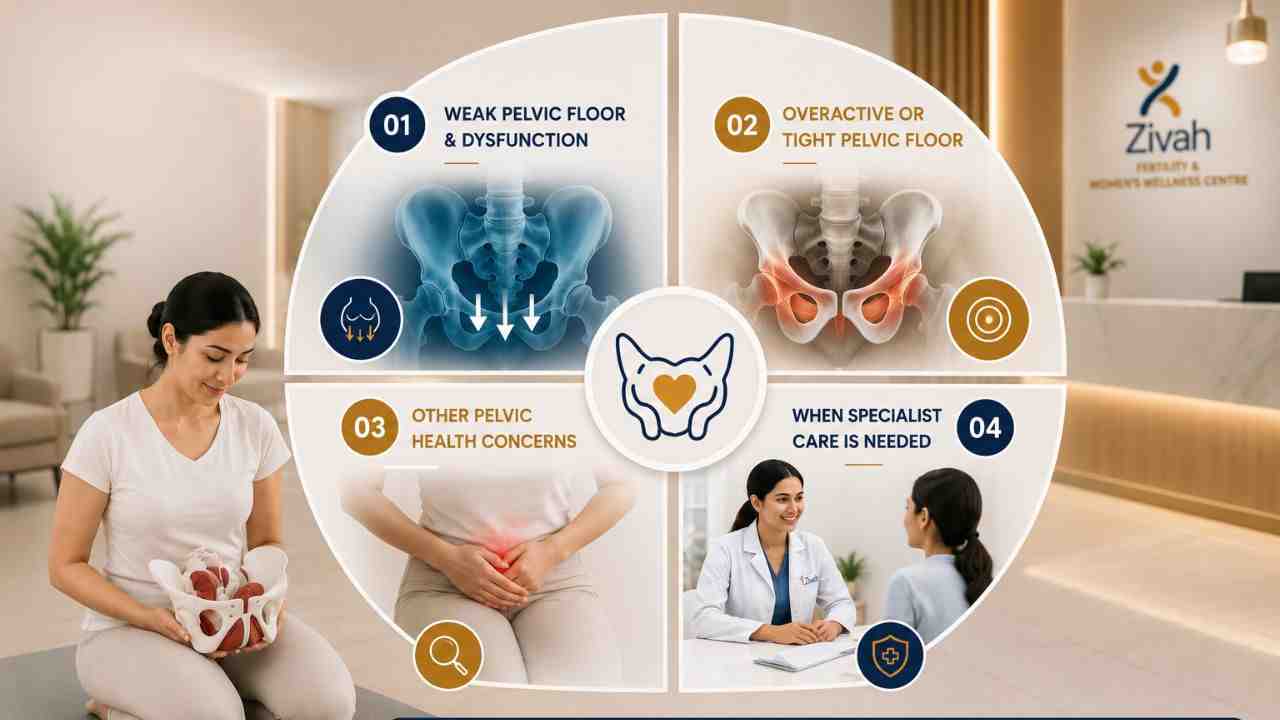
Pelvic floor problems are much more common than most women realise, and they are not usually something you just have to put up with.
Quick tip: If you’re leaking, feeling pressure, having pelvic discomfort or any trouble with your bladder or bowel, that’s a sign of poor pelvic health and worth checking out.
These are the most common pelvic floor disorders diagnosed at Zivah: When we know what’s happening, we guide you to the proper care.
1. Weak Pelvic Floor and Pelvic Floor Dysfunction
A weak pelvic floor means that the muscles are weaker and cannot properly support your organs. A weak pelvic floor may cause leakage when you cough or exercise, urgency, and a feeling of heaviness.
This is a sort of pelvic floor dysfunction, where muscles are not working or coordinating as they should. Pelvic floor physiotherapy is often the first step toward regaining strength and control.
2. Overactive or Tight Pelvic Floor
In other cases, the opposite occurs, the muscles become too tense and find it difficult to loosen up. Tight pelvic floor muscles may cause pain in the pelvic area, problems emptying the bladder or bowel or pain during sex.
Often, this tightness in the pelvic floor requires attention to relaxation. You will learn how to relax the pelvic floor muscles, with guided therapy, which tends to benefit more than strengthening them.
3. Other Pelvic Health Concerns We Assess
We also look for less obvious pelvic floor problems such as:
- Chronic pelvic pain: Pain in the pelvic area that lasts for more than a few months.
- Vulvodynia: persistent discomfort of the vulva for no apparent reason.
- Bowel and faecal dysfunction: constipation, straining or problems managing bowel.
Where they require specialist medical attention, we will refer you to the appropriate place.
When a Problem Needs Specialist Care
Certain pelvic floor issues, such as extensive prolapse or chronic incontinence, require medical or surgical intervention. Our urogynaecology service page details the clinical and surgical treatments available at Zivah for that level of pelvic floor dysfunction care.
Pelvic Health Services at Zivah
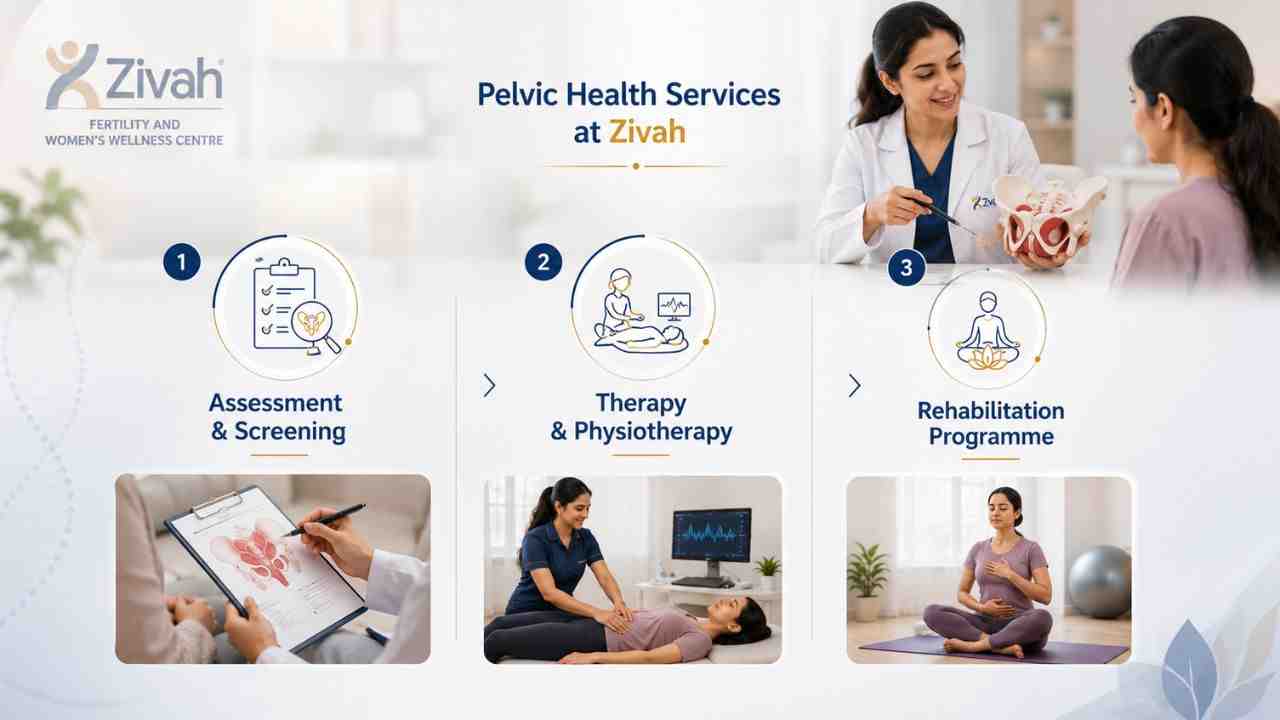
At Zivah, we’ve designed our pelvic health services around one simple idea: recognise the problem first, then treat it appropriately. Our care is straightforward and specialist-led, whether you’re coming in for a pelvic health checkup for a specific issue or to keep your pelvic floor healthy. It begins with an assessment of your pelvic floor to understand your muscles and symptoms.
Then we go into therapy and a structured rehabilitation program where necessary. At our pelvic health clinic, everything is joined up as part of our specific women’s pelvic health services, so you’re never moved around between teams.
1. Pelvic Floor Assessment and Screening
Every plan starts with a pelvic floor assessment, an easy assessment of your muscle strength, tone and coordination. This pelvic health assessment also considers your symptoms and history. Think of pelvic floor screening as a map. It tells us exactly what your pelvic floor requires.
2. Pelvic Floor Therapy and Physiotherapy
We figure out what’s going on, and then pelvic floor treatment takes care of the rest. It retrains muscles to be stronger or more relaxed, depending on your needs, under the direction of a specialist.
In our pelvic health physiotherapy, we often employ biofeedback to help you learn to feel the proper muscles moving. It’s a proven, non-surgical solution, and pelvic floor therapy for women can increase control, comfort and confidence.
3. Pelvic Floor Rehabilitation Programme
For longer-term or more complex needs, we develop a full pelvic floor rehabilitation programme that combines therapy, exercises and lifestyle suggestions into one plan. Our pelvic wellness program is designed to be sustainable, so the benefits of pelvic rehabilitation remain long after your sessions.
Pelvic Health Services at Zivah and What They Involve
| Service |
What It Involves |
Best Suited For |
|---|---|---|
| Assessment & screening |
Muscle strength, tone & symptom review |
First visit, any symptoms |
| Pelvic floor physiotherapy |
Guided muscle retraining |
Weak or tight pelvic floor |
| Biofeedback training |
Sensors to find the right muscles |
Trouble engaging muscles |
| Rehabilitation programme |
Combined therapy & lifestyle plan |
Complex or long-term needs |
| Pessary / support guidance |
Fitting a vaginal support device |
Mild prolapse support |
Curious about your status? Zivah makes booking a pelvic floor assessment the simplest way to learn about your pelvic floor and your options.
Guided Pelvic Floor Strengthening at Zivah
You’ve probably heard that Kegels are a cure-all. The truth is a bit more complicated. Pelvic floor strengthening only works if you are targeting the proper muscles in the appropriate manner.
Research shows that over 50% of women perform Kegels incorrectly, frequently contracting their tummy, glutes, or thighs rather than the pelvic floor. That effort may feel like you are doing very little, even though you are productive.
That’s the role of guided pelvic floor therapy. At Zivah, a specialist shows you how to engage and release the right muscles, then develops a pelvic floor muscle strengthening plan based on your needs. More importantly, strengthening is not for everyone.
If your pelvic floor is already tight, squeezing more might make symptoms worse, which is why we analyse before we strengthen. The short version: Done correctly and consistently, guided strengthening can enhance bladder control, core stability and comfort in daily life.
What Causes Pelvic Floor Problems? Risk Factors to Know
It's usually not one single thing, but a mix of variables that build up over time. Knowing the risk factors for pelvic floor disorders, some of which you can control and some you can't, helps. Either way, being aware will help you to respond early.
The ones you cannot change, like age, family history, pregnancy and menopause, do not suggest trouble is inevitable, but they are a reminder to keep a closer eye on your pelvic health.It counts for where you can impact the ones.
Pelvic floor weakness can be caused by chronic straining from constipation, being overweight, chronic cough, hard lifting and high-impact activity. Understanding the reasons for these pelvic floor muscle weaknesses is the first step towards avoiding difficulties and recognising when a check-up makes sense.
Common Risk Factors and Whether You Can Change Them
| Risk Factor |
Why It Affects the Pelvic Floor |
Can You Change It |
|---|---|---|
| Pregnancy & childbirth |
Stretches and strains the muscles |
No |
| Age & menopause |
Lower oestrogen weakens tissues |
No |
| Family history |
Inherited weaker connective tissue |
No |
| Constipation & straining |
Repeated downward pressure |
Yes |
| Excess weight |
Constant pressure on the floor |
Yes |
| Chronic cough / heavy lifting |
Sudden spikes in pressure |
Yes |
Everyday Habits That Protect Your Pelvic Health
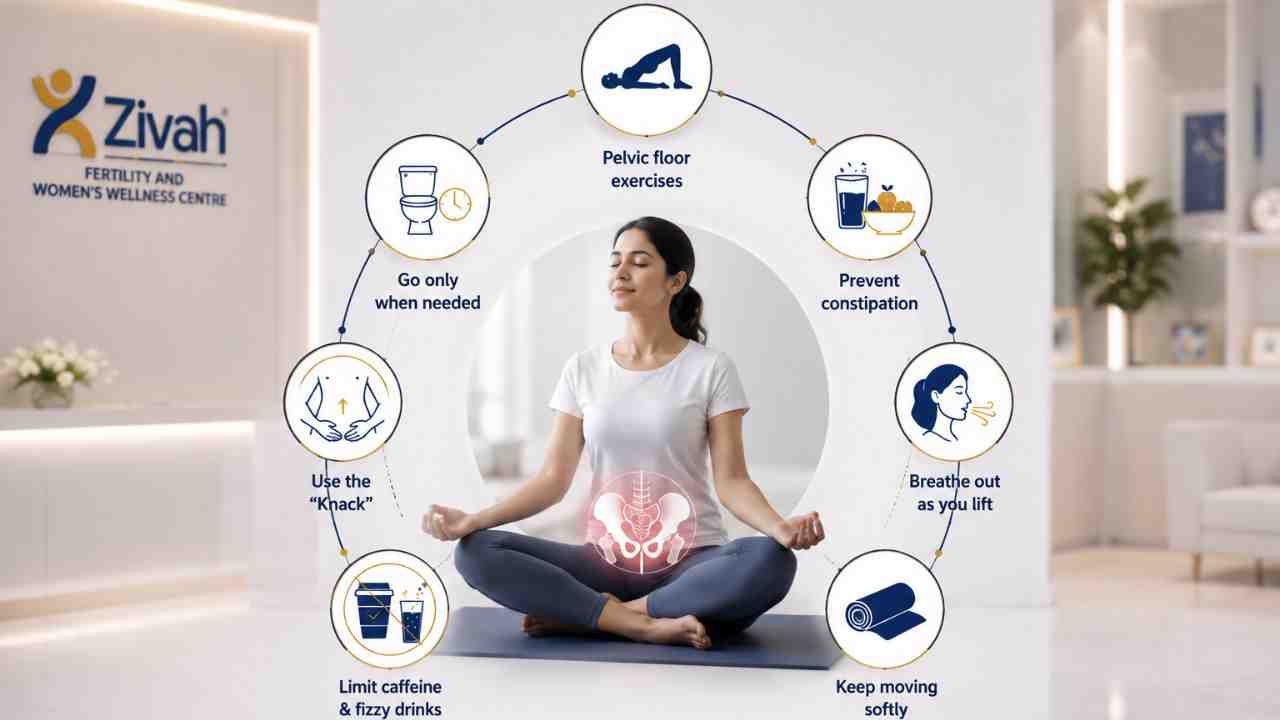
As important as it is to see a doctor for pelvic health, the things you do every day are just as important. So how can you maintain healthy pelvic health in the long run and make it even better? Mostly through small, slow changes. Here are some easy everyday methods to strengthen your pelvic floor and keep it healthy:
- Continue with mild pelvic floor exercises – consistency over the years is what keeps up the effects.
- Avoid “just-in-case” bathroom trips – go only when you need to so your bladder can maintain a healthy rhythm.
- Prevention of constipation – sufficient fibre and water will prevent the straining that weakens the pelvic floor.
- Use the “Knack” – gently tighten your pelvic floor before coughing, sneezing or lifting.
- Don’t ever hold your breath - it increases pressure downward, but breathe out as you lift.
- Reduce caffeine and fizzy drinks – this may help reduce bladder urgency.
- Keep moving softly – guided exercises like yoga might be good for your pelvic floor.
These practices, combined, help maintain a healthy pelvic floor and the benefits of a strong pelvic floor: improved control, comfort, and confidence.
Pelvic Health Across Life Stages
Your pelvic floor changes over time, and so do its needs. Early care of your women's pelvic health offers rewards at every stage. Having a healthy, well-coordinated pelvic floor before pregnancy is the best way to prepare your body for pregnancy and to bounce back afterwards.
Pelvic health during pregnancy is important because a growing baby puts constant pressure on the pelvic floor, and hormones naturally soften the tissues that support it. You receive gentle, guided care to keep you comfortable and ready for birth. Women often notice changes first after delivery.
Your pelvic health after childbirth is about recovery and rebuilding, leaking, feeling heavy or weak is common at this period and extremely manageable.
Later pelvic health care for menopause is necessary as declining oestrogen weakens the pelvic floor, and increases the risk of prolapse and leaking. At Zivah, the benefit is that pelvic, fertility and obstetric care all link together, so your support remains joined-up as your requirements change.
Pelvic Health Needs by Life Stage
| Life Stage |
Common Pelvic Changes |
Pelvic Care Focus |
|---|---|---|
| Pre-conception |
Baseline muscle strength |
Build & maintain strength |
| Pregnancy |
Added pressure, tissue softening |
Comfort & birth preparation |
| Postpartum |
Weakness, leaking, heaviness |
Healing & rebuilding |
| Perimenopause / menopause |
Lower oestrogen, weaker tissues |
Prevent prolapse & incontinence |
Your pelvic care should be appropriate for where you are today, not a one-size-fits-all strategy, regardless of your stage of life.
When Should You See a Pelvic Health Specialist?
Signs of poor pelvic health include urine or bowel leaks, a sudden urge to go, a sense of pressure or a bulge, pelvic pain, and discomfort during intercourse.
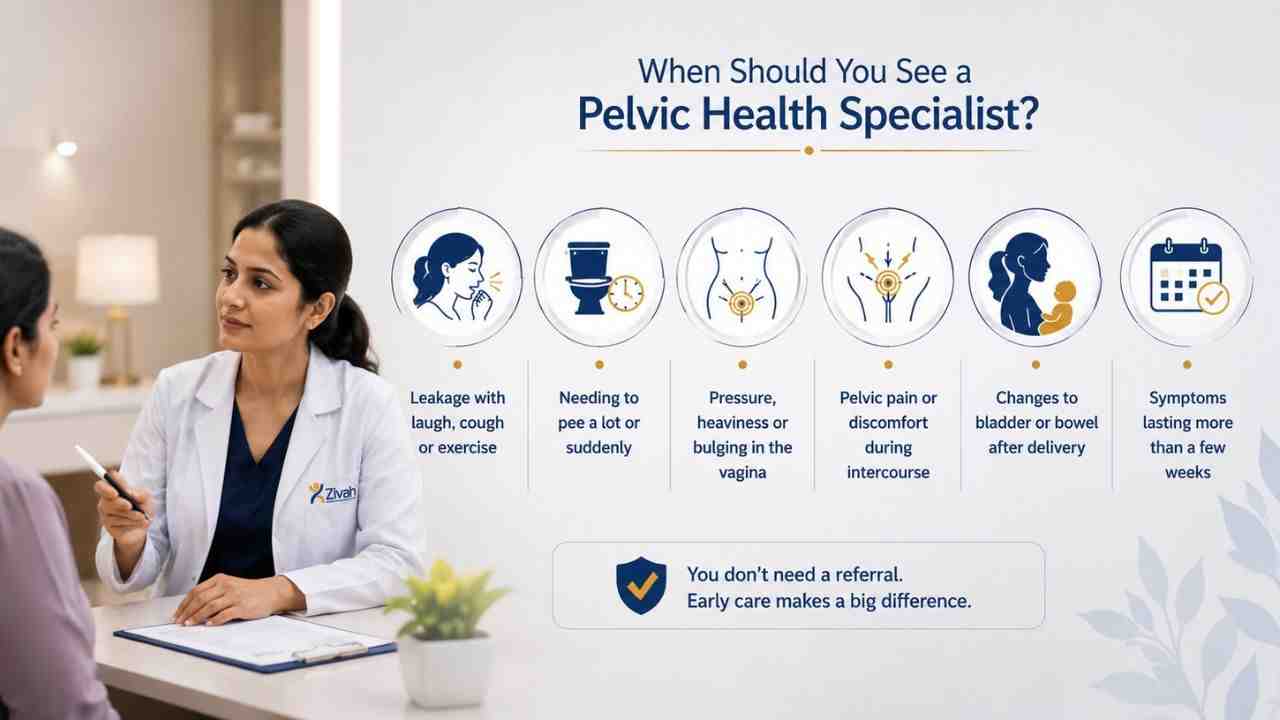
When should you see a pelvic health specialist? When these symptoms remain for longer than a few weeks or start to interfere with your daily life. You don't need a referral, and you don't have to wait till things become worse. Schedule a pelvic health appointment if you see:
- Leakage of urine when you laugh, cough or exercise
- Needing to pee a lot or suddenly
- Pressure, heaviness or bulging in the vagina
- Continuous pelvic discomfort or pain during intercourse
- Changes to the bladder or bowel after delivery
Wondering what doctor treats pelvic health problems? Refer to a pelvic health specialist, a physiotherapist or urogynaecologist. Looking for a pelvic health specialist near you? Book your appointment with Zivah's pelvic health team today.
Why Choose Zivah for Pelvic Health Care
Your experience, and your results, at a pelvic health clinic depend on its selection. Here’s what you can expect at Zivah. Your care is led by specialists. One clear path from examination to therapy to recovery is led by a dedicated pelvic health specialist.
Our pelvic, gynaecology, fertility and urogynaecology teams work together, so your women’s pelvic health services are joined-up, with an emphasis on avoiding problems, not just treating them.
Whether you’re in for a one-off check or a long term pelvic wellness programme, you’re in expert hands for every step of your pelvic care.