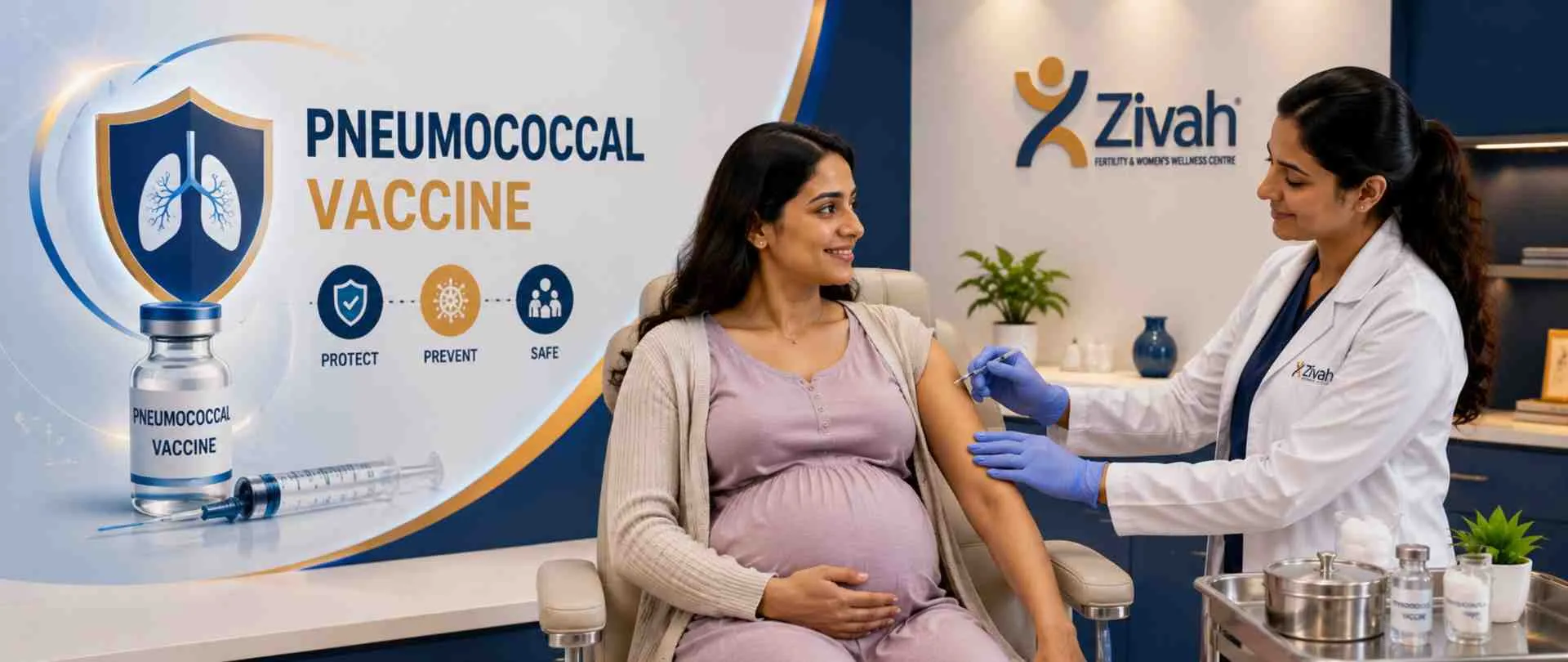
Some infections hit hardest when your body is already working hard for you, and pneumococcal disease is one of them. The same bacteria most people carry harmlessly can turn serious during pregnancy, in later life, or when a health condition lowers your immunity, leading to pneumonia, meningitis, and other illnesses that are far easier to prevent than to treat.
That is where the pneumococcal vaccine comes in, and where Zivah Fertility supports you. Whether you are planning a baby, managing a long-term condition, or simply protecting your health for the years ahead, our specialists help you choose the right vaccine and guide you from your first consultation through to aftercare.
What Is the Pneumococcal Vaccine?
At Zivah Fertility, the pneumococcal vaccine is one of the simple ways we help protect your health through every stage of life. And it’s easy to understand what it does. It teaches your body to fight off the germ that causes pneumococcal disease (called Streptococcus pneumoniae). Once you have had the vaccine, your body is ready to act fast if it ever meets that germ, so you are far less likely to fall seriously ill.
There are two main types used in India, each guarding against a different set of these germs. The right one for you depends on your age, your health, and whether a baby is on the way. Our specialists look at all of this first, so the protection you get truly fits you and is never just a one-size-fits-all choice.
PCV or PPSV23 - Which Pneumococcal Vaccine Do You Need?
You do not have to figure out which pneumococcal vaccine is right for you on your own. Your Zivah specialist reviews your health history, your age, and any factors that put you at higher risk, then guides you toward PCV, PPSV23, or a combined schedule, whichever best protects you.
The table below shows what each one covers and who it usually suits.
| Vaccine |
Protects Against |
Best Suited For |
|---|---|---|
| PCV (Conjugate) |
13–20 pneumococcal strains |
Adults with certain health conditions and older women |
| PPSV23 (Polysaccharide) |
23 pneumococcal strains |
Adults aged 65+ and people with chronic conditions |
| Combined Schedule |
Broader, longer-lasting protection |
High-risk women, as advised by your specialist |
As you can see, no single vaccine is right for everyone, and that is exactly why we take the time to match yours to your needs. Once we know which type suits you best, the next thing to understand is what these vaccines actually protect you from and why pneumococcal infections deserve to be taken seriously.
What Does the Pneumococcal Vaccine Protect You From?
Most of us carry pneumococcal bacteria at some point without ever knowing it. For a healthy body, that is usually no problem. But these germs are opportunists, and they wait for the moments when your defences are lower, during pregnancy, in your older years, or when a long-term health condition is already keeping your immune system busy. That is when a germ many people shrug off can quietly turn into something serious.
This is exactly why the pneumococcal vaccine matters. By knowing which infections it helps prevent, you can see how much it protects you from before trouble ever starts. The table below shows the main illnesses this vaccine guards against and why each one is worth taking seriously.
| Condition |
What It Affects |
Why It Matters for You |
|---|---|---|
| Pneumonia |
Lungs |
Serious in older age and high-risk adults |
| Meningitis |
Brain and spinal lining |
Rapid, high-risk infection |
| Bacteraemia |
Bloodstream |
Can turn severe quickly |
| Sinus & Ear Infections |
Upper respiratory tract |
May occur with pneumococcal infection |
Seeing these infections side by side makes one thing clear: pneumococcal disease is far easier to prevent than to treat. Of course, not everyone faces the same level of risk, so the next step is to determine whether the pneumococcal vaccine is something you should personally consider.
Signs You May Need a Pneumococcal Vaccine
Wondering how to know if you need the pneumococcal vaccine? It comes down to how much protection your body needs right now. A few clear signals can tell you whether it is worth thinking about.
You may need the pneumococcal vaccine if:
- Your immunity changes; you are planning to get pregnant or are pregnant.
- You are at least 65 years old, which makes it harder to fight off infections.
- You have a long-term disease, such as diabetes, asthma, heart, kidney, or lung problems.
- You are sick or getting care; your immune system is weaker.
- You have more throat, nose, and ear problems than most people.
If any of these sound like you, it is worth a conversation with a specialist.
Who Should Book a Pneumococcal Vaccine at Zivah?
If you want to have a baby, you should get this vaccine as soon as possible. More and more, clinical standards include pneumococcal protection as part of a full preconception health check. This way, you are already protected when you get pregnant. The same goes for people over 65 or who have a long-term illness, where a simple infection can quickly become serious.
Our guide to pre-pregnancy vaccination covers the full list of shots that pregnant women should get, but the pneumococcal vaccine has special risks for the lungs and the whole body that need their own attention. When you book with your Zivah specialist, your protection is tailored to your overall health.
What Happens During Your Pneumococcal Vaccination Visit
If you have never had this vaccine, it helps to know what happens when you get the pneumococcal vaccine, because the process is simpler than most people expect. It starts with a short chat about your health history, any conditions you manage, and whether you are planning a pregnancy. This helps decide which vaccine suits you and whether today is the right time.
The vaccine itself takes only a moment. It is given as a small injection, usually in the upper arm, and you wait a little while afterwards so any immediate response can be checked. Before you leave, you will know what to expect over the next day or two and when to return for a second dose if needed. The table below walks you through each stage.
Does the Pneumococcal Vaccine Injection Hurt?
Most people find the pneumococcal vaccine injection quick and easy to tolerate. You may feel a brief pinch, and the area can feel a little sore afterwards, but this usually settles within a day. For nearly everyone, the mild discomfort is well worth the protection gained.
| Step |
What Happens |
What You'll Know |
|---|---|---|
| Consultation |
We review your history and risk |
Which vaccine suits you |
| Assessment |
We check timing and current health |
Whether today is right |
| Vaccination |
We give the injection |
Quick, routine, minimal discomfort |
| Aftercare |
We guide on effects and next dose |
When to return |
Knowing what to expect makes visits feel far less daunting. The next question most people have is how many doses they will need and when, which is where a clear schedule helps.
Pneumococcal Vaccine Schedule and Doses Explained
People usually ask how many pneumococcal vaccine shots they need. The answer is that it depends on you. For some, a single dose is enough to protect them for a long time. For some, getting two vaccines at different times provides greater protection.
Your schedule usually depends on a few things:
- Your age and overall health.
- Whether you are planning a pregnancy.
- Any long-term condition you are managing.
- Which vaccine, PCV or PPSV23, suits you best
Because these factors vary widely, we never set a hard timeline in advance. Your Zivah specialist advises on the right number of doses, spacing, and any boosters you may need later. To know the exact cost of your pneumococcal vaccine, call Zivah Fertility.
How Many Pneumococcal Vaccine Doses Will You Need?
For many women, one dose is enough to stay well protected. Others, especially those with a chronic condition or added risk, do better with a combined schedule spaced over time. The table below shows the typical approach, though your final plan is always confirmed by your specialist.
| Group |
Typical Approach |
Confirmed By |
|---|---|---|
| Preconception Women |
Reviewed before pregnancy planning |
Your Zivah specialist |
| Chronic-Condition Patients |
May need a combined schedule |
Your Zivah specialist |
| Older Women |
Timing and boosters assessed individually |
Your Zivah specialist |
Whatever your schedule looks like, the goal is the same: steady protection with little worry. Once your doses are sorted, it helps to know how you might feel afterwards.
After Your Pneumococcal Vaccine - What to Expect
A common worry is whether the pneumococcal vaccine is safe, and the reassuring truth is that it has been used and trusted for many years. Most people carry on with their day as normal. If any effects do appear, they are usually mild and settle on their own within a day or two.
You might see:
- Some pain, heat, or swelling where the shot was given.
- A low-grade fever or a little tiredness.
- For a short time, you might feel tired or have aching muscles.
These are just signs that your body is building its protection, and they go away quickly. Serious reactions are very rare. If anything feels unusual or lingers longer than expected, your Zivah team is only a call away and always happy to check in on you.
With the practical side covered, it is worth understanding why so many women choose to receive their vaccine at a place that understands their overall health.
Why Choose Zivah for Your Pneumococcal Vaccination?
You can get a pneumococcal vaccine at many places, so why get it at a women's health clinic? Because at Zivah Fertility, your vaccine is never just a one-off jab. We consider your overall health, age, medical history, and whether a pregnancy is on the horizon, so the protection you receive truly fits your life. That wider view is what makes the difference for women planning a baby or managing a long-term condition, with every step handled by a team that knows women's health inside out.
| What You Get |
How It Helps You |
|---|---|
| Personalised Risk Review |
We match the right vaccine to your health |
| Preconception-Aware Timing |
We plan around your pregnancy goals |
| Clear Aftercare Guidance |
We tell you exactly what to watch for |
| One Trusted Women's Health Team |
We keep your full record in one place |
When your vaccine sits within your wider health picture like this, booking becomes the easy final step.
Book Your Pneumococcal Vaccine at Zivah
Want to take care of your health? Scheduling your pneumococcal vaccine at Zivah Fertility is easy. Whether you’re planning to get pregnant, managing a health condition, or just staying ahead of the game, our team can help you find the right time and vaccine for you. Contact us today, and we’ll help you all the way from your first question to your meeting, always putting you first.