Infection screening is a simple combination of tests that looks for infections that can often have no symptoms at all. You can be completely fine and still be carrying something worth knowing about. Some of these infections might quietly affect fertility, a pregnancy, or a partner. why is infection screening done before fertility treatment? Because what you cannot feel, you cannot act on. That is why infection screening before IVF is a routine practice, not an indication of suspicion. No exceptions; everyone is tested.
The process is fast, straightforward, and fully confidential. At Zivah, it often means one blood test, and someone who takes the time to do it right will explain your results to you in simple language. In this guide, we'll explain what the screening tests look for, why they're done before fertility treatment, how the tests work, what your results mean, and how much they cost.
What Is Infection Screening?
Infection screening is a series of simple tests to detect infections your body might be carrying without any symptoms. The last part is important. Many of these infections are symptom-free for years, so feeling fine doesn't tell you anything much. why do we screen for infection at all? Because a silent infection can still impact your fertility, a pregnancy or your partner.
One thing to remember from the start is that an infection test is a screening, not a diagnosis. Whenever something is detected, the next step is always a confirmatory test to verify it. A screening result alone does not lead to any conclusion.
Which Infections Are Screened?
The screening for Zivah’s illness includes the most important infections before reproductive treatment:
- Types of Viral infections: HIV, hepatitis B and hepatitis C
- Bacterial infections: chlamydia, gonorrhoea, syphilis
- Pre-pregnancy checks: immunity to rubella
- Additional tests: added as your doctor advises
And each is there for a very good reason, not just to fill a panel. This is what the screening is really looking for, and why each one makes the cut.
| Infection |
What It Is |
Why It's Screened |
|---|---|---|
| HIV |
A virus affecting the immune system |
Needs careful management during fertility treatment and pregnancy |
| Hepatitis B & C |
Viruses affecting the liver |
Can pass to a baby; affects how samples are handled in the lab |
| Syphilis |
A bacterial infection |
Treatable, but can seriously affect a pregnancy if missed |
| Chlamydia |
A common bacterial infection |
Often silent; can damage the fallopian tubes and affect fertility |
| Gonorrhoea |
A bacterial infection |
Frequently symptomless; can affect fertility in both partners |
| Rubella immunity |
A check, not an infection |
Confirms you're protected before pregnancy |
All of this together provides your Zivah professional with a comprehensive picture before therapy begins, so your care plan is based on facts, not assumptions. So why is screening done at all before IVF? The obvious question is:
Infection Screening Before IVF and Fertility Treatment
At Zivah, infection screening is done as a matter of routine before any fertility treatment starts. This is worth saying plainly: it is a routine step, not a warning sign. Screen every patient, every time, regardless of history or scenario. No one is singled out, and being asked to take the test is in no way a reflection on you.
Why Screening Comes First
So should you test for infection before IVF? Yes, and for four very good reasons. It is protective because, if left untreated, the infection can alter how your body responds to treatment. It also protects your companion, as some infections can be passed from one person to another without being detected. It protects a future pregnancy, as some infections can cross over to a baby. And it protects the lab, because proper handling depends on knowing what is there.
Same for IUI (intrauterine insemination) and ICSI (intracytoplasmic sperm injection). No matter whatever path your treatment takes, the first step is disease screening a small first step that allows your Zivah specialist to map out your care with a complete view. So what does the screening actually include, and what tests are you likely to need?
Types of Disease Screening Tests at Zivah
Infection screening is not one test. It's a panel, a series of tests all run together off one sample. The panel you require depends on your situation, and your Zivah professional will inform you which applies to you.
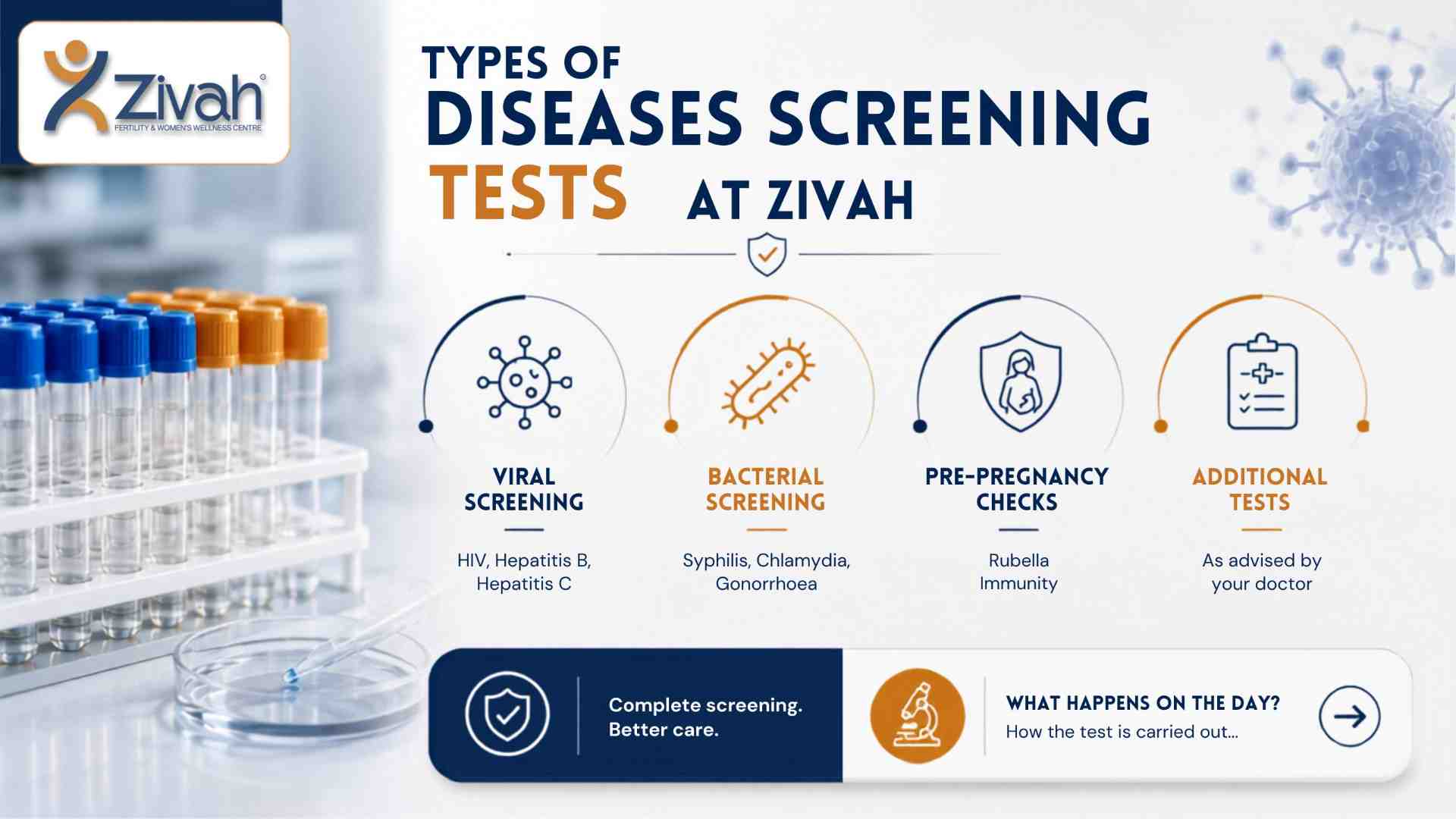
Viral, Bacterial and Pre-Pregnancy Screening
In Zivah, disease screening tests are divided into three classes. Viral screening is used to identify illnesses such as HIV and hepatitis that can remain hidden in the body for years. Chlamydia and gonorrhoea are prevalent, often asymptomatic, and treatable if detected; thus, bacterial screening includes them.
Pre-pregnancy screenings are different; you are not tested for rubella, but rather to see if you are immune to it.So what illness screening panel do you really need? For most people starting on fertility treatment, all three. Here is the breakdown for each group.
| Type of Screening |
What It Covers |
Who It's For |
|---|---|---|
| Viral screening |
HIV, hepatitis B, hepatitis C |
Everyone starting fertility treatment |
| Bacterial screening |
Syphilis, chlamydia, gonorrhoea |
Both partners, before treatment begins |
| Pre-pregnancy checks |
Rubella immunity |
Anyone planning a pregnancy |
| Additional tests |
Added where your doctor advises |
Based on your history or symptoms |
Once your panel is complete, your Zivah professional reviews everything together and creates your treatment plan around a full overview, not a partial one. So what exactly happens on the day. How the test is carried out.
Who Should Get an Infection Test?
An infection test is not just for those who think something's wrong. In fact, most individuals who have one are fine. That's really why these infections can sometimes go quiet for years, which is exactly why testing is better than waiting for symptoms to show up. So who should be tested for infection? These four categories usually include:
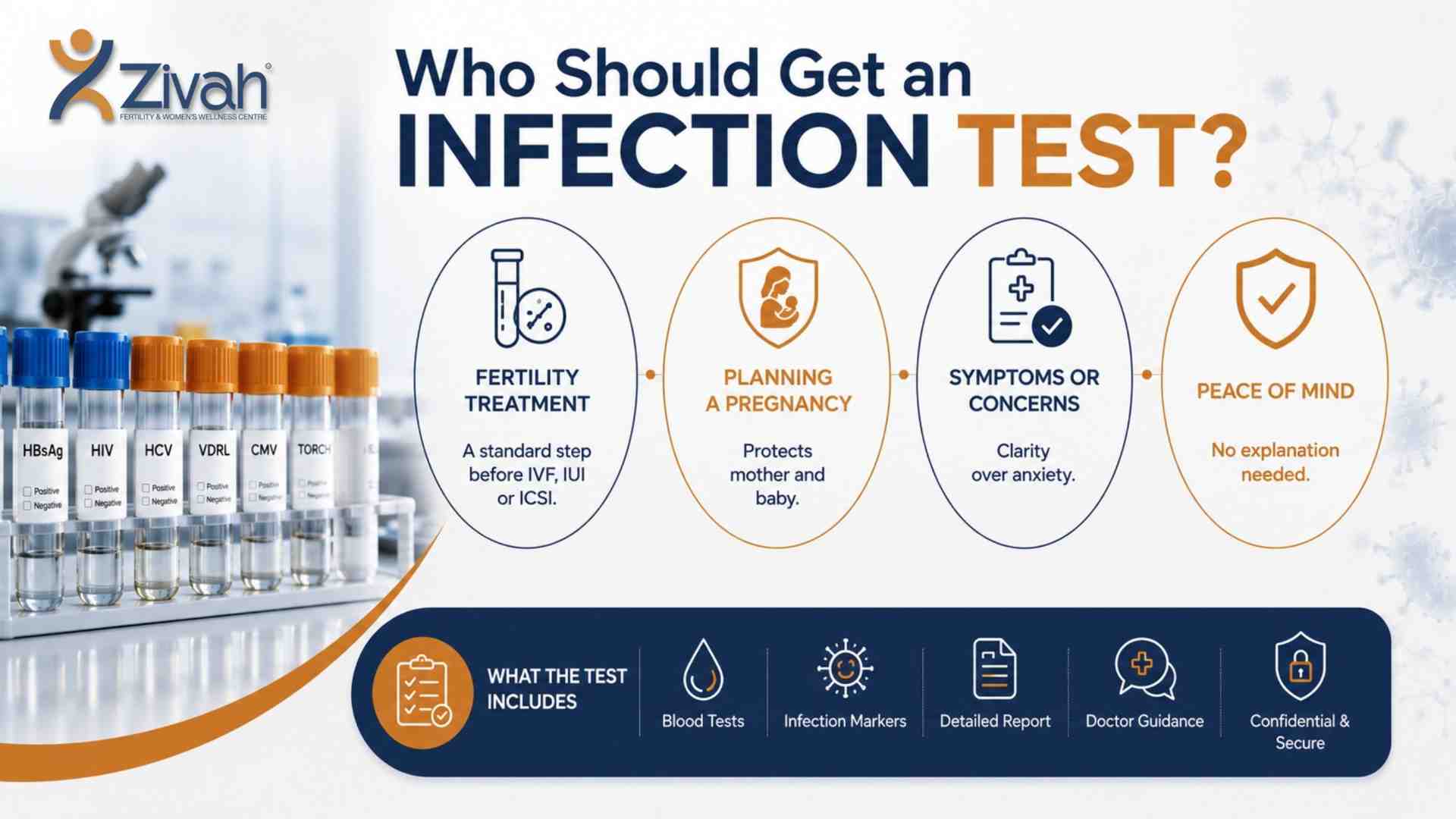
- For those considering a pregnancy: Protects mother and baby.
- People who have symptoms or concerns: clarity over anxiety.
- Anyone who wants peace of mind: No explanation needed.
Why Both Partners Are Screened
At Zivah, we carefully screen for infection together as a team. Some illnesses are passed between couples without either person knowing; thus, a result for one is important to the other.
It's not about blame or history; it's just that treating one partner and ignoring the other leaves the work half done. The best disease screening is the one that gets to all those involved.So you have decided to go forward. This is what the test really includes.
The Infection Screening Process at Zivah
Every sample in Zivah is handled by qualified pathology staff to ensure that your infection screening is accurate and dependable from the very first step. Handling matters carefully here; a screening test is only worth having if you can trust what it tells you, and that trust starts at the lab. The test is quick and easy and over in one short visit.
A Simple Blood and Swab Test
For most people, infection screening involves a single blood sample drawn from your arm in minutes. No different from a standard blood test. Once in a while, a sample is added, and the staff says they'll let you know in advance so you're not caught by surprise. The whole visit is private and confidential, from start to finish. Here's how it unfolds.
| Step |
What Happens |
Timeframe |
|---|---|---|
| Blood sample |
A small sample is taken from your arm |
5–10 minutes |
| Swab (if needed) |
A quick swab, only where advised |
A few minutes |
| Lab testing |
The team runs your viral and bacterial screening |
Same day |
| Your results |
Prepared and explained to you in plain words |
Within a few days |
That's the entire procedure: one quick visit, with your results discussed by the Zivah staff rather than left on a page.
So how long until the results? Usually just a few days. And one thing to say: your results are strictly confidential and shared only with your care team, not with anyone else.But after your results come in, the next step is knowing what they mean.
Understanding Your Infection Screening Results
Most infection screens will be nonreactive, meaning no infection is detected. If that is what you get, there is nothing more to be done; continue your care as scheduled. It’s the outcome that most people understand.
What Happens If a Result Is Reactive
What you need to know first is that a reactive screening result is an indicator, not a diagnosis. Does a reactive result suggest you certainly have an infection? No. Screening tests are quite sensitive, and sometimes they find something that turns out to be nothing on deeper testing. A screening result alone cannot decide anything. There is usually a confirmation test.
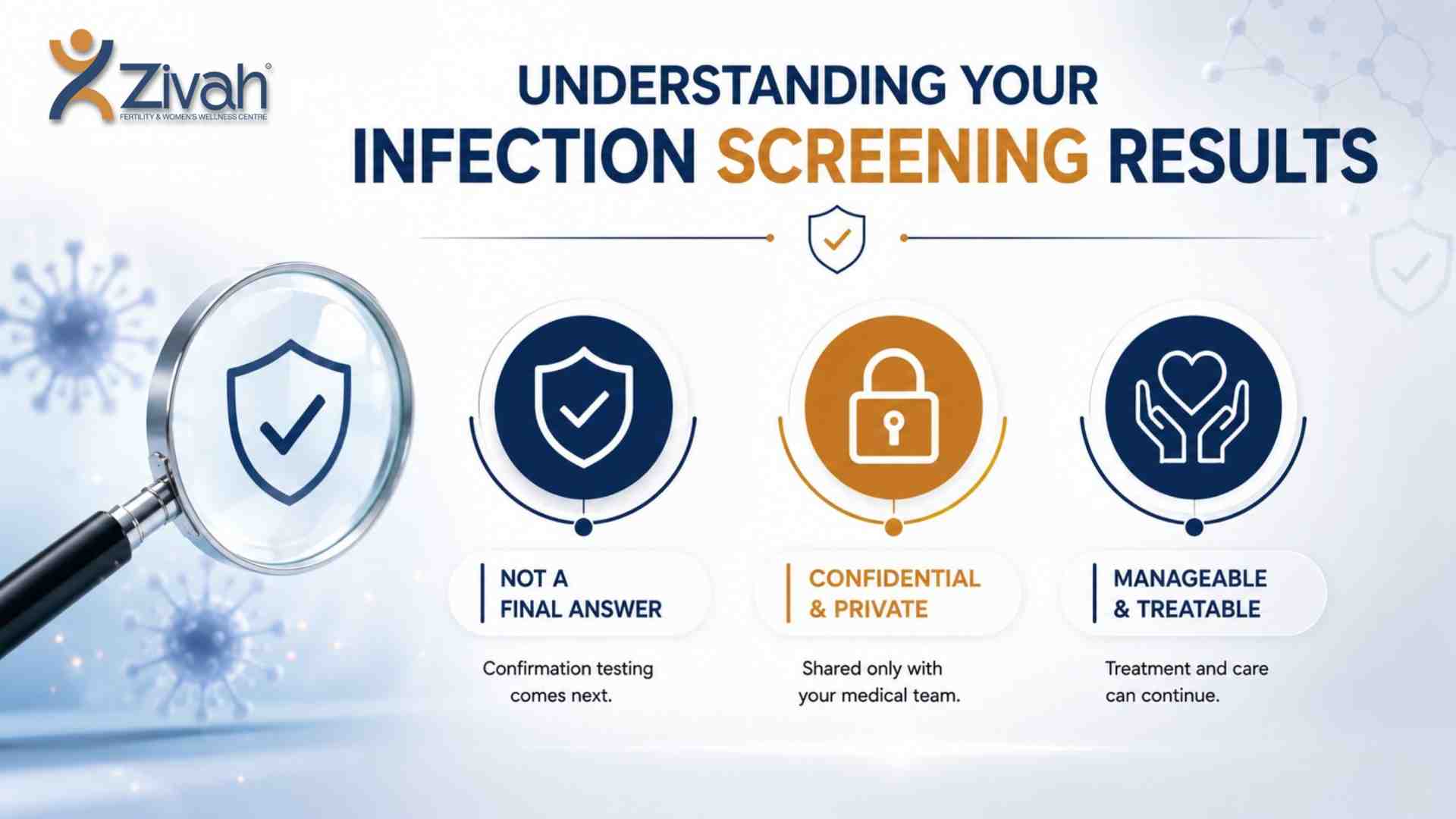
- A reactive result is not a final answer: confirmation testing comes next, and it may not confirm anything.
- Your results are confidential: shared just with your medical team at Zivah.
- Most confirmed infections are manageable: treatment can continue, and fertility care can often continue as well.
| Result |
What It Means |
What Happens Next |
|---|---|---|
| Non-reactive |
No infection detected |
Your treatment proceeds as planned |
| Reactive |
An indication that needs confirmatory testing |
Your specialist arranges the follow-up test |
| Inconclusive |
The sample needs repeating |
A fresh sample is taken |
Whatever your result, you’re never left to understand it on your own; your Zivah professional goes over it with you and explains exactly what it means for your treatment plan.
Once the results are in, the next practical question is often how much infection screening costs.
Infection Screening Test Cost at Zivah
There is no standard number for infection screening. The cost depends on what you need a single infection test is much less expensive than a full panel, and screening is sometimes included in a fertility treatment package.
What Influences the Cost?
- Single test or complete panel: greater infections screened is greater total.
- One partner or both: couples are usually screened together.
- Part of an IVF package: often already included in your treatment cost.
- Repeat or confirmatory testing: an additional test as recommended.
So, what does the real price of the infection screening test look like? Primarily, the number of infections checked and whether one or both are tested. Here is what each option involves.
| Option |
What It Covers |
Best For |
|---|---|---|
| Single infection test |
One specific infection |
When you already know what to check |
| Full screening panel |
The complete range in one sample |
Most people starting fertility treatment |
| Couples screening |
Both partners, tested together |
Couples beginning IVF, IUI or ICSI |
In most cases, when people start treatment, the whole panel is included in the entire plan, so your Zivah specialist will tell you exactly what is currently covered before adding anything.
Many people start with ‘infection screening near me. Zivah makes that first step easy: accurate, confidential testing near home, with no long waits.
Why Choose Zivah for Infection Screening
Getting screened is important. But where you get screened is important too. A result is only valuable if the lab that produced it is reliable and the person explaining it treats you with care. You can have two clinics doing the same exam, and the confidence and experience you walk away with can be worlds apart.
What makes the difference is not the test, but all that surrounds it: careful handling of your sample, the privacy of your results and the clarity with which they are delivered to you afterwards.
Accredited Lab, Complete Discretion
From the very beginning, the infection screening is dependable as your sample is processed in an approved lab by qualified experts. So what is special about screening at Zivah? Mostly just privacy. Your results are 100% confidential, shared exclusively with your care team, and described in simple language, rather than sent to you as a page to read.
For results that require a closer look, confirmation testing is arranged in-house – no chasing, no starting over. The entire process, from viral screening to the last conversation, is meant to be private, transparent and comfortable. Once you’re ready, booking your screening takes just a second.
Book Your Infection Screening Appointment at Zivah
One of the simplest and most reassuring things you can do before fertility therapy is infection screening. It’s fast, it’s confidential, and it solves problems you may not even have known you had. How then do you start? Just make an appointment.
With Zivah, everything is secure from the first call to the outcome. No long delays. No discomfort. No pressure. If you’re preparing for pregnancy, going to start IVF or want peace of mind, this is a simple first step. Your results are completely private. Book Your Infection Screening Appointment at Zivah