
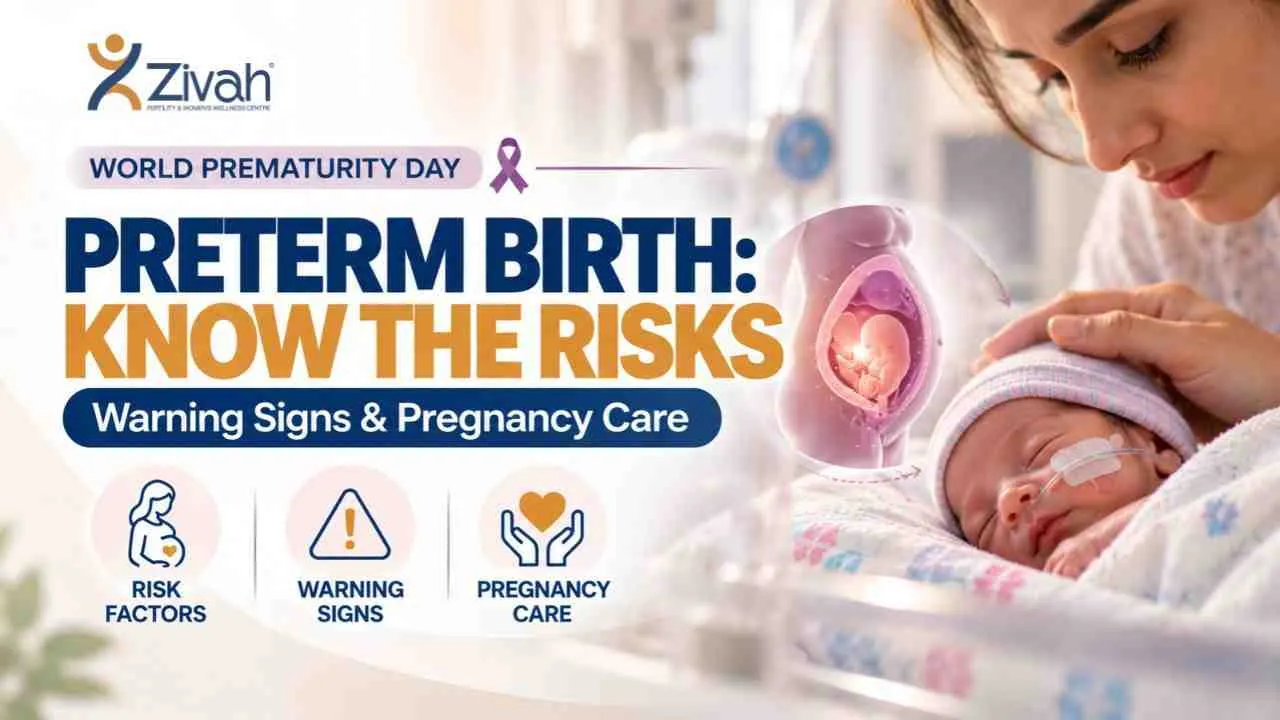
On 17 November, the world marks World Prematurity Day. Preterm birth normally starts with preterm labour weeks ahead of the due date, and India has more at stake than virtually any other country.
If you are pregnant or planning a family, you may have wondered whether the baby would arrive early. Maybe you know a family whose little one had to be in the NICU after a premature birth and that concern has stuck with you.
This guide looks at what is known as preterm birth, why it happens, the warning signs, when to go to hospital and how antenatal care reduces the risk. Not every preterm birth can be predicted. But many send warning signs first, and recognising them might buy a baby precious time.
Why Is World Prematurity Day Observed? The Story Behind 17 November
Every year on November 17. But it’s more than a date on a calendar. World Prematurity Day began with one family's loss and has grown into a global campaign for babies who arrive too soon. As we look ahead to World Prematurity Day this year, the message matters more than ever.
How World Prematurity Day Began
The European Foundation for the Care of Newborn Infants (EFCNI) launched the day in 2008, in collaboration with European parent groups. The date has a personal story behind it.
After losing his triplets to preterm birth, one of EFCNI’s founding members became a father to a newborn girl on 17 November of that year. Originally called International Prematurity Awareness Day, it has been observed as World Prematurity Day since 2011 and is now celebrated by people in over 100 nations. Purple is the colour of the day and symbolises the sensitivity and individuality of the preterm baby.
Why Preterm Birth Awareness Matters So Much in India
So why is World Prematurity Day celebrated so intensely in India? More than 3 million kids are born too early here each year, more than anywhere else.
A preterm baby’s chances largely depend on how quickly the right care reaches the mother and child. Timely and effective treatment can prevent or control many problems. And World Prematurity Day matters: awareness begins in pregnancy, not after birth. To appreciate how risky this is, it helps to understand when a delivery is “too early.”
What Is Preterm Birth? When Is a Baby Considered Premature?
A normal pregnancy is around 40 weeks and is counted from the first day of your last period. Doctors draw a line between "a little early" and "too early" at 37 weeks.
Preterm vs Premature Birth: What’s the Difference?
There is absolutely no difference. Both these phrases describe a premature birth before 37 weeks of pregnancy have been completed, and “preemie” is only the everyday name for these babies. If you ever wondered what week is deemed premature, here is a simple way to read the calendar:
- Is 36 weeks premature? Yeah. A baby born at 36 weeks is late-preterm.
- Is 37 weeks premature? No. “Early term” refers to babies born at 37-38 weeks. They’re usually healthy, though they can have slightly more breathing trouble than full-term babies.
- Full term is 39 to 40 weeks, which is the best time for giving birth.
Why is a week or two important? In the last few weeks, the baby's lungs mature, the brain grows rapidly, and fat stores build up to keep the body warm. That’s why every week in the womb is important.”
Types of Preterm Birth by Week of Pregnancy
Not all premature babies have the same problems. The earlier a baby is delivered, the more danger they have and the more support they will likely need.
The good news is that most premature births occur in the moderate-to-late stages. The chances grow each week, especially after 28 weeks and again after 34. The table covers both, as many Indian families count pregnancies in months.
Stages of Preterm Birth at a Glance
| Category | Weeks of pregnancy | Roughly | What it usually means |
|---|---|---|---|
| Extremely preterm | Before 28 weeks | 6 months or earlier | Needs intensive newborn care |
| Very preterm | 28 to under 32 weeks | Around 7 months | Breathing and feeding support likely |
| Moderate to late preterm | 32 to under 37 weeks | Around 8 months | Most common, and most babies do well |
| Early term (not preterm) | 37–38 weeks | Close to 9 months | Usually healthy, with a little extra watching |
And why do some babies arrive before they are ready? The answer is rarely a single thing.
What Causes Preterm Birth? Common Causes and Risk Factors
What causes premature birth often isn’t one simple answer. Often, a mix of causes is involved, and sometimes doctors can't find an explanation at all. There are two ways that a preterm birth can occur. Labour may begin early or the waters may break on their own. Or doctors might choose an early birth to protect the mother or baby, as when severe preeclampsia puts both at risk.
Pregnancy and Health Conditions That Raise Preterm Birth Risk
Some preterm birth causes are linked to the pregnancy itself or to the mother’s health. These are the things doctors observe most closely:
- Prior preterm birth, the strongest single risk factor
- Being pregnant with twins or triplets
- A small or fragile cervix that might dilate too soon
- Placental issues, including placenta previa or placental abruption
- High blood pressure, pre-eclampsia or diabetes
- Urinary or vaginal infections
- Differences in the shape of the uterus
- IVF pregnancies
- Past pregnancy losses
If you have any of the following, your pregnancy will likely be considered a high-risk pregnancy. There is no reason to panic. It just means more frequent check-ups and closer supervision.
Lifestyle and Everyday Factors That Increase the Risk of Premature Birth
Not all preterm birth risk factors are medical. Everyday life also plays a role, and some of these elements can be changed:
- Teen pregnancy, or getting pregnant after 35
- Underweight or overweight
- Anaemia and low nutrition
- Pregnancies less than 18 months apart
- Smoking or chewing tobacco (including gutkha) while drinking alcohol
- Severe and chronic stress
- Gum disease that research has tied to premature birth
It’s important to emphasise this clearly: preterm birth is often not anyone’s responsibility. Many happen for no known reason, even in a first pregnancy with no risk factors whatsoever. That's why every woman should recognise the warning signs. Here are some ways to handle the most common risks:
Preterm Birth Risk Factors and What Helps
| Risk factor | Why it matters | What can help |
|---|---|---|
| Previous preterm birth | Raises the chance it happens again | Early check-ups, progesterone if your doctor advises |
| Short cervix | The cervix may open too soon | Cervical length scan, progesterone or a stitch if advised |
| Infections | Can trigger early labour | Testing and prompt treatment |
| High BP or diabetes | Can lead to early delivery | Regular monitoring and control |
| Anaemia | Linked to early birth and low birth weight | Iron, folic acid and a good diet |
| Short gap between pregnancies | The body has less time to recover | Wait at least 18 months |
Risk factors tell us who requires closer attention. But all pregnant women should recognise the symptoms that labour is beginning too early.
Early Warning Signs of Preterm Labour: Symptoms You Shouldn’t Ignore
What makes signs of preterm labour tricky is that they can feel so normal. A backache, a little cramping or pressure in the lower tummy can easily be mistaken for typical pregnancy pain, which is why many women wait too long.
Signs and Symptoms of Premature Labour Before 37 Weeks
If you know the early warning signs of preterm labour, you can take action before it is too late. Watch for these preterm labour symptoms if you’re less than 37 weeks pregnant:
- Tightening or contractions every 10 minutes or more often, even if they don't hurt
- Cramps such as period pain, with or without diarrhoea
- A constant dull aching in your lower back
- Pressure down in the pelvis as if the baby is pushing down
- Change in vaginal discharge – watery, mucus-like or blood-stained
- Leak of liquid or unexpected spill of water
- Bleeding or spotting
A single warning sign might not be anything to worry about. But if any of them are new, strange, or keep coming back, it’s worth getting checked out instead of guessing.
When Should You Go to the Hospital for Preterm Labour?
Knowing when to go to hospital for preterm labour can make a huge impact. If you see any of these indicators before 37 weeks, call your doctor immediately. If your waters have broken, you are bleeding, or your contractions are regular, go straight to the hospital.
Don’t wait to see if they will clear up on their own. And don't ever be embarrassed about a false alarm. Doctors would much rather see you and send you home than see you come in after labour has progressed too far.
Every extra week in the womb counts, remember. If you get to hospital in time, doctors can typically slow down labour and offer medicines that protect your baby’s lungs and brain. And if a baby is born premature, what then?
What Happens If a Baby Is Born Before 37 Weeks? Complications and Care
It’s scary to hear that the baby you have might be born early. However, newborn care has come a long way, and many babies born through preterm or premature delivery today grow up healthy and strong.
How Doctors Manage Preterm Labour
If you show up at a hospital showing early signs of labour, the initial aim is simple: buy your baby more time. Doctors will first assess how far into labour you are.
This will normally involve a physical examination, a scan to evaluate your cervix and monitoring your baby’s heartbeat and your contractions. Sometimes they also take a swab to test for infection. Depending on what they uncover, your doctor could recommend:
- Medications to slow down labour (short-term)
- Steroid shots to help your baby’s lungs mature faster
- Magnesium sulfate, usually before 32 weeks, to help protect the baby’s brain
- Antibiotics if there's an infection
If your baby is likely to require intensive care after birth, you may be sent to a hospital with a specialised newborn unit before you give birth.
Premature Baby Health Complications and Long-Term Effects
What happens if baby is born before 37 weeks depends largely on how soon they are born, and how much care they require following delivery. In the first few weeks, common premature birth complications include trouble breathing, staying warm and feeding. Jaundice is also common, and because a preterm baby’s immune system is still immature, infections are more likely.
The long-term effects of premature birth are more likely the earlier a baby is born. Some children have problems with vision, hearing, learning or development, which is why regular follow-up checks matter as they grow.
Most babies born after 34 weeks do very well. Kangaroo care, where the baby is carried skin-to-skin on a parent’s chest, and breast milk are simple parts of premature baby care that help them grow stronger.
Mothers need care too. Anxiety and postnatal depression are more common after a preterm birth, so asking for support is part of recovering from the birth. Much of a baby’s protection starts long before labour, during the pregnancy itself.
How Can Preterm Birth Be Prevented? Pregnancy Care That Lowers the Risk
The truth is, not all preterm births are preventable. But successful preterm birth prevention is truly about reducing risk, and most of that is within your reach with the correct treatment and a few common practices.
Antenatal Care to Prevent Preterm Birth: Checks That Make a Difference
The strongest tool you have is regular check-ups. Antenatal care to prevent preterm birth means that your doctor can discover problems early, often before you even notice anything yourself.
Good antenatal care starts with a first visit in the first trimester, followed by regular check-ups. Your doctor monitors your blood pressure and sugar levels at each visit, and looks for urine or vaginal infections that might silently induce early labour.
If you’re at higher risk, you may get a cervical length scan in mid-pregnancy to see if your cervix is shortening too early. As the risk chart earlier showed, additional steps such as progesterone or a cervical stitch are for chosen women only and only when your doctor suggests them.
Everyday Pregnancy Care Tips to Reduce the Risk of Premature Birth
Hospital visits are as vital as daily practices. If you’re wondering how to lower the chance of preterm birth, a few basic steps do make a difference:
- Eat well, take iron and folic acid as prescribed and attempt to gain a healthy amount of weight
- Avoid all tobacco products, including gutkha, and alcohol
- Control tension and keep all appointments no matter how good you feel
One old idea needs to be corrected. Strict bed rest doesn’t reduce the risk of preterm birth and can cause complications including blood clots and weaker muscles. As your doctor will tell you, a little everyday activity is usually safer.
To know how to prevent preterm birth is also to know when to take action. Remember the warning signs above, and call your doctor right away if anything changes. Here’s a checklist of things to expect in each trimester:
Antenatal Care Checklist to Lower Preterm Birth Risk
| Trimester | Key checks | Why it matters |
|---|---|---|
| First (weeks 1–13) | First visit, dating scan, NT scan, BP, sugar, anaemia and urine tests | Spots risks early |
| Second (weeks 14–27) | Anomaly scan , cervical length if at risk, sugar test | Catches a short cervix or diabetes |
| Third (weeks 28–40) | BP, growth and Doppler scans, review of warning signs | Protects the final, crucial weeks |
This kind of care works best when you begin early, with the proper team on your side.
This World Prematurity Day, Protect Your Pregnancy With Zivah
A healthy pregnancy results from consistent, week-by-week care. On World Prematurity Day, Zivah urges every expectant mother to start care early and continue it through delivery. Zivah’s obstetricians and fetal medicine specialists provide antenatal care from the first trimester forward.
This involves regular check-ups, blood tests and scans such as the NT scan, anomaly scan and growth scans so that any alterations are caught in time. If you've had a preterm birth, are expecting twins, or have high blood pressure or diabetes, our high-risk pregnancy care means closer monitoring and a clear plan for each step.
This World Prematurity Day, book a prenatal appointment with Zivah and get your pregnancy care early. Zivah does not conduct sex determination, which is banned under the PCPNDT Act.
Conclusion
A preterm birth is a birth before 37 weeks. The reasons vary; many have no clear cause, and it’s often no one’s fault. Warning symptoms also appear in many premature deliveries. The steps that count are easy.
Start antenatal care as early as possible, know the warning symptoms of preterm labour, and if you notice any of them, call your doctor or go immediately to hospital. Some things in pregnancy you can’t control. But you can give your kid the best chance every extra week, and that starts at your next check-up.