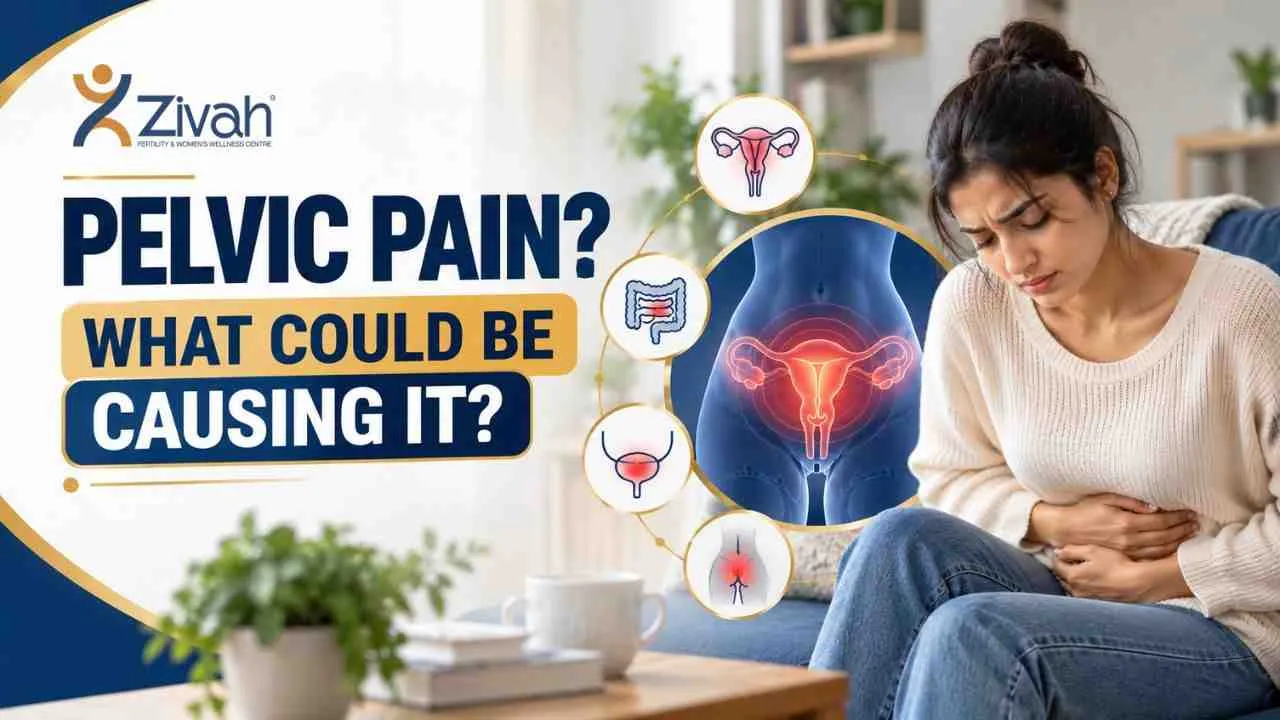
What Causes Pelvic Pain in Women? Common Reasons & When to See a Gynaecologist
Learn the common causes for pelvic pain in women, key symptoms, what left or right side pain means, and when to see a gynaecologist for care.

Pelvic pain is something many women carry silently, brushing it aside as "just period pain." But what if that ache is trying to tell you something more? Pelvic pain in women can begin in many places, from your uterus and ovaries to your bladder and bowel.
So when you wonder what causes pelvic pain in women, the answer is not always where you expect.
This guide walks you through the symptoms, causes, side of pain, warning signs and treatments that can help. Before we begin, there is one small clue most women never notice. It is not how strong your pain feels. It is where and when it shows up.
Let's start by listening to your pain more closely.
Why Does My Pelvis Hurt So Much?
Your pelvis is a busy space. It holds your uterus, ovaries, bladder and bowel, all close together. So when pain begins there, it can come from more than one place. This is why pelvic pain symptoms in women are rarely the same from one woman to another. But the clues are always there.
Is It Cramping, Sharp or a Dull Ache?
Start by noticing how your pain feels. If you keep asking, "Why does my pelvis hurt?", its type is often the first clue.
| Type of Pain | How It Feels | Often Linked To |
|---|---|---|
| Cramping | Tightening, wave-like pain | Periods, fibroids, endometriosis |
| Sharp or stabbing | Sudden, pinpoint pain | Ovarian cyst, ovulation, appendicitis |
| Dull, constant ache | Heavy, lingering pain | PID, adenomyosis, chronic conditions |
| Burning | Stinging, often while peeing | UTI, infections |
| Pressure or heaviness | Fullness in the lower belly | Fibroids, bladder issues |
| Pain during sex | Deep or surface discomfort | Endometriosis, infection, dryness |
One type of pain alone can't give you the full answer. But it points you and your doctor in the right direction.
Do Bloating or Back Pain Come With Pelvic Pain?
Pelvic pain rarely comes alone. Your body often sends other signals, hoping you notice. You may feel bloated or a little nauseous. Your lower back might ache, your periods may change, or you may feel more tired than usual. On their own, these signs can seem small. But they all tell a story worth listening to. So what is really causing your pain? Let's find out.
What Are the Common Causes of Pelvic Pain in Women?
Most causes of pelvic pain in women fall into two groups. Some begin in your reproductive organs. Others start somewhere you might not expect.
Can PCOS, Fibroids or Endometriosis Cause Pelvic Pain?
Many of the common causes of pelvic pain in women start in the uterus or ovaries.
Endometriosis (when tissue like the uterus lining grows outside it) often brings painful periods and pain during sex. Adenomyosis, where this lining grows into the uterus wall, can feel much the same.
So, can fibroids cause pelvic pain? Yes. These growths can bring pressure and heavy, crampy periods. And can PCOS cause pelvic pain? Sometimes, it can cause a dull ache from enlarged ovaries.
PID (pelvic inflammatory disease) and ovarian cysts can hurt too. Some of these conditions may affect your fertility, so an early check-up really matters.
Could It Be Your Bladder, Bowel or Muscles?
Not all pain comes from your reproductive organs. Some causes of lower pelvic pain in women begin close by:
- UTI (urinary tract infection): A common reason for pelvic pain in women when peeing.
- IBS (irritable bowel syndrome) and constipation: You feel cramps and gas in your stomach.
- Interstitial cystitis (bladder pain syndrome): Constant bladder pain.
- Pelvic floor muscle tension: Tight, painful pelvic floor muscles.
Sometimes, the side where your pain is can reveal even more.
Is Your Pelvic Pain on the Left or Right Side?
Remember the small clue from the start? This is where it begins to matter.
The side where your pain sits can point towards its cause. Pelvic pain in women on the left side may come from different organs than pelvic pain in women on the right side. Still, location is only a clue, never a diagnosis on its own.
| Where It Hurts | Possible Causes | Signs to Watch |
|---|---|---|
| Left side | Ovarian cyst, ovulation pain, constipation, ectopic pregnancy | Sudden sharp pain, missed period |
| Right side | Appendicitis, ovarian cyst, ectopic pregnancy | Fever, vomiting, pain that worsens |
| Both sides | PID, endometriosis | Fever, unusual discharge |
| Lower centre | Period cramps, fibroids, UTI, bladder issues | Burning while peeing, heavy bleeding |
If you have been wondering what can cause lower pelvic pain in a woman, this gives you a starting point. Your doctor can then connect the dots with a proper check-up.
Can Pain on One Side Be Linked to Your Ovaries?
Very often, yes. You have one ovary on each side, so pain that starts in an ovary usually feels one-sided too. Ovarian cysts (fluid-filled sacs on the ovary) are a common reason. Most are harmless and fade on their own. Larger ones, though, can cause a dull ache or a sudden sharp pain.
Endometriomas, cysts caused by endometriosis, can cause deeper pain that lasts longer. You may also feel a brief twinge on one side mid-cycle, which we will come to soon.
A simple pelvic ultrasound shows what is happening inside, so you don't have to guess. But where your pain sits is only half the story; when it shows up matters just as much.
Does Your Cycle Affect Pelvic Pain?
Your body moves in its own rhythm, and your pain often moves with it. The same ache can mean something different depending on when it comes.
Pain During Ovulation or Right After Your Period
Some pain follows your monthly cycle, and once you see the pattern, it starts to make sense. So, can ovulation cause pelvic pain? Yes. Pelvic pain in women during ovulation usually:
- Shows up mid-cycle.
- Feels like a twinge on one side.
- Fades within a day or two.
Pelvic pain in women after a period is different. If the ache persists after bleeding has stopped, it could be a sign of endometriosis or adenomyosis.
Pelvic Pain in Pregnancy and After Menopause
Big life changes can bring new kinds of pain. Pelvic pain in women during pregnancy is often just your ligaments stretching for your little one. But please don't wait if you notice:
- Sharp pain on one side in early pregnancy.
- Bleeding or spotting with the pain.
- Dizziness or shoulder tip pain.
These can be signs of an ectopic pregnancy (when the pregnancy grows outside the uterus). Pelvic pain in women after menopause needs attention too. Any new pain is your body asking to be heard. But what if the pain doesn't follow your cycle at all and keeps coming back?
Why Does Pelvic Pain Keep Coming Back?
Women who have severe pelvic pain often have conditions that build slowly, like endometriosis or IBS. When the pain returns month after month, it is easy to accept it as part of life. But you don't have to.
Pelvic pain in women that comes and goes for six months or more is called chronic. Here is how it differs from sudden, short-lived pain.
| Feature | Acute Pelvic Pain | Chronic Pelvic Pain |
|---|---|---|
| How it starts | Suddenly | Slowly, over time |
| How long it lasts | Hours to days | 6 months or more |
| Common causes | Cyst rupture, infection, appendicitis, ovarian torsion | Endometriosis, adenomyosis, IBS, pelvic floor issues |
| Care needed | Urgent medical check | Planned diagnosis and long-term care |
The good news? Chronic pain can be managed once you find its cause. A simple pain diary, noting when it starts, how it feels and what helps, gives your doctor a clearer picture. Sometimes, though, pain arrives suddenly and strongly. That kind needs a closer look.
What Causes Severe Pelvic Pain in Women?
Sudden, severe pain can feel frightening. Take a breath. Most causes can be treated well if found early. A few conditions are known for bringing this kind of pain.
Ovarian torsion (a twisted ovary) can cut off blood flow and cause sharp pain with nausea. A ruptured cyst may bring a sudden stab on one side. Appendicitis often starts near the belly button before moving to the lower right side.
These are the main causes of severe pelvic pain in women, and each one needs medical care quickly.
Should You Worry About Bleeding or Discharge With the Pain?
These signs are worth noticing. They give your doctor important clues about what is happening inside. Pelvic pain in women and bleeding between periods, or very heavy periods, can point to fibroids or polyps (small growths in the uterus lining).
Pelvic pain in women with discharge that smells unusual or changes colour may signal an infection like PID. Neither sign means you should panic. But both mean your body needs care.
So, how soon should you see a doctor? Let's make that clear.
When Should You See a Gynaecologist for Pelvic Pain?
Many women wait, hoping the pain will settle on its own. But early answers bring real peace of mind, and waiting too long can sometimes make treatment harder.
Knowing when to see a gynaecologist for pelvic pain often comes down to what you notice alongside it. This simple guide can help you decide.
| What You Notice | How Soon to Get Seen |
|---|---|
| Sudden severe pain with fainting or fever | Emergency care, same day |
| Pain with a missed period or positive pregnancy test | Same day |
| Pain with unusual bleeding or discharge | Within 1–2 days |
| Pain that returns every cycle | Book a visit soon |
| Mild pain lasting a few weeks | Routine appointment |
If you are ever unsure, trust your instinct and reach out. No good doctor will ever think you came too soon. And if visiting a gynaecologist feels a little daunting, you may be surprised by how simple the first visit is.
Nervous About Your First Gynaecologist Visit?
Feeling a little uneasy before your appointment is completely normal. Knowing what to expect can make it feel much lighter.
Your doctor will start by listening. You may be asked when the pain began, where you feel it and how it changes with your cycle. If an examination is needed, it will be short and gentle, and your doctor will always explain it to you first.
What kinds of tests might your doctor suggest?
As each woman's pain is unique, the tests will be based on yours. Your doctor might tell you:
- Pelvic ultrasound
- Urine test
- Blood tests
- Pregnancy test
- Vaginal swab
- A diagnostic laparoscopy (a look inside through a small hole) if needed.
Once we know the cause, it's much easier to figure out how to feel better.
How Is Pelvic Pain in Women Treated?
The right pelvic pain in women treatment always depends on the cause. That is why finding the cause comes first. Once they know the cause, your doctor can choose care that truly fits you.
Here is how some common causes are usually treated.
| Cause | Common Treatment Approach |
|---|---|
| Endometriosis | Pain relief, hormonal therapy, laparoscopy |
| Fibroids | Medicines, myomectomy (fibroid removal) |
| PCOS / ovarian cysts | Hormonal care, monitoring, cyst surgery if needed |
| PID / infections | Antibiotics |
| UTI | Antibiotics, fluids |
| Pelvic floor tension | Pelvic floor physiotherapy |
While treatment does its work, a few small habits can help you feel more comfortable.
Easy Ways to Ease Mild Pelvic Pain at Home
Small comforts can make a difference on difficult days. Place a warm compress over your lower belly to relax tight muscles. Gentle movement, like a short walk or mild stretching, may help relieve cramps.
Drink enough water, and give your body the rest it asks for. Just remember, home care can soothe the pain, but it cannot find the cause. A check-up still matters. And that brings us to one simple truth worth holding on to.
You Don't Have to Live With Pelvic Pain
Remember the small clue we shared at the start? By now, you know why it matters. Where your pain sits and when it shows up can tell you so much about what is happening inside. From period-related causes to bladder, bowel and ovary concerns, pelvic pain in women has many sources.
Most of them can be treated well once they are found. So listen to your body. Track your pain, notice the signs that need quick care, and reach out to a gynaecologist when something doesn't feel right.
You never had to carry that ache alone. Your body was telling you something. And now, you know how to listen.
Frequently asked
01 Can pelvic pain affect fertility?
02 Does stress cause pelvic pain in women?
03 Will pelvic pain go away on its own?
04 Is pelvic pain ever a sign of cancer?
05 Can teenagers have pelvic pain too?
06 Is pelvic pain after sex normal?
07 Can a Copper-T (IUD) cause pelvic pain?
08 Is it safe to take painkillers for pelvic pain?
09 Does a normal ultrasound mean nothing is wrong?
10 Can diet help with pelvic pain?